Wednesday, March 15, 2006

sampson op-ed on civilizing effects of immigration

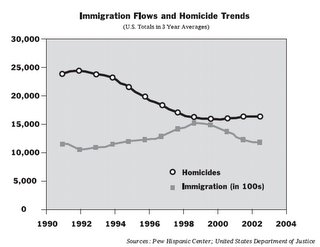
rob sampson has a fascinating op-ed on immigration and crime in the times this week. sampson argues that increasing immigration in the 1990s may have had something to do with declining crime rates.

this is a provocative argument, but plausible so long as the baseline homicide rate of u.s.-born citizens exceeds the average homicide rate of the new immigrants.

such an effect is perhaps easier to see with a gender example. imagine that 75 percent of the new immigrants were women and, of course, that women commit fewer homicides than men. the incoming low-homicide group would pull down the overall rate in the larger population.

as long as the newcomers are less violent than the society they enter, immigration will similarly push down homicide rates. on this dimension at least, our newcomers appear to have had a civilizing influence on american life.

as for the author, i cannot think of a finer american sociologist than robert j. sampson. his status as a card-carrying criminologist might color my perceptions, but his record speaks for itself -- and humbles the rest of us. surely he has helped me over the years and it is in my interest to speak well of him. nevertheless, i think i can look at sampson's oeuvre critically and objectively because we think about social life in very different ways. in any case, the fact that he is writing op-eds bodes well for public sociologies and criminologies.

Monday, March 13, 2006

new eyes

like many minnesotans, i traveled south for spring break. i'm writing from canada, after speaking today at the university of toronto centre of criminology.

it was my first presentation of the felon voting book outside the united states. until i was putting slides together with an eye to my canadian hosts, i hadn't realized just what a peculiarly american story we were telling. some tell me that canada and minnesota aren't terribly different on most dimensions. still, after a quick two-hour flight, the history of felon voting restrictions in the states looks strange and twisty indeed. i guess that's why we subtitled it "felon disenfranchisement and american democracy."

i've long known, of course, that the u.s. has the strictest felon voting laws and the highest rate of criminal punishment in the world. but the story also requires reference to racial conflict and the civil war, low american rates of political participation, and the generally punitive attitudes of americans on crime. even the american conception of felony takes in a broad range of behaviors (e.g., some forms of drug possession and theft) that may not be considered serious offenses in other nations.

i'm still working to get my head around international variation in felon voting restrictions, but by any measure the united states really stands alone on this issue. we wrote about this, of course, but it is another matter to try to explain it. proust wrote that traveling is not about "seeking new landscapes, but in having new eyes." after thinking about felon voting for almost nine years, i figured i'd have to travel a bit farther to gain a new frame of reference.

Friday, March 10, 2006

workin' for cca

corrections corporation of america bills itself as prison privatization at its best. would you invest in an incarceration company? should your university?

the yale daily news reports that their graduate employees and students organization is calling for the university to divest from cca. you might recall campus divestment protests over holdings in south africa and other nations. for example, all companies doing business in sudan were recently dropped from yale's portfolio. although cca lobbies to increase prison sentences, however, the university argues that cca's work does not constitute the sort of "grave social injury" that would trigger divestment.

i haven't invested in private prisons. i suppose that i might if i believed that they were incarcerating more effectively or more humanely than the state. yale student daniel pozen makes the case that, relative to nonprofit and public management, private for-profit prisons underperform on recidivism. to date, i don't think we have a definitive recidivism study on this topic. still, i don't see much evidence here for greater effectiveness.

the second question to ask is whether you or your university is actually making any money on cca. probably not. as an investment, cca has been losing ground to broad indexes such as the s&p500 for the past five years.

Sunday, March 5, 2006

playing god

for some months now i've been disturbed by the issue of states using civil commitment to lock up sex offenders after they have served their prison sentences. chris posted on this a couple of months ago, showing how we have clearly dehumanized and demonized sex offenders in this country. how else to explain the fact that these individuals can do their time, pay their debt to society, and then still potentially be locked up for the rest of their lives? states like new york and washington have opened or are in the process of building new "perv prisons" at great expense and very little public outcry.

new york is currently planning to build a facility that will house 500 civilly committed sex offenders who have served their prison sentences. such civil commitments have been upheld by the us supreme court. in 2002, the nation's top court ruled that people who were "unable to control their dangerousness" and were likely to commit another sex crime could be legally civilly committed.

in washington state, a study by independent researchers showed that felony-level sex offenders had a recidivism rate of 2.7 percent — lower than the rate of repeat arrests for felony-level drug violations and several other categories of crime. the tacoma news tribune reports the following statistics:

About 5 percent of treated sex offenders commit another sex crime, studies show. That figure is about 7 percent for those who didn’t receive treatment. About 8 percent commit new crimes that are nonsexual and nonviolent. About 3 percent commit new crimes that are violent but not of a sexual nature. About 77 percent have no new offenses at all.

yet, still, the moral panic is driving punitive new laws and there is no end in sight. in washington state alone nearly 50 sex offender bills were introduced in the last legislative session. washington's policy is to indefinitely incarcerate offenders after their prison sentences until they have successfully completed "deviancy treatment." in at least one case, an individual has been civilly committed--with the supreme court's blessing--for over a decade after completing his prison term.

as chris wrote about in the post mentioned earlier, minnesota has taken this issue even further and defined some individuals as "sexually dangerous" and civilly committed them without their ever having committed a sex offense.

while sex offenders are the target of the day, i worry that such trampling of individual rights may be a slippery slope...what will be next? when we allow states to play god and incarcerate people based on their potential for predatory crime, the state may ultimately become more frightening than any individual offender.

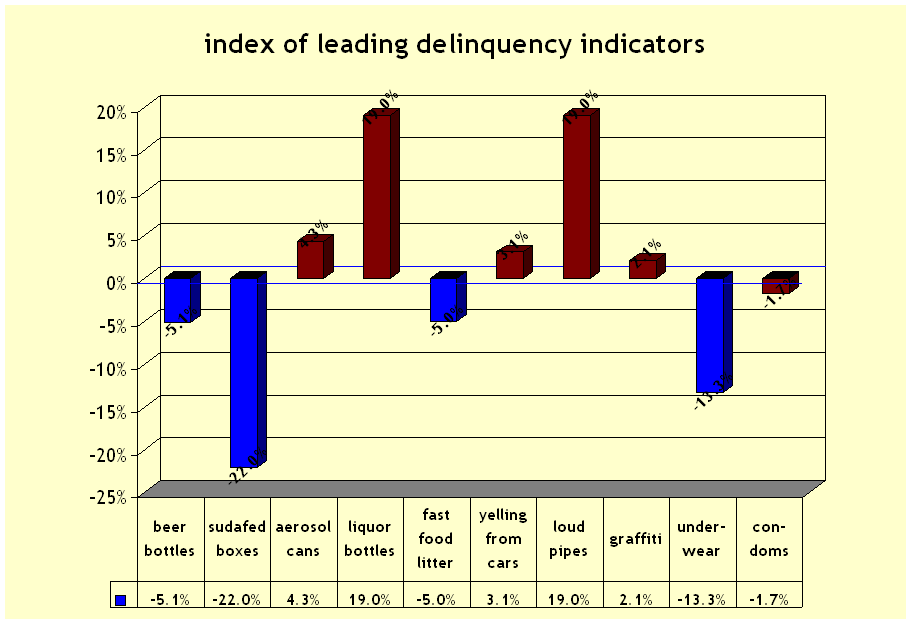
roadside refuse as leading delinquency indicators

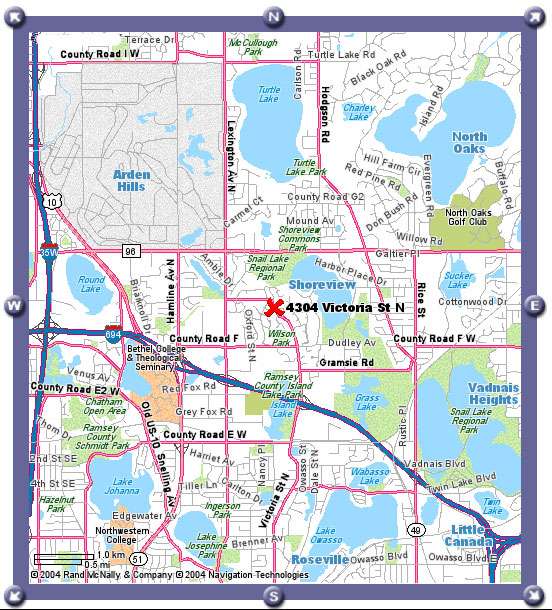
every spring when the minnesota snow melts, all manner of items surface on the roadside. as a running criminologist, i like to observe changes in the quantity and type of items discarded by young people. in spring i run a big loop around shoreview (west to arden hills, north up lexington to lino lakes, east on county road j to north oaks, south on hodson to vadnais heights, and back west to shoreview). along all of these roads i find the detritus of recent delinquency, though most of it is quickly cleaned up each spring.

suburban high school kids don't have much private space, so they tend to do stuff in cars and then throw said stuff out of cars quickly thereafter. i'm therefore thinking about compiling an index of leading delinquency indicators that will use winter trash to predict summer delinquency.


based on yesterday's run, i'd say that beer is down and liquor is way up. there were lots of cheap plastic whiskey bottles along the road -- mostly pints, but i did see what looked like an empty fifth of tanqueray on the north oaks side. i didn't see any sudafed boxes or other methaphernalia this year, but two years ago i found a heavy concentration near a large apartment complex. similarly, i only saw a couple reddi-wip (or similar) cans, suggesting that the kids are huffing less propellant than they had 5 or 10 years ago. maybe high school test scores will be up too!

more distressingly, kids are putting loud pipes on their trucks and cars again and yelling unintelligible things out the window to unsuspecting strangers. at least no drivers have trained a red laser dot on this runner recently. this spooked me a bit on a night run several years ago. i don't see much graffiti in shoreview, but someone had rearranged the letters on a church sign on hodson road -- worshippers were greeted sunday morning with a message that featured "69" quite prominently.

as a parent, i don't know whether to feel more worried or less worried when i see condoms along the road. i'm seeing fewer lately, but don't know whether this indicates greater abstinence or risktaking. perhaps it could be the former, since i haven't seen any discarded underwear along the road for some time. i still find lots of mysterious single shoes, of course.
if my leading indicators have any predictive power, the liquor bottles lead me to expect more alcohol poisoning and d.u.i. arrests this summer. on the upside, the decline in sudafed boxes is probably good news. one of my favorite local runners actually carries a trash bag along much of this route. i applaud his civic-mindedness, but will have to get up earlier to ensure that he doesn't contaminate my data.

i'm actually thinking about making such systematic data collection a paper or project option in my deviance and delinquency classes. what conclusions might students draw from the detritus of delinquency in their towns and neighborhoods? it would have some secondary environmental benefits, of course, and many of my students would know exactly where to look.

Friday, March 3, 2006

between hard covers

oxford is releasing locked out next week, so i've been checking amazon and barnes & noble. after some years of work and some years when we really should have been working, i guess it has finally arrived. i say "i guess" because i haven't actually seen a copy and won't believe it until i do.

the minnversity is doing a press release on monday, so i'm gearing up for interviews. my all-time A#1 favorite question was about "why i think charles manson should get to decide the next president." if anything similarly interesting happens, i'll blog about it -- either as self-promotion or as damage-control.

the good folks at the sentencing project emailed a flyer on their distribution list today (thanks much, marc), so i've gotten some warm congratulatory-type wishes from friends. the best note, however, told me of the book's actual theme song! and look, it's an infectious rocker to boot! here's a wmp snippet of crowded house's locked out. jeff and i explore different themes than the brothers finn, but perhaps we can emulate their "carefully crafted songs, meticulous eye for lyrical detail, and gift for melody."

Thursday, March 2, 2006

strict obedience as law violation

crimprofs links to a video that might be useful in teaching sociology of law or deviance. what would happen if four cars spread themselves across all four lanes of a major highway driving at exactly the speed limit? well, some college kids in atlanta undertook a little experiment on the dangers of strict obedience.

or maybe not. according to the museum of hoaxes write-up, this sort of thing was actually anticipated by georgia lawmakers:

code 40-6-40, section D: No two vehicles shall impede the normal flow of traffic by traveling side by side at the same time while in adjacent lanes, provided that this Code section shall not be construed to prevent vehicles traveling side by side in adjacent lanes because of congested traffic conditions.

so, they weren't actually obeying the law. i'm all for social experimentation and merry prankstering, but ... after watching the five minute video, i had the urge to box their impudent little ears. i guess that's probably just my inner dad emerging. despite the dangers, i can't help wondering about manipulating one more experimental condition: what do you think would have happened if atlanta's black college students had pulled this stunt?

indignities for women only

after last week's excellent piece on the seemingly unreasonable fines and debts that states impose on felons sparked discussion, adam liptak has another thought provoking article in today's new york times on the shackling of pregnant inmates while they are giving birth. this particular practice is a vivid example of why the "add women and stir" approach of many state corrections agencies just doesn't work.

while my former home state of washington is shameful in denying felons the right to vote while they struggle to work off their debts for years after their release, i can be a little more proud of the fact that the washington department of corrections is one of the very few state agencies to enact policy that strictly forbids the shackling of pregnant inmates.

feminist criminologists have been sharing their concern over such practices for years, but it often seemed as though only other feminist criminologists were really listening. liptak suggests that, "In most cases...women are shackled because prison rules are unthinkingly exported to a hospital setting." hopefully liptak's article will bring this issue to a larger audience and encourage thoughtful discussion and debate on the shackling of female inmates during labor and delivery.

Monday, February 27, 2006

life decisions


this week a judge in new mexico sentenced cody posey, 16, as a juvenile, and ordered him held in state custody until he turns 21. posey, you may remember, was convicted of killing his family on sam donaldson's ranch in july 2004. he was fourteen years old at the time he shot and killed his father, stepmother, and 13-year-old stepsister. in deciding how to sentence the teenage defendant, state district judge james waylon counts found that posey suffered from post-traumatic stress syndrome and had acted out after years of physical and psychological abuse at the hands of his father and stepmother. had he been sentenced as an adult, posey would have faced 50 years in prison.

this case brings to mind the case of nathaniel abraham, the youngest person ever convicted of murder in michigan. abraham was eleven years old, 4 feet 9 inches tall and weighed 65 pounds when he killed 18-year-old Ronnie Green with a sniper shot. he was 13 in january, 2000 when the judge handed down his sentence. judge eugene arthur moore had three options: to sentence abraham as an adult, where he faced life in prison; to sentence abraham as a juvenile, in which case he would be released on his 21st birthday; or to hand down a blended sentence in which abraham could be evaluated after his time in the juvenile system and sent to prison if he was not felt to be rehabilitated. judge moore chose to sentence abraham as a juvenile, suggesting in his comments that knowing nathaniel would be released in eight years would add urgency to his care and rehabilitation. judge moore explained:

"if we were to impose a delayed sentence, we take everyone off the hook. Sentencing Nathaniel as a juvenile gives us eight more years to rehabilitate him. We as a community know that he will be back among us at age 21. If we are committed to preventing future criiminal behavior, we will use our collective efforts and financial resources to rehabilitate him and all the other at-risk youth in our community...The danger is that we won't take rehabilitation seriously if we know we can utilize prison in the future. Adult incarceration is a vital immediate solution to danger, but it does nothing to address future criminality."
nathaniel abraham is now twenty years old and will be released within the year. his court-appointed psychologist describes his progress as a "mixed picture, mostly positive." the question now is whether abraham will be released to a halfway house to transition back into the community in the last months of his sentence. at this point, those working on his case do not think he is ready. ready or not, however, within a year he will be released without supervision.

what strikes me most about these cases is the courage of the judges to take what is certainly an unpopular stand in these punitive times. there are a number of ways to argue these cases; what do you prioritize--the safety of the community, the possibility for rehabilitation, the financial cost of sentencing a boy to an entire lifetime behind bars? whatever their specific reasoning, judge moore and judge counts offer us a glimpse back into the original goals of the juvenile court and the belief that young people deserve special consideration. the world will be watching when nathaniel abraham gets out. judge moore has stayed in close contact with him. for both of their sakes, i hope he offers evidence that the juvenile system can still work and fulfill its original purpose and its ultimate promise.

Friday, February 24, 2006

americorps/vista jobs for reentry work

are you interested in doing full-time reentry work in the fabulous twin cities? michael bischoff, a project manager at the council on crime and justice sends word of two americorps/vista positions. one is for an assistant case advocate for formerly incarcerated people. the other is for program evaluation and research related to reentry. click the links for details and contact information.

either position could be a great opportunity to get some real hands-on program and research experience. the jobs are full-time, pay a basic living stipend, provide health insurance, and offer a grant for education.

the council is a fine local non-profit with an excellent national reputation. i can personally vouch for its leadership and core mission: to build community capacity to address the causes and consequences of crime and violence through research, demonstration and advocacy.

to apply, submit a resume and cover letter by friday, march 31 to: council on crime and justice, attn: human resources, 822 south third street, suite 100, minneapolis, mn 55415 or hr@crimeandjustice.org. the positions are anticipated to begin June 21, 2006 and go through June 20, 2007.

Thursday, February 23, 2006

now what would you pay?

adam liptak's thoughtful piece in the times today highlights a significant barrier to felon reintegration: money. i'm not talking about how hard it is to earn a decent living with a criminal record. i'm talking about direct financial obligations to the state.

today, clients in the criminal justice system must pay fines, court costs, restitution to victims, lab costs (e.g., for drug testing, and sampling their dna), treatment costs (e.g., for chemical dependency or anger management), surveillance costs (e.g., for ankle bracelets), and because-we-said-so costs. liptak profiles one man who owes $127,000 to the state of louisiana, though six-figure debts are rare. it is not at all unusual, however, for "average" felons to owe thousands of dollars upon release.

when i analyzed applications for voting rights restoration in florida, i noticed that many such applications were never even reviewed. this is because applicants with any outstanding court costs or unpaid restitution were considered ineligible by definition. such practices seriously exacerbated racial inequalities in the system's operation. like florida, washington state is among the most aggressive in wringing money from felons. here's liptak:

Washington has one of the longest lists of fees assessed to criminals, and it is diligent in trying to collect them. Ms. Dubois, disabled after a car accident, makes payments of $10 a month toward what was once a $1,610 debt — $1,000 for a county "drug enforcement fund," a $500 "victim assessment fee" and $110 in court costs. "I still don't know who the victim was," she said. Her efforts notwithstanding, her debt is growing because of the 12 percent interest assessed annually by the State of Washington. As of September, it stood at $1,895.69.

until she pays it all back, however, she will remain ineligible to vote. just think about that for a moment. do such requirements exact a poll tax on the poor? how many other citizens -- of any socioeconomic stratum -- would pay $1,900 to vote in the next election? what if people remained ineligible to vote until they had completely paid off all student loans and other financial obligations to the state?

most students, of course, are not felons. while the state can make all felons debtors, i question the wisdom of imposing onerous financial obligations across-the-board. in my opinion, such policies needlessly prolong punishment. to the extent that former felons are marked as debtors and outsiders, it is more difficult for them to become "insiders" -- stakeholding and tax-paying citizens in good standing. that said, i grant that adhering to a reasonable restitution schedule might serve a reintegrative or rehabilitative function. making even nominal payments to victims might be part of a broader strategy of "earned redemption."

but that's not what we're talking about here. thoughtlessly dumping four-figure fees on the poorest of the poor serves no such purpose. this is either "piling on" to further stigmatize and criminalize the indigent or a misguided attempt to squeeze blood from turnips:

"The difference between 30 years ago and today," said George H. Kendall, a lawyer with Holland & Knight in New York who represents Mr. Rideau, "is that people who everyone agrees are poor are leaving the courthouse significantly poorer."

Monday, February 20, 2006

age, ski jumping, and desistance

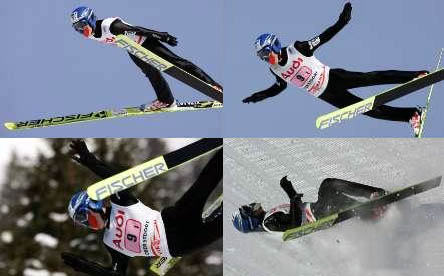
according to olympic commentators, the best ski jumpers are baby ski jumpers. this is because ski jumping involves convincing one's body to do something that one's brain regards as, well, stupid. as any former teenager will tell you, really stupid physical tasks are most reliably accomplished in youth.

one would think that older athletes might fare better at events privileging mind control, whereas the kids might prevail in events privileging speed and strength. instead, fortysomething cross-country skiers such as hilde pedersen sieze medals in grueling tests of endurance, while nervy nineteen year olds take gold in ski jumping.

watching the broadcast, i saw close parallels between ski jumping and desistance from crime and other risk behaviors. i'll bet that the age/ski-jumping curve follows the age/crime and age/accident curves. no, i'm not always thinking about crime. for instance, i also wondered whether jumpers and spectators might enjoy a warm landing pool of delicious banana cream pudding. more seriously, i marveled at the quaint sexist rationale that keeps women from participating: international ski federation president gian franco kasper says ski jumping "seems not to be appropriate for ladies from a medical point of view." sounds like pre-rosie the riveter talk to me, gian franco.

like many boys and girls, i recall summoning up the courage to do really stupid things as a teenager (just jump! do it!) that today i'd reject without a second thought. i suppose this is why keeping the edge becomes such a preoccupation as we get a little older. i'm tempted to challenge my lad to a ski jumping contest, but not until i get some action on this pudding idea.

Friday, February 17, 2006

prison dogs

toby young ran the safe harbor prison dog program in kansas, teaching inmates to train dogs for adoption. this week, she left lansing prison with inmate john manard packed into a dog crate in the back of her van.

this is tough news for dog training programs. i'm most familiar with more intensive efforts to train dogs as helpers for disabled persons. i've spoken with inmates at shakopee correctional facility in minnesota about the powerful influence that such programs had on them. they devote considerable time, attention, and (yes) love to the animals, in the hope that the animals will do some good on the outside. the minnesota program fell victim to budget cuts, but the inmates swore by it.

i'm not aware of a rigorous program evaluation or cost-benefit analysis, but i like such programs for three reasons: (1) they make productive use of inmates' time and affections; (2) they provide a needed public service; and, (3) they help civilize prisons, offering a "carrot" with which administrators can reward good behavior (dog-time is much prized) and an opportunity for inmates to teach discipline. i can second or verify this blurb from ms. young's website:

Safe Harbor has more than 90 inmates in the dog program and the effect on these inmates is very profound. These inmates have something positive that they can be proud of. They write to their families and tell them every last detail about their current dog. They subscribe to dog magazines and research training methods and dog breeds. They attend weekly classes to teach them a bridge and target training method that we use in our program. They have formed teams to help each otherwith specific training issues. They ‘baby-sit’ each other’s dogs. The impact of this program is more far reaching than we will probably ever know. The prison store recently started carrying dog treats that inmates can buy at a cost of 45 cents for a pound of treats. It has been the fastest selling item in the store – inmates who aren’t even dog handlers have been buying treats for the dogs and so have officers who love having the dogs around. The dogs are the highlight of prison tours and visit inmates in the hospice center.

argh. i don't know whether ms. young hatched the escape for love or whether she was an unwitting pawn of the prisoners. i just hope that this escape doesn't compromise the good work of such programs.

Thursday, February 9, 2006

harsh democrats versus draconian republicans

despite strict sentencing guidelines that limit their discretion, federal judges still exert some control over punishment severity. principally, they can adjust offense levels based on the facts of the case and depart from the guidelines altogether based on the fit between law and facts.

the chicago tribune reports a new article by max schanzenbach and emerson tiller on the political orientation of judges and sentencing outcomes. the analysis suggests that Republican appointees to federal district courts punish drug trafficking, theft, and violent offenses more harshly than Democratic appointees. conversely, there is some evidence that Democratic appointees raise punishments for white collar offenses by adjusting offense levels upward.

max is a phd economist as well as a jd, exemplifying the trend toward law profs with disciplinary phds and advanced methods skills (he was also my gracious host during an informal lunch talk at northwestern law). this project would seem to present some tricky level-of-analysis ecological issues and nonlinearities. nevertheless, after a very quick read of the full paper, i think the model is generally well-specified, at least within the limits of the data. the substantive story is reasonable and the authors seem both sensitive to and authoritative about the underlying mechanisms linking the putative cause (partisanship) and effect (outcomes).

for a couple reasons, i think the estimated effects of partisanship might be conservative (too low rather than too high). first, the federal courts do not see a lot of "street" crime. relative to state courts, violent offenses in the federal system tend to be acts such as bank robbery rather than, say, strongarm robbery; drug offenses tend to be moderate-to-large-scale trafficking rather than small-time dealing or possession. so, detecting any difference between street versus suite crime would be difficult within the federal system.

second, these effects were observed from 1992 to 2001, a period in which partisan effects may have been muted rather than exaggerated. it would be laughable to characterize Democrats of the era as "soft on crime." rather than soft versus hard, it might be more apt to characterize the contrast as harsh versus draconian.

since i haven't done any sentencing research, however, i'll need a sentencing expert such as celesta albonetti or rod engen to break the full implications down for me. provisionally, however, i've reached the following conclusions: (1) if (when?) i'm hauled into federal court for illegally trading oil stocks, i'll angle for a bush appointee; and, (2) if (when?) i'm hauled in for possessing my 500-count bottle of generic sudafed, i'll shop for a clinton appointee.

Monday, February 6, 2006

silenced voices, liberties, and change

as anticipated, i learned much at the minnversity's silenced voices conference on felon disenfranchisement last saturday. in particular, i got a little insight into processes of legal change -- in the courts, the legislature, and executives' offices.

in the courts, catherine weiss of the brennan center and art eisenberg of the nyclu gave tight presentations of the constitutional issues involved in felon disenfranchisement -- mainly 14th/15th amendment and voting rights act stuff. ms. weiss gave a thoughtful reply to a question about the supreme court's refusal to hear johnson v. bush. she speculated that this florida case would have (a) reopened fresh wounds surrounding bush v. gore; and, (b) dumped the court into some turbulent civil liberties waters in these uncertain times.

in the legislature, we heard from minnesota representative keith ellison, who introduced legislation to reenfranchise probationers and parolees. ellison discussed his patriotism as rooted in the slow but inexorable extension of the franchise beyond the propertied white male framers. he also noted that a Republican briefing sheet portrayed his bill as "good policy, but bad politics," pointing to its likely partisan impact.

the executive branch story came from gary dickey, counsel and advisor to iowa governor tom vilsack. mr. dickey related an all-american/after-school-special story of legal change. a high school class in cedar rapids iowa sunk their teeth into felon voting rights as a class project. they bombarded mr. dickey and state legislators with daily emails -- sometimes, i'll immodestly add, citing my research with jeff manza -- and phone calls lobbying for personal meetings and legal change. though not much happened in the legislature, mr. dickey and the governor began thinking about an executive order issuing a blanket pardon and voting rights restoration. at least a portion of this plan was hatched in a pickup basketball game with various staffpersons. so that's how it works...

somebody's gotta make a movie about this. dickey named his dogs liberty and justice, yet even he was astounded by the kids' commitment to full democratic participation. the conference also featured characteristically clear and authoritative overviews from marc mauer and carl warren, who organized the conference with minnversity law students. nevertheless, i'm still thinking about cedar rapids, iowa and those high school true believers. as mr. jefferson smith himself once speechified,

Just get up off the ground, that's all I ask. Get up there with that lady that's up on top of this Capitol dome, that lady that stands for liberty. Take a look at this country through her eyes if you really want to see something. And you won't just see scenery; you'll see the whole parade of what man's carved out for himself, after centuries of fighting. Fighting for something better than just jungle law, fighting so's he can stand on his own two feet, free and decent, like he was created, no matter what his race, color, or creed. That's what you'd see. There's no place out there for graft, or greed, or lies, or compromise with human liberties. And, uh, if that's what the grownups have done with this world that was given to them, then we'd better get those boys' camps started fast and see what the kids can do. And it's not too late, because this country is bigger than the Taylors, or you, or me, or anything else. Great principles don't get lost once they come to light. They're right here; you just have to see them again!

i understand that a webcast is planned for the entire conference, including longer presentations by me, marc mauer, and catherine weiss. locals in minnesota can see video replays at the law school on february 10, february 24, and march 31.

Thursday, January 26, 2006

honoraria and felon fund

sometimes when I give a talk these days, people offer me an honorarium. i guess this marks movement beyond the who is chris uggen? career stage, into the short-lived but delightful overrated stage. In academic life, an honorarium is simply payment to visit, lecture, review books for publishers, and do those other scholarly things we do. more formally, an honorarium is payment to any professional for services that do not legally or traditionally require a fee.

aside from travel reimbursements, i never request money to visit or talk. such visits are too much fun -- people treat you very well, the audiences are friendly and laugh at your jokes, and the intellectual exchange is great. the only downside is reentry shock when returning home to piles of laundry and dishes, students who are somewhat less excited about your lectures, and buying your own drinks. i try to give colloquia or talks whenever the schedule permits, though i try to limit guest-lecturing in actual classes to the minnversity unless i'm also doing a department talk.

no matter the amount, my benefactors always characterize it as a “small honorarium” or a “token.” sometimes said amount approximates my weekly take-home pay; other times it is smaller but never trivial. that is, if they are only going to give you ten dollars, they don’t call it an “honorarium.” instead, they call it “lunch.” one kind and generous host, who clearly had never seen my car, said that he hoped that their small honorarium ($500!) would not insult me. we use such language, i suppose, because actual famous people who get honoraria are either too rich or too pure to be be tainted by $500. so, we talk as though such amounts are trivial because donald trump (or bill cosby or bill clinton or nelson mandela) might really be insulted by a speaker's fee of $500. when inviting speakers to my department, i learned that a few famous sociologists -- often those the grad students would most like to see -- charge five-figure speaking fees. i guess they might be insulted by $500 too.

i’m never insulted, but I often feel guilty taking money to talk (i feel much less guilty taking money to review books because, well, i'm not the most voracious reader in the discipline). when a department chair hands me a check after a visit, however, it feels a little like bringing dirty cash into the pure house of love (just leave the money on the nightstand, honey). of course, i report my outside earnings to the government and the minnversity on a report of professional activities form. i also try to think of productive ways to spend it to assuage the guilt:

1. direct honoraria to charities. i sometimes try to redirect the honoraria to some group or charity i find worthy or interesting. last year i tried to divert an honorarium to a musician's hurricane relief fund. unfortunately, that created a hassle for the accountants. so, they still ended up cutting me a personal check.

2. formally redistribute honoraria to research assistants. sometimes i've involved grad students in public criminology work that does not pay or pays very little. so, i've cashed my check and then written them a personal check. because i'm still liable for the taxes on the income -- and i'm taxed at a much higher rate than the students -- my accountant thought this was about the funniest thing he'd ever heard. "ha ha! that's a good one - you're a real smart professor, all right. how long did you go to school? and you're teaching my kids?"

3. informally redistribute honoraria. this is a little sketchier. instead of cutting an actual check, i just try to buy meals and libations at conferences and such for grad students and friends. these are expenses i feel a little guilty about when the mastercard bill comes, but i assuage the "taking money off the family table to live it up in san francisco" guilt if i've got a little "honoraria" money offsetting it.

4. shovel it into the family furnace. sometimes i just put it into the checking account, where it burns away immediately, leaving not a trace of evidence that it ever actually existed.

none of these seem satisfactory. i'd really like to find some way to use the honoraria more meaningfully and productively. so, i've got a new idea, inspired by joseph 'jazz' hayden, a formerly incarcerated person. a few years ago, mr. hayden quieted a large group of lefty academics, activists, and policy types by raising a simple question. i don't remember his exact words, but it was something like, "i'm so happy and proud to see all you fine professors and experts here this morning to talk about prisoners. all your writing and talks and concern and activity is so very important. but can you just just give me one example and tell me one little thing that any of you have done to help the brothers in the penitentiary?"

ouch. his question really got to me. i've been making good money for the past decade talking and writing about crime and reintegration, but what have i really done to help somebody who is trying to rebuild their life after prison? not much. i've given tiny amounts to research organizations such as the sentencing project and the council on crime and justice, but nothing to former prisoners themselves. i hope my research and teaching counts for something, of course, but it seems stupid to worry about how to get rid of money when there are so many in need. so, i'm going to try another approach.

5. start a felon fund. henceforth, i'm going to redirect the honoraria into a little felon fund. my goal is to build a scholarship or fellowship for somebody returning from the system and giving it their best shot.

i'm not sure whether to direct the felon fund toward expungement or education or some other aspect of reentry, but the important thing is to get started. i figure that if i blog about it, i'll have to get off my butt and do it. what kind of sleazeball would write about setting up such a fund and then not actually follow through? given my, ahem, slowness in accomplishing any non-academic task, i'll try to enlist some help in setting this up (sorry, kim. we'll get the cards out too, i promise). i'll hereby guarantee to kick in at least half of any 2006 honoraria, with a greater percentage coming once i figure out the tax thing. for me, finding a personal answer to jazz hayden's question will be a marathon and not a sprint. the felon fund won't amount to much for some time, but it feels like a small step in the right direction.
Tuesday, January 24, 2006

conferring with interested publics

i did a conference call yesterday, tied to the release of on your own without a net: the transition to adulthood for vulnerable populations. the book has chapters on homelessness, mental health, juvenile justice, foster care, disabilities, mental disorders, and other issues. my piece with sara wakefield discussed difficulties facing young adults coming home from the criminal justice system. i think that conducting and disseminating research in interaction with affected communities is an important public sociology and policy sociology task. so, i'm usually happy to participate in such calls when i feel qualified.

here's how it worked. connect for kids publicized the date, time, and call-in number to its mailing list. some of these folks called in at the time to listen, email questions, or ask questions directly of the panelists. we had 5 presenters, each with about 10 minutes to talk before taking questions. we were asked to start with a brief review of the data in the chapter (e.g., trends), but then focus our remarks on policy solutions (e.g., what do we do about it?). approximately 130 people were listening, with a mix of policy folks, advocates, and on-the-ground practitioners and program coordinators.

the other presenters were real experts on their topics (e.g., john hagan on homeless adolescents, mark courtney on foster care) who did a terrific job speaking to the policy and practitioner audience. i too tried my best to give a responsible overview of the field without getting bogged down in statistics or jargon. everybody seemed to make 3 or 4 take-home points that were reasonable and constructive. relative to the call-in talk radio i've done, this audience seemed well-informed and quite expert in their fields.

that said, i was struck by the real-world concreteness of the questions relative to our 20,000-foot aerial view answers. for example, one woman with a teenage son in the mental health system asked for some guidance or suggestions on transitioning out of care, but we pretty much replied in abstractions and generalities. i would have been similarly stumped if a caller had asked whether her felony conviction prevented her from getting, say, a fireworks license in albuquerque, new mexico. even though i'd call myself an expert on felon exclusions, i'd likely do what any non-expert would: start googling. lacking much on-the-ground experience ourselves(or a staff to chase things down), individual academics have trouble bridging this gap. i learn a great deal from the journalists, practitioners, and felons who ask me questions (e.g., ohio? no I didn't know that. who is pushing the legislation? does it look like it will pass?), so i now make it a point to interrogate my interrogators whenever possible.

during yesterday's call-in questioning i had the distinct sense that the audience probably had more useful answers than the panelists -- and that they could help frame more interesting questions for the next round of research. for me, such conference calls illustrate burawoy's distinction between simply disseminating our work to affected publics versus doing work in dialogue with those publics. dissemination is a good and worthy endeavor, of course, and more of us should probably do more of it. engaging in dialogue with affected publics throughout the research process, however, might help produce rich scholarship of even greater utility.

Monday, January 23, 2006

janklow's occupational restrictions

former south dakota governor bill janklow was convicted of felony second-degree manslaughter and misdemeanors for reckless driving, speeding, and running a stop sign in january 2004. "wild bill" had long boasted about his speeding and had amassed numerous citations, but this time he sped through a stop sign and his cadillac struck and killed motorcyclist randy scott.

in addition to paying a fine, janklow served 100 days in jail and resigned his seat in the u.s. house. i'm writing about him now because the south dakota supreme court decided this month to reinstate his law license. judge glen severson, writing for the high court:

"While there are public concerns regarding Janklow's driving, there was no evidence presented to suggest that the public needs protection from Janklow's conduct as an attorney."

that's the funny thing about occupational sanctions that apply broadly to all felons -- they often have very little to do with public safety. in california, felons are barred from some 261 job titles. in new york, ineligible occupations include barber shop owner, boxer/wrestler, commercial feed distributor, and emergency medical technician. in florida, the list includes acupuncturist, speech-language pathologist, and cosmetologist. most convicted cosmetologists, of course, lack the means to mount an appeal to the state supreme court. one st. paul pioneer press reader reacted to janklow's story this way:

Different standard for Janklow?
I read with interest the Jan. 6 story about former South Dakota lawmaker Bill Janklow's triumph over adversity ("Janklow can resume his law practice"). We should all remember that this comes after being convicted for offenses resulting in a motorcyclist's death.
By contrast, an acquaintance was fired from his job as a car mechanic and was told that he couldn't pick up a wrench for five years, provided his record remained clean. His sin? Driving while drunk. There is no defense for this behavior from anyone. I will point out, however, that Janklow has been allowed to restart his practice although he hasn't completed his probation — all before my friend can change your oil. How many standards do we have?
PATRICK QUINN


the felons that i interviewed argued for more narrowly-tailored collateral sanctions -- in housing, receipt of public assistance, student aid, voting rights, parental rights, and firearms rights in addition to occupational restrictions. for example, some would ask "what did my assault conviction have to do with voting? i could see losing my vote if i tried to rig an election or something." janklow's lawyers made the same argument -- what did his manslaughter conviction have to do with lawyering? the standard answer, made by supporters such as george will, is that felons have shown themselves to be "untrustworthy" citizens and therefore blanket restrictions are merited. yet this logic is pushed to absurdity by the dizzying array of lifetime bans imposed on felons.

if i could reinvent the parole and prisoner reentry process, i'd like to see all collateral sanctions imposed on a case-by-case basis in a reentry court. if someone has been convicted of molesting children, then it makes good sense to restrict them from occupations (such as school bus driver) in which they have access to children. i would similarly restrict mr. janklow from driving a school bus, but would likely be sympathetic to his desire to practice law or to pick up a wrench as a mechanic once he has served his sentence. under the current system, only those felons with the information, time, and resources to mount a clemency drive will ever see their rights restored.

Friday, January 20, 2006

mandatory sentencing

i posted recently about my preference for indeterminate sentences (warts n' all) over mandatory minimums. frankly, one can find egregious miscarriages of justice under every sentencing scheme. nevertheless, the federal drug laws take the cake. here's the latest from law.com.

david powell, a 32-year-old with an IQ of 72, was sentenced to life-without-parole for distributing crack. he had two "nickel and dime" drug possession convictions at 16 and 17, which required judge david hurd of new york to lock him up forever on his third drug conviction. as appears to be the case for mr. powell, the full weight of such mandatories often falls upon the "mules" rather than the "kingpins." the only way powell could have avoided a life sentence would have been to provide "substantial assistance" to the prosecution. as a small-timer, however, he couldn't offer anything (or, more precisely, anybody) of prosecutorial value. here's how judge hurd sees it:

"The increment of harm in this case bears no rational relationship to the increment of punishment that I must impose," Hurd said at a sentencing proceeding last week in Utica, N.Y. "This is what occurs when Congress sets [a] mandatory minimum sentence which distorts the entire judicial process... . As a result, I am obligated to and will now impose this unfair and, more important, unjust sentence."

aside from injustice, such policies are expensive. although old dudes are generally much less dangerous than young dudes, it costs a lot more to lock them up. in particular, generations of californians will pay sizable medical costs for the aging prison population delivered by that state's two- and three-strike sentencing policies. here are some conservative* back-of-the-envelope calculations from the sentencing project:

Assuming that a typical lifer is sentenced at the age of 30 and will live until 70, we can estimate conservatively that incarceration costs of $20,000 a year from age 30 to age 60 will total $600,000. From age 60 to 70, costs are conservatively at least $40,000 a year, yielding a total lifetime cost of $1 million.

whatever you think of mr. powell's crimes, do we really need to spend a million dollars on him? and these costs don't even consider his lost productivity over the next forty years -- when he could be paying social security and income taxes. there's a nice RAND cost effectiveness analysis by jonathon caulkins and colleagues that attempts to account for some of these complexities. here is the authors' bottom line:

a million dollars spent extending sentences to mandatory minimum lengths would reduce cocaine consumption less than would a million dollars spent on the pre-mandatory-minimum mix of arrests, prosecution, and sentencing. Neither would reduce cocaine consumption or cocaine-related crime as much as spending a million dollars treating heavy users.


*i characterize these estimates as conservative because $20k and $40k are lower than anything else i've seen. it varies by jurisdiction, but i'd guess that $25k and $65k would be closer to the mark in the federal system.

Tuesday, January 17, 2006

dehumanizing sex offenders

one could devote several blogs to the moral panic surrounding people convicted of sex crimes. the stories are depressing, frustrating, and creepy on many levels, so i don't often follow up on them. but this story, sent by the blog muse last week, and this one from the weekend really caught my eye. i've italicized for emphasis in both excerpts.

GOV PUSHES NEW PRISON FOR PERVS by KENNETH LOVETT New York Post January 11, 2006

ALBANY - The state will build a "pervert prison" , a special maximum-security facility for the most dangerous sex offenders, it was announced yesterday. Gov. Pataki yesterday said the facility is needed to confine 500 convicted sex predators considered too likely to strike again to let back on the streets after their prison terms are over...

Frustrated that the Democrat-controlled Assembly repeatedly blocked civil-confinement legislation, Pataki late last year ordered his administration to "push the envelope" in keeping sex offenders deemed dangerous locked up by using existing law pertaining to the involuntary commitment the mentally ill.

Creating a new facility, which would open in 2009, would allow the mental-health system to keep dangerous sex offenders whose prison terms expire away from nonviolent mentally ill patients, Pataki said.

Donna Lieberman, executive director of the New York Civil Liberties Union, said the governor is "putting the cart before the horse" since the state does not yet have a civil-confinement law on the books. "It's interesting he's prepared to spend money to build yet another prison, but not engage in the kind of evaluation, monitoring, supervision and treatment of high-risk offenders that all the experts agree can significantly reduce the risk or incidents of reoffense," Lieberman said.

Meanwhile, lawyers for the sex offenders now in mental facilities were grilled yesterday by the panel of Manhattan appellate-division judges who are deciding on the constitutionality of the civil commitments. The inmates' lawyers argue that Pataki is doing an end run around the corrections commitment procedures by having the inmates' dangerousness evaluated by state doctors - essentially the governor's own shills. [emphasis added].


okay, i know the story comes from the post, but here's what catches my eye as a sociologist and criminologist:

1. dehumanizing language - isn't the term "sex offender" stigmatizing enough? does the post really need to refer to individuals convicted of sexual crimes as "pervs" or perverts? the term is gratuitous and really imprecise to boot.

2. "after their prison terms are over" - the proposed prison is not for people serving prison sentences, but for those who have already done their time. this sort of do-over for the state has generally withstood constitutional scrutiny for sex offenders, but i'm skeptical that it would for anyone else. as the nyclu points out, states could provide evaluation, treatment, and supervision of sex offenders while they are under criminal sentences.

3. "allow the mental health system" - mental health treatment does not appear to be the primary (or secondary or tertiary) motivation here. sex offenders are deemed mentally ill because they are perceived as dangerous and the mental health system offers another avenue for incapacitating them. i would prefer to see long prison sentences of indeterminate duration, rather than a transfer of authority to the mental health system at the conclusion of a shorter sentence.

4. "push the envelope" - governor pataki must be hearkening back to his days as a top gun fighter pilot here. in this case, it sounds as though the "envelope" is the constitutional protections typically afforded criminal defendants. [what else could he mean here?]

5. "evaluated by state doctors" - however well-intentioned, one could easily imagine abuse potential in a system with no independent evaluation of dangerousness.

perhaps this is me just being paranoid -- too much huxley and orwell in middle school or something. are my fears of abuse exaggerated? if so, it is tough to explain a case reported by the minneapolis strib yesterday. in recent years, minnesota has dramatically expanded its use of civil commitment proceedings for "sexually dangerous persons." today the net has widened to the point that it captures people who were never even charged with sex crimes.

Dwayne Peterson, 25, of Mankato, Minn., has never been convicted of a sex offense or even charged with one. But after completing a prison term for kidnapping a 78-year-old man at gunpoint in 2001, he now sits in the Security Hospital in St. Peter pending civil court proceedings to commit him indefinitely to the Minnesota Sex Offender Program as a sexually dangerous person. Peterson wouldn't be the first of the nearly 300 men confined under the program -- from which no one has ever been permanently released -- to be committed without a prior sex-crime conviction. [emphasis added]

at age 25, mr. peterson has completed his court-imposed sentence. it is no exaggeration to say that he may now spend the rest of his life behind bars for a crime that was never even brought to trial. if the allegations (of sexual activity with boys) had been brought to trial, he would almost certainly be acquitted. according to his attorney, there are "no corroborating victim-witnesses for Peterson's accounts."

in minnesota, as in new york, i remain convinced that the goals of such commitment proceedings are incapacitation and retribution rather than rehabilitation or treatment. the fact that none of the 300 men confined under the program has ever been released suggests as much, though i should point out that i am no expert on the inner workings of this system and have never even visited these facilities. nevertheless, i have to ask whether it is good public policy to transfer authority from the criminal justice system to the mental health system in such cases.

just to be clear, i am not suggesting lighter sentences for sex offenders. i'm just as creeped out by the lurid description of sex crimes reported in these stories as everyone else. but i'm also creeped out by the hopeless constitutional no-man's land in which we place individuals convicted of these acts -- or simply suspected of these acts, in the case of mr. peterson. personally, i'm a believer in old-school discretionary parole and indeterminate sentences within the criminal justice system. some will turn out much longer and some will turn out much shorter than the current mandatories. this system was also subject to abuse, of course, but it seems subject to greater reform and oversight than the far slipperier civil commitment procedures we employ today.

Sunday, January 15, 2006

oddly, they prefer the party that isn't trying to disenfranchise them

rick ruddell sends word of voting in canadian prisons on friday. incarcerated citizens have been eligible to vote in that nation since 2002, when the supreme court of canada ruled that barring prisoners from voting was contrary to the canadian charter of rights and freedoms. according to ctv, about 25 percent of 35,000 eligible prisoners were expected to cast ballots.

the story quotes conservative leader steven harper as saying, "no, I don't agree with prisoner voting." manitoba inmate jeff power (shown in the ctv photo at left) shaved a maple leaf and liberal 'L' into the side of his head. "We're all voting for the Liberals, just because we want to keep our vote."

here in the states, i'd imagine the republicans would adopt the canadian conservative position and the democrats would be ... skittish. only maine and vermont permit prisoners to vote today and the u.s. supreme court has generally permitted states to disenfranchise prison inmates, probationers, parolees, and even former felons who have completed their sentences.

Saturday, January 14, 2006

soctalk january 17 and lawtalks january 28

here's an update on a minntalk this week and a small minnconference (minnminiconference?) next week:

1. i'm speaking with shelly schaefer on voting and the civic reintegration of former prisoners this tuesday as part of the sociology department workshop series. this one was bumped last semester for a really impressive roster of job candidates. the workshops are held in 1109 social sciences from 4-5:15 and all are welcome.

2. those interested in racial disparities in punishment and felon voting research might be more interested in silenced voices: the constitutionality and legality of felon disenfranchisement provisions on saturday, january 28 at the university of minnesota law school. law school professor carl warren is organizing the conference as part of the national civil rights moot court competition, which this year will examine johnson v. bush. all are welcome and attendance is free. attorneys can even get continuing legal education credit* if they contact the organizers in advance.

this should be really good -- i know i'll learn a lot. marc mauer of the sentencing project and race to incarcerate will be speaking on racial disparities. i'm especially eager to meet rep. keith ellison, who has introduced legislation to reenfranchise probationers and parolees. other speakers include catherine weiss of the brennan center, art eisenberg of the nyclu, and gary dickey, counsel and advisor to iowa governor tom vilsack. i'll be doing an overview in the morning session, which will overlap with my department talk. events will be held at the minnesota law school from 9-3, but i don't have the specific rooms yet. here's the tentative schedule:

9:00 a.m. to 9:10 a.m.
Welcome and brief description of the facts and procedural posture of Johnson v. Governor of State of Florida, 405 F. 3d 1214 (11th Cir. 2005).

9:10 a.m. to 9:50 a.m.
Overview: Felon Disenfranchisement and Democracy.
Prof. Christopher Uggen, Associate Chair, University of Minnesota, Department of Sociology.

9:50 a.m. to Noon.
Silenced Voices
Panelists will examine the legal, constitutional, societal and policy-making implications of felon disenfranchisement provisions; measures that have been taken to address them, e.g. executive orders, legislation; and litigation that has challenged them, e.g. Johnson v. Governor of State of Florida; ­Muntaqim v. Coombe­­, 366 F. 3d 102 (2nd Cir. 2004) and Farrakhan v. Washington, 338 F. 3d 1009 (9th Cir. 2003). The panel will consist of:

  • Catherine Weiss, Associate Counsel, Brennan Center for Justice at NYU School of Law. The Brennan Center represents the plaintiffĂ‚’s class in the Johnson v. Governor of State of Florida;
  • Art Eisenberg Litigation Director of the New York Civil Liberties Union. The NYCLU submitted an Amicus brief in support of the PlaintiffĂ‚’s position in ­Muntaqim v. Coombe­­;
  • Rep. Keith Ellison of the Minnesota House of Representatives. The author of legislation to restore the voting rights of people who have been convicted of felonies and who are on probation or parole;
  • Gary Dickey, Jr., General Counsel and Policy Advisor to Governor Tom Vilsack of Iowa who by executive order restored the voting rights of ex-felons in Iowa;
  • Marc Mauer, Executive Director, Sentencing Project, Washington DC; and
  • Clinical Prof. Carl M. Warren, faculty advisor to the University of Minnesota Law SchoolĂ‚’s Wm. E. McGee National Civil Rights Moot Court Competition, will moderate the panel.

Noon to 1:00 p.m.
Break

1:00 p.m. to 1:45 p.m.
Catherine Weiss , Esq. will discuss the standards and appropriate legal analysis of the 14th Amendment and Voting Rights Act issues in Johnson v. Governor of State of Florida.

1:45 p.m. to 2:45 p.m.
Marc Mauer author of ­Race To Incarcerate and Invisible Punishment will examine the staggering racial disparity in incarceration.


*5.6 hours of continuing legal education and judicial education credits (4.6 hours regular credit and 1.0 hours of Elimination of Bias credit) are available.

Thursday, January 12, 2006

i'm not a real badass but i play one in my memoirs

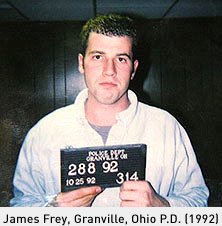
james frey is under siege for fabricating big chunks of his monster-selling memoir, a million little pieces. the minneapolis strib had questioned his accounts of surgery without anesthesia and a northwest airlines flight in which he was bleeding, with a hole in his cheek, and covered with "a colorful mixture of spit, snot, urine, vomit and blood." as the smoking gun reports, frey represented the memoir as non-fiction but, to put it charitably, seems to have seriously exaggerated his experiences. here's the short version:

"When recalling criminal activities, looming prison sentences, and jailhouse rituals, Frey writes with a swaggering machismo and bravado that absolutely crackles. Which is truly impressive considering that, as TSG discovered, he made much of it up. The closest Frey has ever come to a jail cell was the few unshackled hours he once spent in a small Ohio police headquarters waiting for a buddy to post $733 cash bond."

i think we should give folks a little wiggle-room on their memoirs, so i feel bad for mr. frey. of course, misrepresenting one's criminal history probably seems like a pathetic way to do masculinity, at least for those over 25. still, i won't deny the seductions of embellishing such experiences. my juvenile delinquency students know that i'll sometimes refer to my experiences in the system. i've never hidden the fact that i was arrested several times at 16 and 17 (mostly for fighting and disorderly conduct) or that i had sleepovers in jails and other secure facilities. it can be useful in showing the discrepancy between the clean flow-chart picture of the system in textbooks and the messy experience of things like juvenile intake from a kid's perspective. but whenever i feel any semblance of "swaggering machismo" in telling such stories, i know i'm starting to embellish -- because it was never like that.

the first and most important reality checks are that i never did time (and certainly not hard time in a state penitentiary), that i've only seen prisons as a visitor or professor, and that i felt and was perceived as a nerd at the time or, more charitably, a hipster doofus or confused kid rather than a badass or tough guy. my guess is that frey has a similar history. this is important because the real badasses sniff out a phony in a second. when i interview men and women in prison, i represent myself as a dork professor rather than someone who has "been there." even if i wanted to sell myself as an ex-con, i couldn't pull it off. similarly, none of my publications on crime make any mention of my own history -- i'm not embarrassed, it is just way too "thin" to be of any use. it certainly affects the kinds of questions i ask and the perspectives i adopt, but it would be the height of phoniness to trade on it.

also, the memory plays tricks. for example, i think i was arrested at 17 for stupidly attacking a bouncer at the cabooze, right down cedar avenue from my current office in minneapolis. if i were writing an account of the evening for my memoirs (or blog, i suppose), it would be tempting to embellish this "fight" (which was probably over in 2.4 seconds) as some sort of gladiator-style struggle and half-remember all sorts of details from all sorts of sources. just like mr. frey, i could see myself writing about being covered with "a colorful mixture of spit, snot, urine, vomit and blood." after 24 years, though, all i can really remember is that the band was wilma and the wilburs. i think i was handcuffed for a long time that night/morning and that it hurt, but that could have been a different night altogether. if the smoking gun investigated my blogoirs, they might discover that it was bullwinkles rather than the cabooze or, worse, that i was not arrested in hennepin county that night (hmm. was it ryan's in ramsey county?).

i'm thinking about embellishment because my son is now a wrestler and musician -- two activities that i explored at 14 too. i thought i was a pretty scrappy wrestler, but had to ask my dad whether i was really any good at it (verdict: fought like hell, but lost as much as i won). i know that i was never a good guitar player ("scrappy" probably applies here as well), though i'm sometimes tempted to embellish my experiences or abilities here too. my delinquent history hasn't really been questioned, though those who knew me at 16 love my little joke about preparing a lifetime to "teach a course in juvenile delinquency."

so, even if mr. frey was never the badass of a million little pieces, he probably had some experiences that were something like the events described in the book. or maybe they were stories he heard in treatment. why do we embellish our deviance? hmmm. edwin lemert noted long ago (1951) that rewards as well as penalties derive from deviant roles. rw connell explains the general swagger and jack katz explicated the specific ways of the badass. now that he's apparently been busted, the arc of frey's story fits goffman's (1961) sad tale, and shadd maruna's redemption scripts might help us figure out his next move.

prediction: his next book is gonna be huge.

Wednesday, January 11, 2006

far-flung applications of sociological research

i recently received an email from the homeland security institute, a federally funded interdisciplinary think tank for the department of homeland security. they did not ask me to keep the request confidential, so i'll reproduce the main text here:

We are currently working on a project for the Science and Technology Directorate of the Department of Homeland Security, in which we are cataloging consequence assessment tools/methodologies/suites in an attempt to assess those that have homeland security applications. Political Consequences Methodology has been selected for inclusion into our report. Since this report impinges on matters of national security, we are attempting to make all information as accurate as possible. Would you be so kind as to fill in the table provided and return it to me at the email address below?

the questions in the table seemed designed for researchers who had developed software or other tools far beyond anything i've done (i.e., geographical information systems stuff). i had never thought of my felon voting project with jeff as having homeland security applications, so i don't know why this project was selected. i just did my best with the table and returned it to the institute. the national science foundation funded the research and i'm glad to provide any information i can about it.

i've always sought to do "engaged" scholarship that would somehow be useful. once the work is public, however, i'm always surprised at how it is used. for example, the republican party in washington cited my work in challenging a closely-contested democratic victory. i've heard anecdotally that my study showing job training success among older ex-prisoners was used to cut funding for job training among younger ex-prisoners, which wasn't quite what i'd intended. still, i'm happy as long as the work provides decent social facts that allow for better informed decisions, even if the outcome isn't consistent with my preferences as a citizen. in this case, i'd like to think that the institute's interests have something to do with protecting the integrity of national elections, though i can, of course, think of less virtuous reasons.

when i was just out of college, some of my other work was put to far-flung purposes. i was 22 and working in a madison social service agency when i helped develop software to track the employment and training experiences of people on public assistance. when wisconsin-style "welfare reform" went national, ibm and some locals tried to market the software to all sorts of organizations (including, as i recall, fire departments). i felt a little cheated that i didn't get paid on that venture, since i was making about seven dollars per hour when i did the screen shots with the coders. to be fair, the ibm folks did buy me a nice lunch at pedro's (mmm...chimi) and say nice things about me to my boss.


of course, i'm relieved i didn't have to kill myself rewriting code to somehow satisfy the poor fire department that actually bought the software. i guess the lesson here is mostly caveat emptor for those using our research. still, public sociologists and criminologists would do well to heed warnings of caveat venditor as well.

Tuesday, January 3, 2006

smilin' mli


when michelle makes a post, she can include a link to a cool west coast story in the seattle times. then, she can include a photo . if she doesn't want to post it right away, she can just save it as a draft.