Thursday, October 19, 2006

wouldn't the moral entrepreneurs make a nice name for a band?

i generally reserve howard becker's term moral entrepreneurs for full-on self-righteous crusading reformers such as prohibitionists. yet one needn't look far to find mellower unplugged and acoustic versions of the concept.

chris riemenschneider, the strib's fine music writer, offers a front-page story this morning on environmentally friendly concert tours. performers such as gomez, the dave matthews band, pearl jam, jack johnson, bonnie raitt, and even the entire warped tour (!) have gone at least a little bit green.

cloud cult singer craig minowaare and others try to model environmentally friendly lifestyles without "sounding like some preachy folk singer." what behaviors are they modeling?

* Using biodiesel tour bus.
* Buying renewable-energy "credits" to offset fuel emissions.
* Using soy-based ink and recycled paper in merchandise.
* Selling organic cotton T-shirts.
* Serving organic food backstage.
* Minimizing bus idling.
* Staying at hotels identified as eco-friendly.


as gusfield pointed out, status politics are at play when uppers tell lowers how they should live. but bands such as gomez aren't really cultural elites (yet) nor are they too wealthy to feel the extra cost of their green livin'. so all this seems quite socially responsible to me, though i wonder how ol' keith moon would have fared in such a band. maybe he'd personalize the practices:

* Driving biodiesel tour bus into holiday inn swimming pool.
* Smashing corn-plastic drum kits.
* Detonating biodegradable explosives.
* Recycling endless stream of Courvoisier bottles.
* Dressing in organic cotton vicar's, clown, and santa claus costumes.
* Heating room with detritus of smashed televisions, chairs, dressers, beds, and cupboards.

i wouldn't count mr. moon as a moral (or immoral?) entrepreneur, but he certainly qualified as a professional discoverer of wrongs to be righted, of situations requiring new rules.

Monday, October 16, 2006

ufc and the old ultraviolence

given my pop culture avocations, people can't understand why i've never plugged into the cable. just when i think i really need cnn or comedy central, however, i flip channels in a hotel room and see something too horrible for words. such is the case with [warning: the following link is brutal] ultimate fighting.

i raise the issue because i spoke this weekend with an intelligent young woman who attended a pay-per-view UFC event with her boyfriend. when i asked what she liked about it, she pointed to "passion" and the faces of the participants. dang. they'd get as much passion and intensity watching a good guitar face at the local bar.

but she's not alone, and that's got me worried. ultimate fighting is outdrawing the baseball playoffs among males age 18-34. is this the state of american masculinity in 2006? i'll summarize a spike tv bout i saw while traveling this summer: palooka A knocks palooka B into chain-link fence, straddles B's chest, and pounds face until some savagery threshold is crossed (unconsciousness? a two-quart blood rule?), whereupon A is declared the victor. i've seen more civilized fights in prison yards.

after one has physically dominated an opponent, doesn't man law dictate mercy? or is mercy the crucial distinction between ultimate fighting and plain vanilla penultimate fighting? somewhere along the line i picked up the idea that a man doesn't continue hitting or kicking a fallen opponent into unconsciousness, or immobilize him and then cave in his face with elbow shots.

i admit that i'm the wrong guy to cluck about this, given my own conflicted history with violence. among my edumacated friends, i'm a lonely defender of disciplined and attenuated violent forms such as football, rugby, and wrestling -- and i continue to applaud my significantly larger lad's participation in such activities. if anything, he's learned discipline and control in these sports. to my knowledge, at least, he has yet to throw a punch in anger.

i lost my stomach for boxing after boom-boom mancini v. duk-koo kim, but i'll admit that i've probably participated in more violence than most sociologists or criminologists. on the other hand, with the possible exception of murray straus, i also watch far less of it than any sociologist or criminologist i know. i've simply got no time for the phony played-out bloodfests by scorcese and tarantino. i'll grant you that straw dogs, mean streets, and clockwork may have had something important to say. but thirty years later i'm amazed that critics, most of whom have neither thrown nor taken a punch, still lap up the same old tired movie tropes as authentic.

i work hard as a criminologist because i want a little more justice and a whole lot less violence in the world. for me, real violence is only interesting in the way that hiv/aids and earthquakes are interesting. but that's a rant for another day. ultimate fighting strikes me as straight-up pornography, perhaps a step or two below cockfighting on the debasement scale. as long as i've got kids in the house and comcast is pushing UFC (and, frankly, i could throw goodfellas and reservoir dogs in there as well), they'll just have to make do without me. i see an ugly human transaction whenever two human beings come to blows, made all the uglier by money and spectators.

who benefits from online gambling restrictions?

president bush signed legislation to criminalize internet gambling on friday. under the unlawful internet gambling enforcement act, it is illegal to use credit cards, checks and other bank instruments for online bets. i've never gambled online, unless you count my emotional and ill-fated email dinner bets with friends (points? i don't need yer stinking points -- my vikings will win straight up, and you'll be buyin', my friend). whenever new rules are made, however, i like to suss out the winners and losers.

senate majority leader dr. bill frist evidently took the lead in attaching gambling restrictions to a port security bill that was virtually assured of passage. the national football league lobbied hard for this one, employing two lobbyists who were former senior aides to senator frist.

the nfl gains much by upholding the perceived integrity of their games, while some senators benefit by distancing themselves from jack abramoff (who had successfully lobbied on behalf of internet gambling) and shoring up the christian conservative base before the election. the big losers, of course, are individual american gamblers and offshore internet gambling operators. those who view gambling as evil or addictive would argue that such costs are offset by the reduced social and individual harm associated with the practice. but will internet gamblers really stop betting?

if these folks continue to bet their $6-12 billion per year, i can think of another beneficiary of criminalization. most serious gamblers probably know a small businessperson who loves the new unlawful internet gambling enforcement act: the local bookmaker. bookies don't usually hire lobbyists like the nfl, but you can bet they are just as pleased with the result. with decreased competition online, demand for their services should increase significantly. now, if the local numbers bankers could just get rid of those pesky state lotteries...

Thursday, October 5, 2006

deadly defiance

the new york times features a story today that a mugging victim's attitude led to her death. anemona hartocllis reports from the defendant's trial: "It wasn’t the color of her skin, or the amount of money in her purse, the mugger said, but the victim’s attitude — her insouciance, defiance and disdain that made the mugger’s accomplice shoot the actress, 28-year-old Nicole duFresne, once in the chest, killing her."

you may remember this case. in january, 2005, two couples were mugged by a group of seven youths. now, the youngest of these youths is testifying against the leader who pulled the trigger and killed nicole dufresne. tatiana mcdonald, now 16, testified that ms. dufresne taunted rudy fleming, the 19-year-old leader of the pack, going eye to eye with him and shouting: “What are you going to do, you going to shoot us? Is that what you wanted?”

apparently mr. fleming got so angry that he responded to the challenge by shooting ms. dufresne at very close range and killing her. her friends, who apparently kept quiet, were not shot.

so what's the message here? i guess if you end up in a dangerous situation like this one, you don't want to taunt your mugger. the code of the street may demand a response.

biomedical prison research

allen hornblum writes on prisons in the october 6 chronicle of higher education. he isn't concerned with criminological research so much as human medical experimentation ranging from "relatively innocuous studies of deodorants and detergents to dangerous work on dioxin and chemical warfare."

after writing a book on mistreatment in a philadelphia prison from the 1940s to the 1970s, professor hornblum is today concerned that a new national academies report (Ethical Considerations for Research Involving Prisoners) will greenlight a new generation of biomedical research on prisoners.

i applaud any national academies report that will help prevent abuses of prisoners, but professor hornblum does raise some troubling questions.

first, we know about the risks to the subjects of such research, but what are the benefits to prisoners? do we really need to be testing cosmetics on inmates (rather than, say, supermodels who might actually use such products)? given the absence of health care for prison releasees, how many subjects could even afford the costly drugs they tested?

second, aside from biomedical companies and individual researchers, who else wins and loses in such research? the state? what about the non-prisoners paid to offer up their bodies for medical experimentation? will they be undercut by cheaper and more plentiful prison "volunteers?"

third, to what extent do normal human subjects procedures apply behind prison walls? while principles of voluntariness and confidentiality are given great weight by internal review boards, they can be extremely difficult to achieve in a coercive environment such as a prison.*

i complain as loudly as anyone whenever i must go through several sets of arduous human subjects procedures before i can ask prisoners fairly innocuous questions (e.g., whether and how they voted). i don't anticipate another tuskegee, but a new wave of high-profit biomedical research will certainly require continued vigilance to prevent similar abuses.

*for example, one prison administrator discouraged me from paying inmates for the interviews published in locked out. s/he said that if i offered as little as two dollars per interview, almost every inmate would want to participate and this would create problems among those not selected for interviews. this was an exaggeration, but not that far from reality -- where else would two dollars seem like a coercive inducement?

Monday, October 2, 2006

another lecture shot to s***

well, i was all set to lecture tomorrow on labeling theory, moral panics, and congressman mark foley. on first reading, his emails to a young page didn't strike me as all that creepy.if you squint a little, you can almost construe them as a dorky but caring adult reaching out as a big brother-type (are you weathering the hurricane ok? what's school like for you this year?).

i wasn't eager to come to the congressman's defense, but i didn't like the way that the pundits cited his resignation as damning evidence that he must be hiding something worse. turns out, of course, he likely was hiding something worse. after reading a transcript of his instant message correspondence from abc news, i'm less interested in even discussing the case in class. yeesh.

on the other hand, his entry into an alcohol rehab program might be a useful sidebar to tomorrow's lecture. there is currently no moral panic swirling around lawful alcohol use -- at least nothing on a scale approaching child sexual abuse. so, alcohol treatment could function as a strategic stigma management technique. the post quotes congressman foley thusly: "I strongly believe that I am an alcoholic and have accepted the need for immediate treatment for alcoholism and other behavioral problems."

by scaling rehab mountain, congressman foley signals that booze is the real problem, relegating his sexual contact with minors to an ancillary grab-bag of other behavioral problems. wonkette has the whole sordid tale.

pains of imprisonment

serving time in prison leaves all kinds of scars -- some visible, some not. two recent news stories have reminded me of this point. first, is the story of the inmate who was forcibly tattooed with the words "Katie's Revenge" in large letters across his forehead. anthony ray stockelman, 39, is serving a life sentence for molesting and murdering a 10-year-old girl named katie. while tattoos are against prison regulations, motivated inmates can be very creative and at least one found a way to leave a permanent reminder of his distaste across stockelman's face. you can see a photo of the tattoo here on cnn's website.

the tacoma news tribune offers the second story about murder defendant ulysses handy III. handy recently plead "guilty as charged" to three counts of aggravated first-degree murder. his plea bargain saved him from a death sentence; instead he will spend the rest of his life in prison without the possibility of parole. he laughed when family members of his victims spoke of their pain and their hope that he would be killed in prison, telling them in court: "pain is part of life. deal with it. get over it." reporter karen hucks quotes handy as saying that pain was the only constant in his life. in court, he claimed:
"I know why I did what I did,” he said. “It wasn’t over no money. It wasn’t over a jacket. And it ain’t no secret who or what I am,” he continued. “I never covered that up, never tried to … I shoot people, kill people, all that other good stuff, only when I’m provoked. Vengeance, karma, whatever you want to call it. People cross me, I did what I did. And that’s not going to change.”

Handy blamed his inability to feel anything on the eight years he spent in prison for hitting a man over the head with a baseball bat. “I went into prison a kid,” Handy said. “Whatever love or compassion or mercy or sympathy I had, prison took that away from me. Anything I was died a long time ago.”

prison leaves scars on those who live behind the walls, but it does not take away the free will of individuals, and in mr. handy's case, it does not excuse aggravated murder. there's more to the story, of course, including handy's anguished mother begging the victims' families for forgiveness outside of the courtroom, claiming "he was not raised this way." but handy does not want to remember his days as an honor student, a boy scout, and an altar boy. he claims that prison killed all that was good within him.

while prison leaves it mark, there are hundreds of thousands of former inmates who have returned to their communities, changed, but willing to work incredibly hard to rebuild their lives. their stories may not have the high drama that garners media attention, but they are filled with courage, frustration, obstacles, and small triumphs. we should remember them and applaud their efforts even as we condemn the system's many failures.

Monday, September 25, 2006

why put that amendment first?

san francisco chronicle writers mark fainaru-wada and lance williams face up to 18 months of federal prison time, pending appeal, for refusing to identify the source of leaked grand jury testimony in a steroid investigation involving barry bonds.

18 months is a pretty long sentence (even in comparison to the clunky lead sentence written above). under the current minnesota guidelines, someone with minimal criminal history would get 18 months or less for crimes such as simple robbery, residential burglary, theft greater than $2500, forgery, and sale of controlled substances.

as a former journalist wannabe, i'm officially spooked. et tu, sports page? this is supposed to be the "toy department," not the trenches of modern journalism. it seems that any writers could find themselves neck-deep in such cases, with the possible exception of bridge columnists and sudoku contributors. as for this investigation, here are some of the major players:
  1. barry bonds, the expanding man.
  2. victor conte, who admitted distributing steroids to athletes and laundering the proceeds (sentenced to 4 months in prison and 2 years of court supervision for illegal drug distribution).
  3. greg anderson, mr. bonds' trainer, who has already done 3 months after pleading guilty to dealing steroids and laundering money, plus 15 days for refusing to answer a previous grand jury's questions.
  4. mark fainaru-wada and lance williams, the reporters who are refusing to name names.
  5. judith miller, former new york times reporter who did 3 months last year, after refusing to identify sources in a cia leak investigation.
who do you think will ultimately do the most time as a result of the balco investigation? who, if anyone, do you think should do the most time?

republican arlen specter has sponsored senate bill s. 2831 - “the free flow of information act of 2006”, a "shield" law that might offer some protection for journalists in such situations -- except for those seditious bridge columnists, that is.

Wednesday, September 20, 2006

sociology v. deviance

i just gave a sociology of deviance lecture about how deviance casts a wider conceptual net than crime (parenthetically arguing that sociologists should really make better use of their intellectual jurisdiction over the former area). whereas criminology is generally concerned with explaining violations of the criminal code, deviance engages a much broader landscape of norm violation. for example, my studies of sexual harassment, civil rights violations, and alcohol use probably fit better under a deviance umbrella than the crim umbrella i use in other work.

sometimes acts shock the collective conscience and arrests are made, but there's simply no prohibition on the behavior in the criminal code. such was the case in cassville, wisconsin this month, when three sad young men attempted to exhume a woman's corpse for sexual purposes. there are all sorts of what were they thinking? details to this act, such as the strange image of the trio stopping at a dodgeville wal-mart to buy condoms before they began digging. fortunately, they were apprehended before they broke into the burial vault.

we all know that such behavior is wrong on many levels, but most states do not explicitly prohibit necrophilia in the criminal code. the wisconsin youth were instead charged with attempted third-degree misdemeanor theft and attempted third-degree sexual assault. the sexual assault charges didn't stick, since the law was not written to cover such behaviors. they remain subject to charges of criminal damage to property and attempt to break into a burial vault, but neither of these carry sanctions commensurate with the shock and outrage expressed by the community.

as you might guess -- particularly in an election year -- a moral entrepreneur has stepped in to rectify this situation. state senate majority leader dale schultz of richland center has pledged to criminalize necrophilia in wisconsin. i imagine that the senator, who helped bring brett favre day to the state last year, will probably face even less resistance on this one. i sure wouldn't oppose such a law -- i just hope they never need to use it.

Friday, September 15, 2006

mediocre sleep-inducing homogenized pablum v. background music for the slavery of daily drudgery

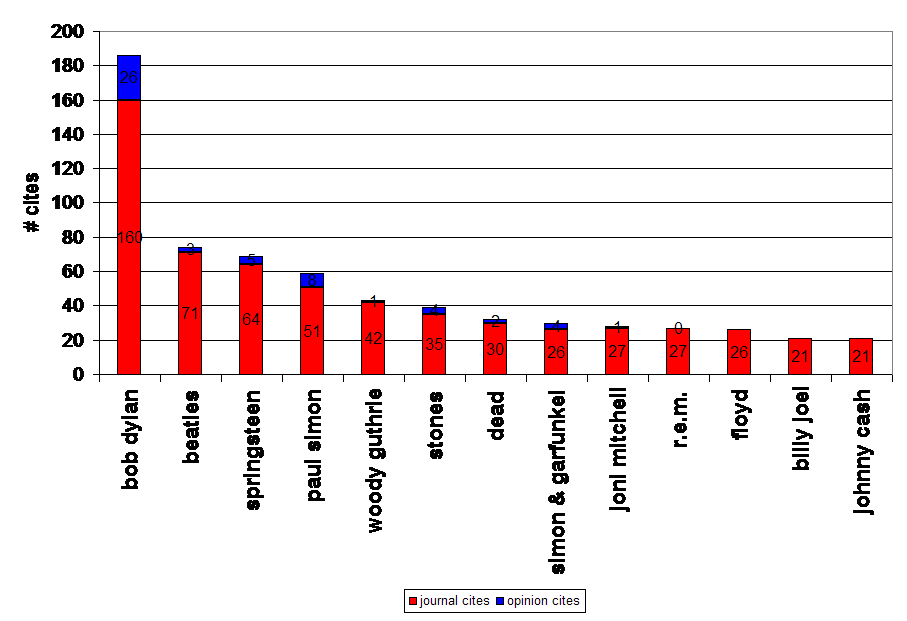
alex long has written a fun working paper on uses and misuses of popular music lyrics in legal writing. as is my custom, i skipped immediately to the data. i worked up a li'l spreadsheet with the most cited artists in both law journals and legal opinions.

the list is a familiar but disappointing catalog of self-consciously respectable boomer-friendly aging or dead white males: dylan, beatles, springsteen, simon, et alia. professor long himself cites the stooges' raw power, but this stuff hasn't made it into legal scholarship. he even drops a li'l lester on us in the footnotes:

[I]t’s harder than hangnails to … even have a little moronic fun these days without
some codifying crypto-academic … swooping down to rape your stance and leave you shivering fish-naked in the cultural welfare line. So I wouldn’t blame you for hating me for this article at all.


i don't hate you, dude. in fact, i've gotta love a lawprof who can go deep on lester bangs. still, this leaves me with two questions:

first, would the sociology list look any edgier? i doubt it. nirvana, rage, james brown, or marvin gaye might pop up -- and i know i've seen gang of four in more than one context -- but i'd wager the soc list would pretty much replicate the lawlist. personally, i tried to cite social distortion in contexts once ("a broken nose, a broken heart, an empty bottle of gin" in a review of laub and sampson), but it was excised before it hit the newstands. so it goes.

second, i've always wanted to drop the pistols' pretty vacant into a title but never quite found the proper setting. which great song titles are just sitting there, crying out for a hunk-a hunk-a burnin' sociological research?

Wednesday, September 13, 2006

www.employexoffenders.org

minnversity political science student sarah walker and artist/advocate mark hayden have started the employ ex-offenders project. their goals are the following:

to make visible the often invisible discriminatory practices of denying employment to individuals with criminal records, to reduce the class and race based stigma of criminality and to challenge the popular media discourse that demonizes individuals with criminal records and individuals making the transition from prison to civil society.

if you would like to support their work, you can order a $12 t-shirt like this one. former offenders are also invited to submit their own photos for use in the campaign. you can contact sarah or mark at employexoffenders.org for other ways to get involved in this grassroots effort.

criminal victimization, 2005

new national crime victimization survey data show relative stability in violent crime rates, after significant declines over the previous decade. according to criminal victimization 2005, both personal (violent) and property crime rates have been halved between 1993 and 2005.

i quickly scanned the new bjs report for some bad news. well, i found an uptick in firearm violence from 1.4 to 1.9 per 1,000 between 2004 and 2005, but this is still way down from the rate of 5.9 per 1,000 in 1993. the picture for robbery is similar -- a significant increase over the previous year, but at levels far below those of the mid-1990s. similarly, i could discern few scary negative trends when looking at subgroup patterns (e.g., breaking the data down by race, gender, class, urban residence, and region).

robbery and firearm violence could be ugly harbingers, of course, but the overall picture is one of short-term stability and long-term decline in criminal victimization. while such national trends obscure lots of local variation -- i'd wager that victimization is up in many parts of my fair cities -- the high-quality ncvs data are giving us no indication that aggregate crime rates are spiraling out of control.

Wednesday, September 6, 2006

voting requirements

the great legal mind wrote with an update on minnesota voting requirements. like many jurisdictions, my home state publishes a voting FAQ.

sometimes folks are skeptical when i argue that the rules are unclear or needlessly complicated. when i do so, i'm referring to passages such as this one:

Q: Who is eligible to vote?
A: You may vote if you are:

  1. at least 18 years of age [no problem here]
  2. a US citizen [check]
  3. a Minnesota resident for at least 20 days before the election [shouldn't be hard to figure out]
  4. not a convicted felon without your civil rights [hmmm. what if had been convicted but did my time?]
  5. not under guardianship of the person where you have not retained the right to vote [huh? HUH?]
  6. not legally incompetent [well, technically i'm not legally incompetent]

my research draws my attention to criterion #4, since i think such statements give former felons the erroneous impression that they cannot vote even after they are released from (probation, parole, or prison) supervision. but #5 is just bizarre. i get the sense that this rule was first translated into japanese, then into norwegian, then rewritten as english. before you vote in november, be sure to ask yourself whether you are "not under guardianship of the person where you have not retained the right to vote." and remember -- if you misinterpret the rules and vote illegally, you've just committed a felony.

Saturday, September 2, 2006

say a prayer

i'm reprinting a comment that arrived today in response to an older post. i can't begin to feel the writer's frustration, but i've heard his story again and again and again and again. by my count, there are about 11.7 million former felons -- people no longer under any correctional supervision -- in circulation in the united states today. they often have a very tough time finding work:

To Other Convicted Felons,
I am at the end of my rope. I have a non-violent, class D Felony for Burglary that was committed 2 yrs ago. I have a College Degree in Marketing Mgmt. & great work experience. I have endorsements from Probation for successfully meeting the terms & conditions of probation.
I applied to Owens-Corning for a job in Construction Sales & I lied about my Felony. I passed all of their requirements (phone & interview screenings, drug test, online psychological test) and beat out 2 other candidates for consideration. They sent me to Toledo, OH for 1 week of training. I truly believed that they would do the background check first. When they didn't, I thought maybe God heard my prayers. Upon my first day of work, the Boss says a background check revealed my record. I pleaded with him to give me a shot as that was an isolated incident. I told him that the guy he nterviewed & liked was the guy that I am.
All to no avail. I left humiliated & ashamed. I see no worthwhile job opportunities & am contemplating suicide. Please don't say this is crazy, I already know that. I just can't face the future with this amount of Hopelessness. Please say a prayer for me, I just can't deal with this.

does it help or hurt to know that others have walked the same hard road? with nowhere to hide from their records, i know that many beat their heads against the wall for years (and years and years and years), often working their way up from the very bottom and sometimes getting stuck along the way.

i happened to meet yesterday with some folks on the council on crime and justice about a new research project on employment and criminal records. in time, it might provide some policy guidance on employment and criminal records, but this research doesn't offer any help or solace today. at best, it will nail down some social facts on the issue that legislators can consider or ignore.

i've never done hard time, but i know i've done worse than a class-D burglary. i'm not usually a praying man, but i just gave it a try. i'm also inspired to keep working on reentry and reintegration issues, as both a researcher and a private citizen. godspeed on your journey, man.

Thursday, August 31, 2006

ol' doc wheelock

on august 18, darren wheelock successfully defended his diss: Jury of One's 'Peers:' Felon Jury Exclusion, Racial Threat, and Racial Inequality in United States Criminal Courts. that's darren in the afterglow of his defense, flanked by me and co-advisor doug "stephanopoulos" hartmann.

it is a cool project, with a careful legal analysis and event history models of the passage of felon jury exclusions, as well as an elegant county-level analysis of their impact on the expected number of african americans per jury. darren just started his new job as an assistant professor at marquette university, so he'll be spinning the diss into publication gold for the next few years.

in this business, it doesn't get much better than seeing one's advisees pop up on the faculty roster of fine institutions. congrats, darren.

Tuesday, August 29, 2006

sunday section gave us a mention

roger clegg name-checked my research with jeff manza in sunday's pro-disenfranchisement wall street journal editorial. countless writers oppose the practice, but mr. clegg is perhaps the most articulate among the few proponents of felon voting bans. the full piece is subscription-only, but here's the relevant passage:

...So why is there an effort to give criminals the right to vote? Partly there's a sincere if mistaken belief that can be summed up as: "When a person has paid his debt to society, it is unfair and counterproductive to treat him as a second-class citizen." But much of the momentum comes from a feeling that, because a disproportionate number of felons are black, the laws are racist.

Finally, this issue has a partisan tinge. Most politicians' instincts tell them that these potential voters are likely Democrats, and they're probably right. Profs. Christopher Uggen of Northwestern and Jeff Manza of the University of Minnesota have concluded that, had felons been enfranchised, Al Gore would have been elected in 2000, and the Democrats would have controlled the Senate from the mid-1980s down to the present decade.

In any event, the arguments favoring voting rights for felons don't wash. Serving time may pay a debt to society in some sense, but it's not the end of the story: Felons can't possess firearms or serve on juries, and we don't let them hold certain jobs. The "debt to society" argument is something of a red herring, moreover, as leaders of the movement to enfranchise felons believe that they should have the vote while they're still paying the debt. Marc Mauer of the ACLU's Sentencing Project, for example, has acknowledged that "people in prison should have the right to vote."

The racial issue is also a red herring. Certainly the disenfranchisement laws do have a disproportionate impact on some racial groups, because there are always going to be more individuals in some groups that commit crimes than in others. That doesn't make the laws racist -- just as they are not sexist simply because more men than women commit crimes.

Today's laws restricting or prohibiting felons from voting have their roots in ancient Greece and Rome , came to the American colonies from Britain , were adopted without any racist intent, and are not applied discriminatorily.


you can probably guess that i took issue with a few of the statements. i was surprised to learn i'd been traded to northwestern (presumably for professor manza), but i'd heard most of mr. clegg's other arguments before. after some discussion with neema trivedi of the brennan center, i decided to send a brief letter to the editor. it seems kind of pathetic to blog a letter that may never be printed, but i felt that someone should at least take issue with the "adopted without any racist intent" statement. in some states, at least, i think there is good evidence of racist intent. here's the letter:

To the Editor:

Roger Clegg’s editorial (“Franchise Protection,” Aug. 26) asserts that U.S. felony disenfranchisement laws “were adopted without any racist intent.” This is a misleading account of the origins of America’s unusually restrictive felon voting laws.

Mr. Clegg correctly cites the ancient roots of disenfranchisement, but fails to note that many American laws were purposely enacted to dilute the voting strength of newly freed slaves.

In the aftermath of the Civil War, between 1865 and 1900, 19 states adopted or amended felony disenfranchisement laws. Alabama, for instance, added new disqualifying crimes that legislators thought African-Americans were more likely to commit. Along with poll taxes and literacy tests, such laws became mechanisms to “establish white supremacy” and avert the “menace of negro domination.”

This legacy of racial discrimination continues to sap the political strength of African American communities. Nationwide, nearly 40 percent of those disenfranchised due to a felony conviction are African American. In 14 states, more than one in ten African Americans has lost the right to vote.

There are thus good reasons for the emergence of felon disenfranchisement as a national civil rights issue. For felons as for other U.S. citizens, race is no “red herring” when it comes to the right to vote.


UPDATE: the journal published this letter on september 2, ("The Disenfranchised of History ... and Now, p. A9).

Sunday, August 20, 2006

the indefensible position: koren robinson is a rational actor

as i was walkin' in memphis last week, minnesota vikings wide receiver koren robinson was apparently careening up highway 169 to the team's mankato training camp. his speed was estimated as 120 miles per hour and he blew a .09 on the breathalyzer when the law finally caught up with him. the police report suggests that mr. robinson outran the locals in his bmw 7-series. since they knew he just had to be a viking, though, they phoned ahead for friendly officers from three other jurisdictions to greet the fleet receiver upon his arrival in mankato. on this night, he was running fast, drunk, and out of control into at least triple coverage.

mr. robinson's criminal complaint charges him with one count of felony fleeing police, two counts of fourth-degree driving while impaired, and one count each of reckless driving, careless driving, and driving with a suspended license. all this has led to much hand-wringing and speculation about why a tipsy pro football player with a $12.7 million contract on the table would put so much at risk. i don't see any big mystery here that a simple beccarian choice model couldn't explain.

i'm usually quick to wag a finger at the pampered athlete's sense of entitlement, but this one actually makes sense to me as a criminologist. relapse is all too common for those with real substance use issues, so it is pretty easy to understand why he took a drink or three. this is a man with such a serious recent habit that he showed up with booze on his breath to serve a one-day gift sentence last year in seattle.

why did mr. robinson speed through st. peter? he was racing to make an 11 pm curfew implemented by his major dad-like new coach, brad childress. why did mr. robinson run? once he saw those red lights a-flashing, he knew he'd get at least a year's suspension as a repeat violator of the league's substance abuse policy, leaving some large money on the table. he was also at serious risk of becoming owner zygi wilf's sacrificial scapegoat, as the latter waged a public relations battle to obtain a new stadium at taxpayer expense. plus, if he's anything like me, he worried a lot about screwing up in public after all the feel-good stories had been written, letting down those friends who had gone out on a limb for him.

to be sure, mr. robinson is responsible for making all five of his terrible decisions on tuesday night:

1. drink
2. bust curfew
3. drive
4. speed
5. flee

that said, i'll make the indefensible assertion that the punishments are partly responsible for the crimes. mr. robinson's choice set was socially determined by increasingly strict rules and laws governing drinking and driving, as well as his own prior choices and behavior. i'd therefore argue that at least the last four decisions were partially influenced by the severity of the sanctions attached to the preceding bad decision. that is, the severity of a curfew violation likely had something to do with his speed that night; the severity of being sanctioned for drunk driving likely had something to do with his decision to flee.

more indefensibly (less defensibly?), i might even argue that a zero tolerance, get-tough set of rules increased the threat to public safety on tuesday (recognizing, of course, that such rules might also have successfully deterred dozens of other wild-eyed vikings from taking to the road that night). to take a far more serious example, there is some evidence that twenty-five year mandatories for drug crimes may have had something to do with the death of innocent witnesses in several cases in recent years. perhaps surprisingly, big-time dealers can be quite risk-averse.

drunk driving is pretty serious too, of course. nevertheless, as "recovering drunk" uberwriter patrick reusse suggests, mr. robinson's "official .09 blood alcohol reading made him easily the least drunk among the dozens of vikings arrested on similar charges." any longstanding vikes fan would concede mr. reusse's point that a .09 would have qualified mr. robinson for designated driver status back in the franchise's tommy kramer/keith millard dui era. and those dudes rarely got tickets, much less felony charges.

yes, mr. robinson screwed up in a major way by putting other citizens and officers at risk on tuesday. before we ramp up any other formal and informal sanctions, however, we'd do well to remember that harsh punishments can sometimes make things worse. put another way, would you consider fleeing the police if you knew that a citation would effectively end your career?

Wednesday, August 16, 2006

hard time, no money

when i wrote recently about the michael evans case, the jury was still out. he was wrongly convicted of the kidnapping, murder, and rape of a 9-year-old girl in 1976 and spent 27 years in prison before being exonerated by DNA evidence. evans was seeking $57 million dollars, based on claims that the chicago police falsified evidence, coached witnesses, and otherwise worked to deny him justice.

after deliberating for slightly more than one day, the jury rejected all of his claims and evans will not receive a dime in his civil lawsuit.

as the chicago sun-times reports, jurors believed there was a miscarriage of justice, but felt their instructions were too rigid to allow a finding for the plaintiff. as one juror explained:

A juror who voted against awarding money to a man who spent 27 years in prison before DNA freed him said Wednesday he believes police officers bungled the case so badly that criminal charges should be brought against some of them.

"I know one thing: Justice was not done. The verdict went that way because the jurors' hands were tied. Our hands were tied," said juror Olaseinde Sapara. "The jury instructions were too rigid; we could not find for the plaintiffs. We knew absolutely, definitely that there was a lot of police misconduct; the handling of the case was bungled by the police. Personally, I believe a lot of coercion went on. I think a lot was falsified."

illinois has paid evans approximately $160,000, the maximum state law will allow. as chris pointed out in the comment on the last post, the variation between what compensation states will allow the wrongly convicted is staggering. the city had offered evans $2.7 million to settle, but he and his team turned it down. evans explained his feelings on the jury's decision: "it was like life and death they were holding in their hands at that moment...instead of giving life, it's like they gave death, to an innocent man...there really is no amount that could justify what happened and give me all my years back."

evans and his lawyers are planning to appeal. the outcome of the appeal will undoubtedly have implications for similar cases; four other suits have been filed by pardoned death row inmates and are pending in the chicago courts.

27 years in prison. evans spent the end of his teens, all of his twenties, all of his thirties, and into his forties in prison for a crime he did not commit. now he is expected to pick up his life and move on with only $160,000 to make up for lost time. that may be the toughest sentence of all.

**image: Poetic Justice by Peter Ehrlich

Monday, August 14, 2006

simple, huh? memphis 8/15

i'm loving old montreal and the sociology meetings, but nearing saturation. on my way home (sort of), i'll be giving a talk in memphis at a felon voting panel hosted by the american civil liberties union. barring travel delays, i'll be at the cecil humphreys school of law, university of memphis, 3715 central avenue (Rooms 248, 250 and 252) at 6:30.

tennessee has had one of the twistiest felon voting laws for former felons, with one's rights dependent on the date of conviction, the type of conviction, the financial obligations owed to the state or victims, and other criteria. fortunately, attorney erika wood of the brennan center for justice and several local experts will handle the tough legal questions. my job will be to give the big picture overview.

the flyer notes that tennessee has dramatically simplified its procedures:

Public Chapter 860, a new law, simplifies the process for restoring voting rights to persons with past felony convictions who have completed their sentences. What was the country’s most confusing system, with six different procedures for restoration, has been streamlined into a single restoration process.

it still seems pretty complicated relative to other states, though. in minnesota, a former felon simply has to show up at the polls with some identification. here's another flyer that breaks down the new simplified procedure:

A NEW TENNESSEE LAW MAKES IT EASIER TO GET YOUR RIGHT TO VOTE BACK
Just follow these easy steps:
1) Complete your sentence, including probation and parole
2) Pay court-ordered restitution, if any
3) Be current on all court-ordered child support obligations
4) Complete a Voter Registration form and submit it to the local Election Commission office
5) Obtain a Certificate of Restoration form from the local County Election office and have it completed by:
• An agent of the pardoning authority (probation or parole officer), or
• An agent or officer of the supervising or incarcerating authority (prison or jail), or
• An agent of the circuit/criminal court (clerk).
6) Submit the completed Certificate of Restoration to the local Election Commission office. If your application is approved, you will receive a Voters Registration card. If it is denied, you will receive a letter explaining why and explaining the steps you need to take to restore your right to vote. (Contact your local Election Commission Office if you have not received your registration card or a letter within a week.)
NOTE: The Voters Registration and the Certificate of Restoration forms can be found at your local Election Commission Office or at the Tennessee Election Commission website (www.state.tn.us/sos/election).

Your right to vote can be restored when:
• Your sentence is complete, including probation and parole, or when you are no longer under the authority of the penal institution
• You have paid any applicable court-ordered restitution
• You are current on applicable child support payments
Most persons with felony convictions can have their right to vote restored. In some cases, convictions for certain crimes will prevent you from having your right to vote restored. These include:
• First-degree murder, aggravated rape, treason, and voter fraud (If convicted between July 1, 1986 and June 30, 1996)
• Murder, rape, treason, and voter fraud (If convicted between July 1, 1996, and June 30, 2006)
• Murder, rape, treason, voter fraud, any violent sexual offense designated as a felony where the victim of the offense was a minor, and offenses against the administration of government (official misconduct) by elected or appointed officials (If convicted on or after July 1, 2006)


this procedure surely makes it easier for tennessee ex-felons to regain the vote. that said, i'm guessing that many will be deterred by the financial hurdles and administrative requirements. in most states, one's rights are automatically restored after completion of sentence.

Wednesday, August 9, 2006

the costs of incarcerating those who needn't be incarcerated

criminologists often write about the costs of incarceration --generating crude estimates by multiplying the number of inmates by the per diem paid by the taxpayers. larger costs, of course, are borne by the inmates who don't really need to be there.

though i've written about the relative safety of prisons and jails, they clearly remain dangerous places to spend the night -- especially for younger arrestees and those brought in on minor charges.

carl edward moyle was booked into the sherburne county jail yesterday and was beaten to death within twelve hours. his crime was a simple traffic offense: driving without proof of insurance, which is a gross misdemeanor in minnesota for repeat offenders. his assailant was a state prison inmate awaiting trial for assaulting yet another inmate in a st. cloud penitentiary.

sherburne county sheriff bruce anderson, jail administrators, and minnesota corrections officials will surely be asked why they failed to segregate an inmate with a history of assaulting other inmates. but my question is more basic: do we really need to be locking up folks because they don't have insurance? given state variation in insurance requirements, can you think of a better example of a mala prohibita offense?

doing prison interviews, i've asked inmates "how many of these guys need to be here?" most respond with an estimate between 25 and 75 percent of their fellow residents, easily pointing out examples in each category. i suspect that the incarcerated could have distinguished between mr. moyle and his assailant. i know that few would identify traffic violators as deserving of incarceration, much less a fatal beating.

Tuesday, August 8, 2006

pubcrim paper

shameless plug: michelle and i are speaking on public criminologies this sunday morning at the sociology meetings in montreal.

here's the paper (comments welcome!) and here's the session info:

Regular Session. Public Sociology
Scheduled Time: Sun, Aug 13 - 10:30am - 12:10pm Building: Palais des congrès de Montréal

Session Organizer: Eric Klinenberg (New York University)


Presider: Kieran Healy (University of Arizona)


Accessibility through Accountability: Moving Beyond the Traditional Literature Review in Public Sociology
Laurel E. Westbrook (Univ of California-Berkeley), Damon W. Mayrl (University of California-Berkeley)

Challenging Institutional Barriers to Community-Based Research
Randy Stoecker (University of Wisconsin)

Public Criminologies
Christopher Uggen (University of Minnesota), Michelle Inderbitzin (Oregon State University)

Publicly Financed Sports Stadiums, the Media, and Public Policy
Kevin J. Delaney (Temple University), Rick Eckstein (Villanova University)

Saturday, August 5, 2006

solzhenitsyn didn't see this coming

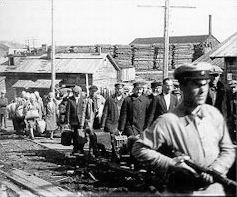
i'm sure that plenty of americans would holiday on alcatraz, but something tells me this gulag won't be a huge money maker. according to the independent,

Igor Shpektor, the Mayor of Vorkuta, 100 miles above the Arctic Circle and 1,200 miles north-east of Moscow, says he is looking for an investor to turn an abandoned prison complex into a "reality" holiday camp for novelty-seeking tourists keen to understand what life was like for Soviet political prisoners at first hand.

His idea, which has upset survivors of the prison camp, envisages recreating a tiny part of the Gulag complete with watchtowers, guards armed with paintball guns, snarling dogs, rolls of barbed wire, spartan living conditions - and forced labour.


yeesh. they probably aren't taking volunteers at guantanamo, but "extreme tourists" who want a prison experience might be better served volunteering or mentoring at actual prisons and juvenile training schools.

Friday, August 4, 2006

time and money

how much do you think one day of your life is worth? no, really. if you had to give up one day, what would be your price? i'll admit to occasionally having days that i would pay to have someone take for me, but in general, it's hard to put a price on one's life. some have tried to quantify it, but that doesn't speak to issues of quality and what you may miss in a day that you gave up or lost.
now, what if you were wrongly convicted of a crime and spent years of your life behind bars? not only would you have missed all kinds of potentially lovely experiences, you would have been instead subjected to truly miserable ones. how much would a year of your life be worth to you then?

it's difficult for the wrongly convicted--and imprisoned--to get compensation for the years that they have lost. a recent story suggests that in many states the wrongly convicted must prove "actual" innocence and/or police/criminal justice misconduct to get compensation. for those who do prove their innocence, california allows $100 per day in compensation. do you think your life and your freedom is worth more than that?

michael evans thinks his is. the chicago sun-times reports that evans, who wrongfully spent 27 years in an illinois prison before being freed by dna evidence, is seeking up to $58 million dollars in damages. he is asking for $2 million per year he was in prison plus $1 million punitive damages from each of the four police officers who conspired against him. if the nine person jury finds for evans, the four officers will be personally responsible for the punitive damages and the city will pay the $54 million in compensation. the jury is currently in deliberations.

so how much is a day or year in your life really worth to you? do you have opportunities that may never come again? if so, are you taking full advantage of them? there may never be a better time.

Thursday, August 3, 2006

freedom and stability assumptions

as i reluctantly trundled a decade of sociology journals to the free shelf, my mind raced and ricocheted to all manner of worst-case scenarios. what if everybody dumped their paper journals but electronic access was sharply restricted? just because we have cheap or free electronic access today doesn't mean that we'll always have it, does it?

i quickly spun an(other) orwellian movie treatment in which all sociological knowledge was lost, save for the brave efforts of a rag-tag crew of grad students uploading pirate scans of ajs and asr, just one step ahead of the information police. in a cave. with a generator. more seriously, we all act as if services such as jstor or google will be around throughout our careers, and that we will be able to access such information -- as well as the great libraries of books being scanned -- for free or for cheap. maybe this is the case, maybe not.

i started a blog last year, in part, because i sensed that freedom this good is too good to last. i don't keep pace with efforts to regulate blogs or net content, but reports like this sometimes give me pause. unfortunately, i don't know what netcasting is either, just that my president is calling to regulate it.

in the end, i made the same stability assumptions as everyone else and gave away my old journals. that said, i suspect there's a non-zero probability that what's free is gonna cost, and it probably won't be long before the doors start closing.

Tuesday, August 1, 2006

mistakes of our youth

the tacoma news tribune recently ran a couple of interesting stories essentially showing a before-and-after look at life in gangs. the before story features four young teenage boys discussing the allure and glamour of gangs. all of them have friends and family members who are in gangs; two of them are hoping to join soon, the other two are doing their best to avoid the gang life.

the boys anxious to join gangs anticipate proving their worth: "They talk ecstatically about getting jumped-in, a gang initiation ritual that involves beating the newcomer for several minutes. They contemplate the crimes they’ll commit to gain status. Attack someone? Knock over a store?"

the boys hoping to avoid gangs offer a different perspective: “'I’m going to go to school and do what I have to do,' is the message they send to friends who’ll listen. Both said they are upfront about telling friends they think gangs are a waste of time."

this literally hits close to home for me because i have a 14-year-old nephew growing up in this neighborhood and starting a new school next month. he's fortunate to have two loving parents (and a criminologist aunt), but peer pressure is absolutely crushing at that age, so i think there's reason for concern.

the second story, published the next day, details the life of Diamond Laurice Boyd, co-founder of the hilltop crips. it's an interesting and thoughtful account of a life that went wrong. boyd, 33-years-old, is currently serving nearly 30 years at mcneil island corrections center; his story is one of regret. "To today’s young gangsters, he sends a message: Get out of the life. There is no glory in it – only a road where freedom ends...his legacy is a lesson: It’s not that hard to fall. One step, then another and another – soon, all the chances are gone."

boyd has seen his friends and family members killed; his brother, who co-founded the gang with him, is serving 24 years in a california prison. boyd blames himself for his choices--he had love and opportunities throughout his childhood--and he claims that he was the black sheep of his family. there is no happy ending to his story. at earliest, he'll be nearly 50 when he gets out of prison. his five children are growing up in his old neighborhood; they see their father maybe twice a month. boyd worries about his sons, knowing the kind of pressure they'll face, the decisions they'll soon have to make. "He has a nightmare, a vision of torment: his sons, locked up with him. He will not permit it. He will block it with his own life. He will tell them how things happen. 'My boys, they really listen to me,' he says. 'They really listen to me.'”

his sons may listen to him now, but they will soon be teenagers facing peer pressure and tempted by the glamour of gangs. will his story and his regret be enough to deter them from following in his footsteps and his legacy? will his sons be strong enough to break the cycle? what, if anything, can the community do to help?