Tuesday, November 29, 2005

lafave sentence

cnn.com reports that debra beasley lafave, a 25-year-old florida teacher, pleaded guilty to two counts of lewd and lascivious behavior for having sex with a 14-year-old student. she was sentenced to three years of house arrest, seven years probation, and she must register as a sex offender. conditions of her supervision also ban her from profiting financially from her crime.

ms. beasley lafave's photo is already posted on the florida department of law enforcement's sexual predator website. i've gotten somewhat familiar with these sites, since kim gardner began collecting data on the contents of state sex offender registries for her independent thesis project. here is the information that florida provides on debbie lafave:
Sex Offender

Debra Jean Beasley
Alias:
Debra J Beasley, Debbie Lafave, Debra Lafave, Debra Beasley Lafave

Status: Community Control
Department of Corrections #: T47535 Date of Birth: 08-28-1980
Race: White Sex: Female Height: 5' 07"
Hair: Blond Eyes: Blue Weight: 135 lbs.
Scars, Marks, Tattoos: Tattoo Other:Butterfly On Hip; Tattoo Back:Butterfly; Tattoo Back:Chinese Character;
Last Reported Address: 406 12th St Sw, Ruskin, FL 33570-4182
County: Hillsborough Date Address Entered: 11-24-2005
Qualifying Offense(s): Lewd Or Lascivious Battery Victim 12-15 Years Old (Principal)
Victim(s): Gender: Male ; Minor? Yes Gender: Unknown ; Minor? Yes

aside from her gender and the enormous amount of publicity generated by the case, the entry for ms. lafave/beasley is not dissimilar to others on the site. her age, race, and offense are fairly typical, as are her tattoos. some observers have commented on her physical attractiveness, but even this characteristic is probably not that unusual in the databases (though nobody but sinatra actually looks good in a mug shot). nor is her crime all that unusual. for example, i searched under "beasley" and quickly found a similar case. bobby beasley is also 25 and also convicted of lewd and lascivious conduct with a child under 16.
Sex Offender Bobby Beasley

Alias: Bobby Ray Beasley, Red Beasley
Status: State Incarceration
Department of Corrections #: H08933 Date of Birth: 05-22-1980
Race: White Sex: Male Height: 6' 02"
Hair: Red Eyes: Brown Weight: 178 lbs.
Scars, Marks, Tattoos: Tattoo Right Chest Broken Heart Tattoo Right Chest Broken Heart Tattoo Tat
Last Reported Address: Dept. of Corrections, FL
County: Date Address Entered: 12-05-2001
Qualifying Offense(s): Lewd,Lascivious Child U/16 (Principal)
Victim(s): Gender: Unknown ; Minor? Yes
If further information is needed, please contact the Florida Department of Law Enforcement's Sexual Offender/Predator Unit at (1-888-357-7332) between the hours of 8am and 6.30pm, Monday through Friday

i next searched under "debra" and easily found similar florida cases involving females (e.g., debra favre, who also got some publicity). i think the worldwide attention to lafave's situation is likely due to a combo platter of newsworthiness:
  • she's a teacher entrusted with middle school kids, which touches upon parents' fears;
  • the case is set against a backdrop of moral panic over (mostly) male sex offenders, particularly those who victimize children;
  • at 14, the victim in this case was "only" two years from the median age at first intercourse for males;
  • she has posed for calendars, which simultaneously validates her physical attractiveness and sexual desirability to males and makes for great television;
  • and, in a society in which males are viewed as either sexual predators or protectors, we're simply flummoxed by the idea of an adolescent male receiving "unwanted" sexual attention from an attractive young woman.
my point here is that debbie lafave's crimes are far more typical on sex offender registries than the coverage of her story would suggest. the cultural image of the sex offender is a person such as joseph duncan, accused of murder, kidnapping, and rape. yet we apply the same generalized label -- designation as a sex offender -- to duncan, lafave, and thousands of other lafaves.

lafave's sentence will seem light to many, since she isn't doing any jail or prison time beyond house arrest (i mean, even martha went to prison for a few months). for me, it highlights the difficulties in applying gradational punishments for criminal sexual conduct when a categorical "sex offender" stigma is applied to such diverse behaviors.

Wednesday, November 23, 2005

can you drink your way to a safer neighborhood?

the west coast blog muse alerts me to a seattle times story on crime and community. residents of the seattle south park neighborhood were upset about the putatively seedy county line bar and the drug sales and prostitution that surrounded it. rather than mobilize against the bar, however, they actually started drinking there. interesting idea, right? criminologists generally believe that even infrequent and informal neighboring can help reduce crime. in this case, residents are doing their neighboring on-site during community happy hours every monday.

if we are to believe the story, such meetings have coincided with crime reductions in the area. an earlier post-intelligencer story was more pessimistic, but featured this quote from organizer joel clement:

"It was time to show the proprietors that there's an upside to that trend," he said. "My theory is, crime tends to migrate toward sociocultural vacuums. So let's fill the vacuum. And drinking a beer is not a lot of work on anybody's part."

i like the idea of at least attempting reintegrative rather stigmatizing sanctions -- whether for individuals, bars, or other community institutions. my guess is that some of the worst stereotypes have likely been dispelled by the practice. nothing comes for free, of course, as "sociocultural vacuums" are in the eye of the beholder. most worrisome, seattle may have lost a great dive bar in the process. i'm guessing that the county line will have to bring in a golden tee golf machine, ferns, and heirloom balsamic goat cheese salads to keep the upscale residents coming back.

[photos by karen ducey in seattle post-intelligencer story]

Tuesday, November 22, 2005

upcoming conferences

sarah walker, a grad student in the minnesota political science department, sent word of two interesting conferences:

both gather a strong group of scholars, activists, and other experts, reflecting a burgeoning research interest in criminal punishment.

Sunday, November 20, 2005

2005 criminology meetings

i'm just back from the 2005 american society of criminology annual meetings in toronto. we had a fine conference at the royal york (though it was expensive for the student members) and near-record attendance. i love the meetings and the society has been a great home for me since my early grad school days. both meeting and society are less formal and more interdisciplinary than american sociological association gatherings: almost anyone who wants to get onto a session can get onto a session and they usually have some interesting things to say.

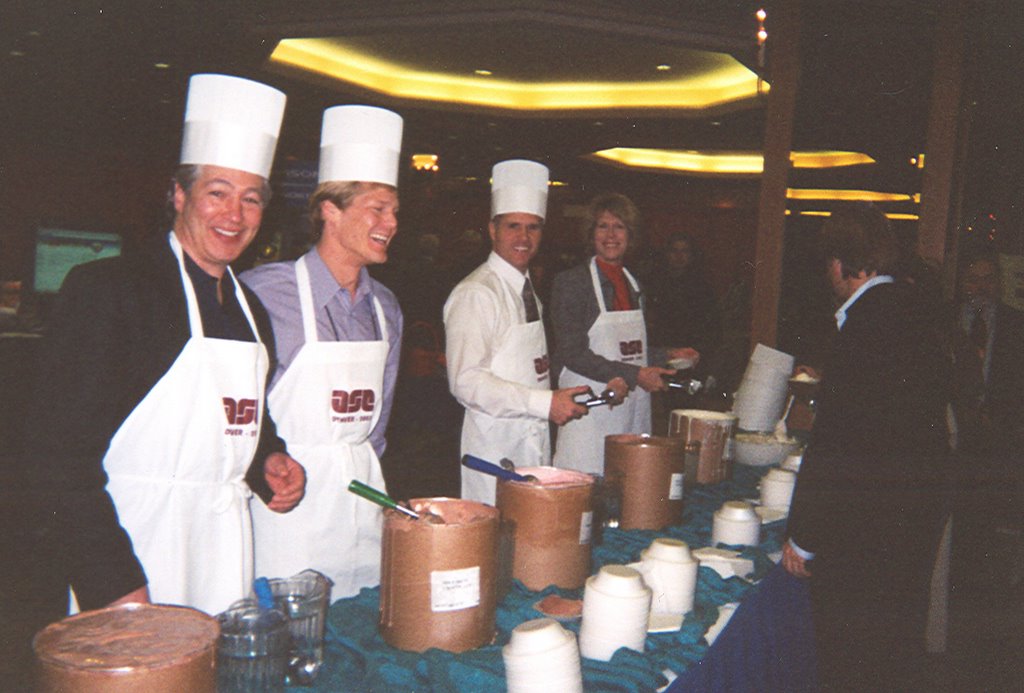
i'm currently the executive secretary of the organization, which means that i type board meeting minutes, scoop a lot of ice cream, and sign off on awards. plus, i really rake in the loot on secretary's day. next year's meetings will be held in los angeles, and the theme under new president gary lafree will be "democracy, crime, and justice." i'll be organizing sessions on crime and politics, chairing an article award committee, and working on a long-term planning committee for the society. i'm hoping to reach out to non-asc members interested in voting, politics, and crime who might not otherwise attend the meetings. i'll post more on this in spring, but if you would like to present a paper on this or another crime topic next november, you only need to submit an abstract by march to get on the program.

Tuesday, November 15, 2005

civic reintegration through tough guys for tots

i had a great meeting with michael bischoff of the council on crime and justice recently, where we discussed the sort of civic engagement work that could be done behind prison walls. minnesota has a number of inmate-based restorative justice groups. michael wrote to me today with word that the men of faribault prison are holding their second annual "tough guys for tots" walk this Saturday. All money raised will go to the local rice county toys for tots program. Last year the inmates (who earn very little wages) pledged quite a bit themselves.

if you normally give to such toy programs around the holidays, you might consider making a donation and sponsoring a walker this year. in addition to helping out the kids, you can help nurture a prisoner's pro-social impulses and actions. if interested, you can send a check marked "tough guys for tots" to:

MCF-Faribault
Attn: Jay Welborn
1101 Linden
Faribault, MN 55021-6400

Monday, November 14, 2005

u.s. supreme court refuses to hear johnson v. bush

from yahoo news:

WASHINGTON - The Supreme Court refused Monday to review Florida's lifetime ban on voting rights for convicted felons, a case that would have had national implications for millions of would-be voters.


i worked for several years, took a lengthy deposition, and wrote an expert report on this case (johnson v. bush), so the news is disappointing.

Sunday, November 13, 2005

heartfelt pleas for quality / too intense for class?

who says the war on drugs hasn't been effective? the daily mirror reports another celebrity chagrined at the quality of cocaine these days. current crooner and former sexy person rod stewart reports:

I don't know why anyone would want to take coke now ... It was different in my day, because it was all so much purer. Now these dealers mix it with salt, washing powders, anything they can get their hands on. Kids just don't know what they're taking.

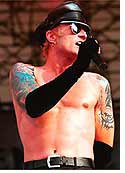
this reminded me of other recent complaints by noted cocaine experts, such as current velvet revolver vocalist scott weiland. in an esquire interview this april, weiland described the good old days:

it was not that nasty, gasoline-tasting, cat-piss-smelling sh*t that they have nowadays. It was f*ckin' shale, you know? It was mother-of-pearl stuff that they used to have in the old days. It was so hard, you had to slice it real thin with a razor blade, like little slices of garlic. They don’t even make that sh*t anymore.

weiland's imagery is evocative, isn't it? i can see (mother of pearl), smell (cat-piss), feel (hard, like garlic slices), and taste (gasoline) the differences he's describing. weiland's imagery is richer than rod stewart's, i think, because stewart was only a "casual" user.

weiland was anything but casual about cocaine and heroin. his first-person account of his love affair with these drugs is riveting. i was planning to require it for my deviance class this week, but chickened out. although it is an honest, candid warts-n'-all portrayal, in my view it simply makes cocaine sound too attractive. based on my student surveys over the years, i know that coke remains a deviant taste among my undergrad students (in contrast, lifetime marijuana use is roughly 75 percent). would weiland's words have led anyone to try cocaine or heroin for the first time? would a professor's apparent endorsement make a difference? here are a few excerpts from weiland's piece, highlighting the exotic attractions, the rituals, and the subjective experience:

MY FIRST EXPERIENCES WITH COCAINE were just completely...it was, like, sexual. It was unbelievable. I didn't think that there could be anything that good...

The guy cut us out a couple lines each, like, six inches long and about an eighth of an inch wide. I had two of them. And that was all we needed. We were high for five hours. And there was no grinding teeth. There was no big comedown. I think the devil gives you the first time for free...

He tied me off and shot me up. And then he said, "Now you got your wings." I remember just lying back on his mattress ... Complete warmth went all the way through my body. I was consumed. It's like what they talk about in Buddhism, that feeling of reaching enlightenment. Like in Siddhartha ... there's this feeling in Buddhism where they say there's a golden glow that goes from your fingers all the way through every appendage and into the pit of your stomach. And that's what it felt like to me, slamming dope for the first time. Like I'd reached enlightenment...

I was home. All my life, I had never felt right in my own skin. I always felt that wherever I went...I don't know, I always felt very uncomfortable. Like I didn't belong. Like I could never belong. Like every room I walked into was an unwelcome room. After doing dope for the first time, I knew that no matter what happened, from that day forward, I could be okay in every situation. Heroin made me feel safe. It was like the womb. I felt completely sure of myself. It took away all the fears. It did that socially; it distanced me from other people, made me feel less vulnerable...

Once I started shooting, I realized I'd made a career decision...
WHEN I STARTED DOING HEROIN, I felt almost immediately like I had become part of something bigger than myself, that I'd entered into a new social realm...

I never wanted to quit. Never. I saw narcotics as something I needed in order to function. I believed at the time that I was born with a chemical deficiency. Which I was. I was totally correct. But at the time, I believed I was born with this particular chemical deficiency that only opiates could fulfill. My basic thought was: How the hell can all you people want to keep me away from the one particular medicine that could keep me from blowing my head off?

again, weiland does not endorse use of these drugs -- he just tells us honestly about how he experienced their seductions. drug educators face a real paradox in describing such psychoactive effects to non-users. any realistic presentation must note that cocaine and heroin are experienced as pleasurable by users (recognizing, as howard becker, that such definitions are social constructions). yet, such descriptions have at least some potential to encourage use. and, of course, such use can bring harm to users.

of course, cocaine and heroin have long histories as licit as well as illicit drugs. freud himself endorsed parke-davis cocaine, which it alleged could “supply the place of food, make the coward brave, the silent eloquent and ... render the sufferer insensitive to pain.”

i would have used weiland to lecture on stigma and the arc of his career as a singer and as a drug user. yet his descriptions were too rich for the task -- i would have needed a few more first-person accounts describing the banality of the experience ("did coke in the club, got really anxious, couldn't sleep, didn't want to do it anymore") for balance. in any case, the students will get plenty of sociological analysis of drugs in america: craig reinarman and reefer madness on moral panics and a little becker on learning to use marijuana. still, i'd like to find a way to responsibly add some sort of first-person account to cover the individual-level processes described by weiland.

Friday, November 11, 2005

bumped! not that anyone would fly in for it or anything...

i noted a couple weeks ago that shelly schaefer and i were speaking on voting and the civic reintegration of former prisoners on november 29th. alas, we've been bumped for another fine talk by a visiting job candidate. postponement offers a bit of relief for shelly (currently serving a tough four-month sentence as my sociology of deviance teaching assistant), but we're still readying the paper for asa submission by january 18th. despite this bumping, elaine hernandez, an nimh-nrsa predoctoral fellow, will present some of our coauthored work that week.

Wednesday, November 30 12:30 - 2:00 pm in 915 Social Sciences Building
Elaine Hernandez and Christopher Uggen, "Sources of Variation in State Mental Health Parity Laws."

i won't give away the punchline, but mandating mental health coverage appears to be a partisan political issue.

Wednesday, November 9, 2005

new alec ewald paper on felon voting

from the sentencing project:

alec ewald, a political scientist at union college, has written some excellent law review articles on felon disenfranchisement. he just completed a new sentencing project report on how such laws are administered. in a mail and phone survey he finds much confusion and error in interpreting and administering these ballot restrictions. in a 'crazy-quilt' of tiny pieces: state and local administration of american criminal disenfranchisement laws, he reports that 37 percent of local elections officials interviewed misunderstand state eligibility law. moreover, in at least five states a misdemeanor conviction also results in the loss of voting rights (hmmm. maybe i should stop calling it "felon" disenfranchisement).

Monday, November 7, 2005

run, jimmy run...

the ny times reports that jim deupree, a florida prison inmate, was assigned a number for last weekend's nyc marathon. mr. deupree would run "not through New York's five boroughs with 37,000 other entrants, but in the razor-wire isolation of the prison yard of the Jackson Correctional Institute. He would circle a dirt track, one that measures about two and a quarter laps to the mile, until he completed the marathon in about 60 laps. He said he had trained 50 miles a week and hoped to complete the race in four hours."

although florida prison officials were distrustful, i'm heartened by the story. i especially liked reading that new balance tried to send 80 pairs of running shoes to jackson prison. count me in for a half-dozen pairs if it will help prisoners get what i get out of running. in fact, i'll mail off my size 10 nikes right now if inmates can put them to use. on the basis of countless pre-race conversations but no hard data, i'm convinced that many runners are in recovery from something. running seems to scratch some kind of itch for them that they'd heretofore only reached through self-destruction.

at 14, i only ran when chased (which was not infrequent). still, i remember being completely transfixed by the jericho mile, a made-for-tv movie about a running prisoner. the setting was a dusty folsom prison and the recurring theme song was the stones' sympathy for the devil. the bassline is perfect for running -- gathering steam and confidence at an intense pace that is almost out of control. the jagged guitar solo at song's end somehow conveys the funky-good pain one feels at race's end. the protagonist, a murderer named "rain" murphy, was played by peter strauss, who looked and ran like a gnarly thirtysomething miler. well, at least he looked a lot faster than the skinny-legged boys playing runners in most movies. the critics also praise the jericho mile for its use of inmates in many scenes and for dealing squarely with the racial tensions at folsom, despite this gem of dialogue:

"Without me coaching you, without Captain Midnight filling your hoochy soul with funky inspiration, how are you going to be champion?" ~Stiles to Murphy

looking at the movie's stills, i'm starting to think it had a bigger influence on me than i had realized (studying prisons, running, bad 70s hair) . for some of us, running offers both the joy of wild freedom and the satisfaction of self-control. i can't help but think that at least some inmates might be wired in a similar way. run on, jim deupree.

Saturday, November 5, 2005

self-experimentation on the incapacitative effect of dethumbing

las vegas mayor oscar goodman proposed "thumbing" graffiti taggers in a tv interview rebroadcast yesterday. i'm familiar with all manner of corporal punishment, but "thumbing" is new to me. more precisely, he's talking about de-thumbing -- cutting off a miscreant's thumb.

"I'm saying maybe you put them on TV and cut off a thumb ... That may be the right thing to do." Goodman also suggested whippings and canings for wayward youth. "I also believe in a little bit of corporal punishment going back to the days of yore, where examples have to be shown ... I'm dead serious," said Goodman. "Some of these punks don't learn. You have got to teach them a lesson." "They would get a trial first," he [very responsibly] added.

ah, the days of yore! contemporary advocates of corporal punishment, such as death penalty proponents, generally justify them on the following grounds: (1) retribution (imposing suffering to get even with the criminal); (2) deterrence (such that the costs of crime are perceived to outweigh the benefits); and, (3) incapacitation (physically preventing the offense from recurring). inspired by seth roberts' research on self-experimentation, i got curious about #3, the incapacitative effects of de-thumbing. well, not that curious -- i wasn't going to cut off my own thumbs or collect serious data as professor roberts would. instead, before coming to the office today, i stopped in the garage and played with spray paint.

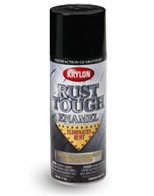
how much tagging could a tagger tag if a tagger had no thumbs? i worked in kitchens and with tradespersons such as sheet-metal workers who had lost digits, so i knew that one could retain some degree of dexterity. true, without thumbs it was initially difficult to spray the full-size krylon cans favored by taggers. but i did just fine with the l'il 6-ounce can. more impressively, i needed no thumbs at all for the tiny automotive touch-up sprayer. i soon learned to spray without using my index finger or other digits that might also attract sanctions. emboldened, i went back to the big cans and soon perfected a two-hands/no thumbs approach (ha! do your worst, goodman -- i don't even need fingers to tag!). given my impressive tagging skills sans thumbs and my well-documented coordination deficits and my regular guy-sized hands, i can only conclude that dethumbing would have little incapacitative effect among serious graffiti artists. so, mayor goodman must justify de-thumbing as either a general deterrent or as vegas-style retributive infotainment (the mind reels with possibilities).

seth roberts doesn't say much about the side-effects of his self-experiments, but i observed a big one: i began to contemplate criminal activity. it could have been the fumes or my newfound dexterity with spray cans, but i felt a distinct urge to throw down some graffiti in my hometown of shoreview. it would certainly be clever, i thought for a brief moment, to change the "h" on each "Shoreview, Population 26,991" sign to an "n." a bit of green paint, or even removable green tape, would do the trick and only the most discerning drivers would notice. of course, i quickly got some air and came to my senses. what would my kids think if i were arrested for graffiti? my colleagues? oh my, can you imagine what my sociology of deviance students would say? or how much fun certain graduate students would have at my expense? who could i call to bail me out?

nope! i would not take the risk, even if i estimated the probability of being caught at less than .001. plus, "snoreview" didn't really seem so clever outside the garage. maybe i'll suggest it as a name for the lad's next band. i doubt shoreview's fine mayor would want to cut off my thumbs on channel 14 cable access (would you, sandy?). no worries, though. i'm easily deterred by the existing informal sanctions and the moral costs of making a mess for someone else to clean up.

Thursday, November 3, 2005

2004 correctional supervision numbers

the department of justice released its national prison and probation and parole numbers for 2004 yesterday. together, the nation's total correctional population was 6,996,500 in december 2004: 4,151,125 were on probation, 1,421,911 were in prison, 765,355 were on parole, and 713,990 were in jail. this represents about 3.2 percent of the u.s. adult population, up from about 1.2 percent of the u.s. adult population in 1980. of course, the rate for males, young adults, and african americans is far higher than these national averages. although 7 million is a staggering number, it bears mentioning that, for the first time in a long time, the rate of correctional supervision actually declined slightly (from 3.186 percent to 3.175 percent) between 2003 and 2004. after close to three decades of growth, have we finally reached a "punishment plateau?"

Monday, October 31, 2005

iowa court upholds mass restoration of felon voting rights

from the des moines register and talkleft.com: a district court in muscatine has upheld iowa governor tom vilsack's executive order restoring voting rights to all former felons in that state. as i wrote in august, the order raises some interesting legal questions. shelly schaefer and i are presenting a paper framed around some of them in a department workshop november 29:
Chris Uggen and Shelly Schaefer “Voting and the Civic Reintegration of Former Prisoners”

When Iowa governor Tom Vilsack restored voting rights to all former felons in that state this July Fourth, he noted that “research shows that ex-offenders who vote are less likely to re-offend.” The National Review countered that “the problem with Vilsack’s claim is that there is absolutely no research to support it. Not one longitudinal study exists showing the effects of the restoration of voting rights on crime rates or recidivism.” We undertook such a study this summer, by matching criminal records with voting records. We conceptualize voting as a form of “civic reintegration,” analogous to the work and family ties that are well-established in life course criminology. For our 1990 Minnesota release cohort, we find that approximately 20 percent of the former felons registered to vote. Our event history analysis shows that felons who voted in the previous biennial election have a far lower risk of recidivism than non-voting felons, and that this effect holds net of age, race, gender, and criminal history. The talk will discuss the strengths and limitations of our data and covariate adjustment approach for making causal inferences, the implications of felon enfranchisement for public safety, and the viability of weaving former felons back into the citizenry as stakeholders.

Thursday, October 27, 2005

illegal voting

i wrote last month about a minneapolis woman who was charged with illegal voting because she cast a ballot while still on probation. other prosecutors are getting into the act as well. according to a milwaukee journal-sentinel story by reed epstein:

"A 24-year-old woman with a felony drug conviction in Dane County voted illegally in the 2004 presidential election, according to a complaint filed Friday in Waukesha County Circuit Court. Elizabeth A. Mitchell-Frazier of Waukesha faces one count of voting illegally and one count of falsifying her voter registration. The two felony charges carry a combined maximum penalty of 3 1/2 years in prison and up to $11,000 in fines. ...According to the criminal complaint, Mitchell-Frazier was told that after her conviction, in March 2004 in Dane County, she would lose her voting rights until the end of her sentence, which was three years of probation and drug and alcohol treatment. On election day, Mitchell-Frazier filled out a voter registration card and voted at Prairie Elementary School, the complaint says. It states she listed a valid Wisconsin driver's license on her voter registration application. But Mitchell-Frazier told investigators she thought the Dane County conviction was a misdemeanor..."

as i noted before, i'm astounded that we've made the simple act of voting a felony-level offense and that prosecutors are pursuing such cases so vigorously. ms. mitchell-frazier didn't vote twice or sell her vote or rig voting machines or turn legal voters away at the polls or destroy the votes of others. she merely showed up at the local elementary school and cast a ballot. i doubt that any judge will give her 3.5 years of prison time for this, but the fact that she could is incredible. if i drink a fifth of jack daniels before hitting rush-hour traffic today and get into a bloody fistfight after rear-ending a school bus, there's no way i'd be charged with a felony or even threatened with anything worse than a few weeks in the workhouse (no, i don't know this from personal experience). I'd be interested to know: (a) how many people have been prosecuted for illegal voting solely by virtue of their felon status and (b) what sort of sentences they have received. Has anyone actually done time for voting?

why criminologists should study rulemaking as well as rulebreaking

is law a narrowly crafted expression of societal consensus? or is it a product of group conflict and a tool for advantaged groups to maintain a dominant position? the answer depends on the law, of course, but criminologists too often accept the criminal code uncritically. once we scratch the surface of many laws, we find that they emerged from conflicts over race, class, religion and other social cleavages.

i told my deviance class that, by most definitions, rosa parks was a deviant in 1955 and a hero in 2005. she was arrested fifty years ago because she defied a law requiring blacks to yield their bus seats to whites, which set off the montgomery, alabama boycott. theconglomerate.org reprinted the text of the city ordinance defied by ms. parks.

Every person operating a bus line in the city shall provide equal but separate accommodations for white people and negroes on his buses, by requiring the employees in charge thereof to assign passengers seats on the vehicles under their charge in such manner as to separate the white people from the negroes, where there are both white and negroes on the same car; provided, however, that negro nurses having in charge white children or sick or infirm white persons, may be assigned seats among white people

i think i can make a pretty good case that this law emerged from conflict. the u.s. supreme court declared the ordinance unconstitutional in 1956, in violation of the due process and equal protection clauses of the fourteenth amendment. not everyone remembers that ms. parks was actually sitting in the black section of the bus. the driver "invited" her to move when a white man could not find a seat up front in the white section. her refusal brought her a disorderly conduct conviction and fine of $14. it seems strange that whites, so vigilant in policing segregation, would be comfortable sitting in the black section when convenient. segregation no doubt brings on all sorts of strangenesses.

for criminologists, such ordinances remind us yet again that the law is not a narrowly-crafted expression of consensual values. instead, many laws emerge from conflict and the naked exercise of power. moreover, laws that seem "normal" to us today will likely look out of place in a generation or two.

Tuesday, October 25, 2005

parental rights of sex offenders' wives

the ny times reports* that a pennsylvania woman lost custody of her newborn son because the child's father was convicted of sex crimes. melissa wolfhawk gave birth last tuesday. although she lives separately from her husband, a schuylkill county judge stripped her of custody and sent the baby to the county's department of children and youth services. ms. wolfhawk will only get two hours of supervised visits before an october 31 hearing, but is appealing the custody decision in federal court. her husband, daishin john wolfhawk, served 10 years on a 1983 conviction of rape and sodomy of two teenage girls. according to the times:

The unusual case has raised some doubts even with groups that champion the rights of abused children. Ernie Allen, president of the National Center for Missing & Exploited Children, said he respected the right of agencies to take custody of endangered children, but said that the standard for removing a child had to be set "very high." "If somebody was convicted 20 years ago and has not reoffended, and the circumstances of the offense would not appear to make him a threat to young children, then this is troublesome," Mr. Allen said. David L. Levy, the chief executive of the Children's Rights Council, a nonprofit organization based in Washington, said, "I am not aware of any case where a 20-year-old conviction, no matter how heinous, has been used to remove a child from the care of the perpetrator and from a mother who had nothing to do with that crime." "The state may think that because they're married, the only way to make the child safe from the father is to remove him from the mother," he said. "But what about her due process and constitutional rights? If they can show a present danger, I'd be the first one to support removal, but they need to show a connection between 20 years ago and now."

the case offers another example of the hyperstigma applied to sex offenders today -- it appears to be a permanent mark that extends beyond any official sanction. but regardless of the father's fitness, this case sets a troubling precedent for mothers who have committed no crimes whatsoever. i suspect that ms. wolfhawk's best chance of getting the boy back will be to divorce mr. wolfhawk and to relocate far from him. i've never heard of a case quite like this, although sex offenders who victimize children have been deprived of parental rights while under supervision, as have parents who kill their children. so i guess there are a few questions here:

1. which crimes, if any, should affect one's rights to be a parent? all sex crimes? murder? sex crimes against children? incest? what about drug use? any felony? reckless driving?

2. for how long should such a restriction be enforced? during the sentence, for a 2-5 year waiting period beyond the sentence? for 10 years? forever?

3. should both parents be liable for the sins of the father (or, i guess, the mother)? what should melissa wolfhawk have to do to get her kid back?

*thanks to "guilty k." for the heads-up on this story.

Thursday, October 20, 2005

crime, fear, and public opinion

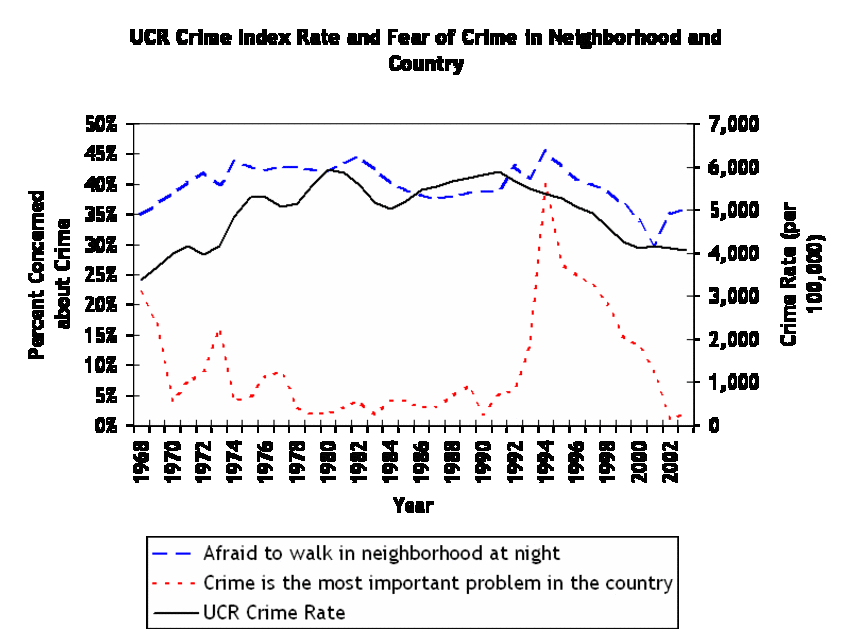
some comments on the last post raised the issue of fear of crime and the ucr crime rate. here are a few figures i've been playing with to track these trends. first, compare the general social survey fear of crime indicator with the ucr index offense rate and the percentgage believing that crime is the most important problem. according to the gss, the percentage of people afraid to walk in their own neighborhoods dropped from about 45 percent in 1994 to 30 percent in 2001. 1994 was the year of bill clinton's crime bill debates, so you see a big spike in the percentage naming crime as the most important problem facing the nation.

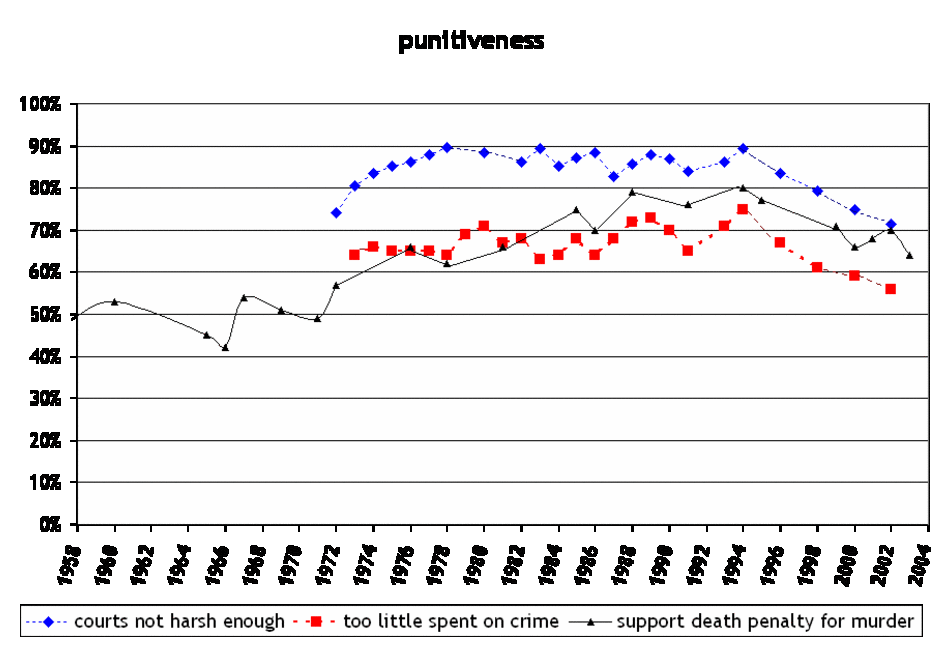
many criminologists and politicians believe that the public is more punitive today than ever before, but that's not quite true. the chart below shows responses to three standard punitiveness indicators: the perception that courts are not harsh enough, that too little money is spent combating crime, and support for the death penalty. all peaked in 1994 but have declined significantly since then.
so maybe times are changing. people seem to feel less afraid of street crime in their everyday lives today than they did a decade ago, as both police and victimization data suggest they should. although a majority still favor "tougher" crime policy, the percentage has declined significantly over the past decade. i read these trends as providing an opening for reintegrative efforts. more people seem ready to view law violators as fallible human beings who will eventually desist from crime rather than as irredeemable monsters. if so, it creates a policy opportunity to reorient correctional practices toward the clear-headed goal of maximizing public safety.


Tuesday, October 18, 2005

less crime today than at any point in your lifetime?

if you are my age or younger and live in the united states, serious street crime has now fallen to the lowest levels recorded in your lifetime. according to the just-released 2004 fbi uniform crime reports, the murder rate is at a forty-year low and the overall violent crime rate is the lowest in thirty years. the ucr numbers are based on crimes known to the police, but they are really the most reliable and valid data source for homicide. ucr rates for rape, robbery, aggravated assault, burglary, auto theft and larceny-theft were also down again this year, as were rates of property crimes such as burglary, larceny-theft, and shoplifting. for offenses other than homicide, these numbers should be considered alongside trend data in victimization and self-reported offending. in triangulating these sources, however, one generally gets an encouraging impression. the local picture is murkier, with serious crime trending upward in several important categories. nevertheless, here too the trend is decent if not encouraging -- particularly since the "murderapolis" days of 1995-1996.

so do you feel safer than you did 5 or 10 or 20 years ago? if not, why not? because 16,000 u.s. murders is still way too many murders? or, has the street crime effect on safety diminished relative to other concerns for you? do you think support for harsh anti-crime measures will diminish if the downward trend continues, or will punitiveness be cited as the reason for diminishing crime rates?

Saturday, October 15, 2005

national workshop on female offenders

although there are far more men than women in the u.s. criminal justice system, female correctional populations have risen significantly in the past decade. today women make up roughly 7 percent of prison inmates, 12 percent of jail inmates, 13 percent of parolees, and 23 percent of probationers.

a conference devoted to women in the system, the 11th national workshop on adult & juvenile female offenders, takes place today through wednesday at the marriott hotel in bloomington, mn. an informative ap story on the conference emphasizes some of the minnesota programs for mothers in prison and their children.

when i interviewed minnesota prisoners about their political life a few years ago, i started by doing ten interviews in a women's prison, then moved on to a men's facility. my impression was that the first interviews were much "easier" -- more women than men seemed to have developed a vocabulary for talking about things such as civic participation and their past and future roles in the community. so, i got a little spoiled as an interviewer. the men were immediately on top of issues such as individual rights, liberties, and voting but seemed to have given less thought to communitarian issues.

i didn't draw any big generalizations from a handful of interviews and this didn't become a theme in the books or articles from the project. still, it made me think about something i heard from a warden at a women's prison long ago but didn't believe at the time. she said, "female prisoners aren't anything like male prisoners -- they are a lot more like women in the community." consistent with the conference and the mission of the apfo, the warden was deeply skeptical of a "just add women and mix" approach to correctional programming.

Thursday, October 6, 2005

european court of human rights on felon voting

from the sentencing project: the european court of human rights ruled today that denying voting rights to prisoners in the UK violates the european convention on human rights. the court held that “any limitations on the right to vote had to be imposed in pursuit of a legitimate aim and be proportionate” and that “any departure from the principle of universal suffrage risked undermining the democratic validity of the legislature.”

i don't know enough about the court's powers or jurisdiction to understand the full implications of this decision (i'm hoping that a great legal mind will step up to set me straight), but here is how the guardian describes the decision:

Laws setting out who can and cannot take part in elections are to be rewritten after the European court of human rights today ruled in favour of giving British prisoners the right to vote ... Britain is among 13 signatories to the human rights convention who prevent prisoners from voting, according to a government survey ... The court - on a majority ruling of 12-5 - said an article in the convention guaranteeing the "free expression of the opinion of the people in choosing a legislature" was not absolute but in a 21st century democracy the presumption should be in favour of inclusion ... The court was set up in 1950 to hear citizens' complaints under the human rights convention and is independent of the European Union.

debates over the voting status of prisoners -- in the UK, australia, and south africa, among other nations -- really draw the restrictiveness of u.s. laws into sharp relief. prisoners are now disenfranchised in 48 of the 50 states (maine and vermont are the only exceptions) and policy debates generally focus on whether non-incarcerated felons (probationers and parolees) and former felons (who have completed their sentences) should be permitted to vote.

Saturday, October 1, 2005

dna giveth but it sure don't taketh away


pspunk alerted me to a short article describing how some states are addressing the "problem" of prisoners being exonerated by dna evidence. as clayton neuman wrote this week in time magazine:

Justice, it seems, has an expiration date. Luis Diaz last month became one of a handful of Florida prisoners--and one of 99 nationwide--exonerated by DNA testing since 2000. But the 2001 statute that helped set him free after he spent 26 years in jail for rapes he did not commit is set to expire next week. After Oct. 1, when prisoners can no longer petition Florida courts for post-conviction DNA testing, their only hope will be to ask prosecutors (the people who put them in jail in the first place) to reopen their case. Prisoners in Ohio face a similar deadline at the end of the month. "It is quintessentially un-American for the very people who may have caused this kind of miscarriage of justice to be the people who decide whether DNA testing occurs," says Jenny Greenberg of the Florida Innocence Initiative.

Worse still, the four-year window in Florida that required the preservation of evidence for older cases--which may have predated reliable DNA testing--is also closing. And unlike California, which last year passed a law ensuring the preservation of evidence throughout an inmate's incarceration, Florida Governor Jeb Bush last month mandated that law-enforcement agencies need give only a 90-day notice before destroying evidence, which isn't much time given the low literacy rates among inmates and how hard prison protocol makes it for them to reach a lawyer. Six states have yet to address the issue of requiring the preservation of DNA evidence. And new hurdles could arise at the congressional level, where a bill threatens to restrict many prisoners from filing one last-ditch petition in federal court. All these moves are designed to keep courts from getting deluged with DNA-related requests by thwarting new technology with red tape.

if i read this correctly, it means that states are starting to destroy the dna evidence used to convict prisoners at one end, and then not allowing them to petition to have themselves tested at the other. i'm all for keeping our busy courts from "getting deluged with dna-related requests," but i find the asymmetry in power a bit troubling here. dna evidence is an invaluable tool for police and prosecutors, but shouldn't it also be available for the wrongly convicted? i'm sure that there are many "frivolous" requests for testing, since guilty as well as innocent prisoners have an interest in something (anything!) to "rule themselves out" as suspects. still, it seems only a slight exaggeration to see this trend as inverting justice blackstone's adage: better to imprison 10 innocent people than to let one guilty person go free.

Friday, September 30, 2005

multiracial victimization part deux

in response to my why are those of two or more races victimized at such a high level? post, erik larson of macalester college has already come up with at least a partial answer. he explains a large portion of the gap in victimization between multiracial individuals and all other racial groups with a single variable. based on his quick calculations, age seems to account for about 40 percent of the excess victimization over the population as a whole. i think that developing this analysis might make a nice research note when the data arrive in full (just make sure to give erik some authorship credit -- dude is on the tenure track!). it doesn't necessarily kill my discrimination hypothesis, but at least it reduces the magnitude of the multiracial victimization gap from "shocking" to somewhere around "disturbing." thanks erik.

i don't know the literature well, but i'm interested in the social construction of racial and ethnic identity for personal as well as scholarly reasons. people immediately peg me as swedish or norwegian (especially outside of minnesota) because of my physical appearance, and this is generally the way i self-identify. but i certainly grew up knowing that my background was at least somewhat more diverse (e.g., cree (nêhiyawêwin) indian, italian, irish...). if people who self-identify as biracial or multiracial are more likely to be victimized net of age and everything else, this doesn't bode well for the american mosaic. am i really less likely to be beaten or assaulted because i look like i'm from one and only one racial background? i'm not advocating a melting pot or assimilation model, but i can't help thinking we'd be better off if more than .9 percent of us (the figure in the ncvs) self-identified as "2 or more races."

on a much, much, lighter note, erik's response got me thinking about another kind of diversity -- the ability to claim "2 or more methods." since erik is best known for his qualitative comparative work, his sharp quantoid contribution helps make a case that i preach to grad students early on -- that there's no such thing as pure "qualitative" or "quantitative" researchers anymore. i probably look like a quant in the same way that i look like a norwegian and i emphasize quant tools in my work. still, few of the top sociologists i know advocate a "purebreed" approach to methods these days. here's a cheeky take on the advantages and disadvantages of [sociological] purebreeds and mutts, adapted from the "pet library:"

Take two [sociologists], one a [methodological] purebred and one a mixed breed. Which one is more beautiful, smarter, a better companion? It's often a matter of personal opinion as there are those who believe that purebreds are the only choice while others steadfastly stand by the mutt. One of the most appealing features of the purebred is that they have rather predictable [scholarly] characteristics. You more or less know what you're going to get when it comes to appearance and size. They also have a fairly predictable temperament so you can get a pretty good idea of what your [sociologist's] disposition will be. And, of course, if you want to professionally breed or show your [sociologist], a pedigree is your only option.

[Methodological] purebreds are more prone to [career] problems, many of which are often due to overbreeding. It's very important when considering a purebred that you find a reputable and proven [graduate program]. Many purebreds also come with working behaviors that may not fit your ideal of the perfect [sociologist]. Behaviors like digging holes, chasing after things or nipping, which have been bred into certain [epistemologies] for centuries, often prove difficult to change. And, of course, purebreds can be very costly, running anywhere from several hundred dollars to over a thousand dollars.

Now for the mixed breeds. One of the most obvious downsides of the mixed breed is that you can't predict what a [new ph.d.] will look like or what size it will be as an adult. However, there are those who actually find this to be a positive, enjoying the surprise of realizing what their mixes grow up to look like. Along the same lines, mixed breeds are less predictable than purebreds when it comes to temperament. However, mixed breeds tend toward the moderate, with their temperaments often proving to be less extreme than those of purebreds. You're less likely to have a [sociologist] who's "very" energetic or "very" demanding or "very" stubborn, with [epistemologically]-based characteristics that often prove difficult to change, and more likely to have a [sociologist] that can adjust to a greater variety of situations. With a greater [methodological] diversity, mixed breeds are less likely to suffer conditions that affect certain purebreds as a result of inbreeding. They also tend to be a lot less expensive, usually costing around $25 to $75 at most [graduate programs]. Furthermore, by opting for a mixed breed, certainly one from the [non-elite departments], you may just be saving a life.

Thursday, September 29, 2005

crime and elective office

when i think of crime and voting, i usually think about felon disenfranchisement. i got word today from a friend in the research triangle on a story involving the criminal records of those running for office.

DURHAM -- Of the 17 candidates on the primary ballot for mayor and City Council in Durham, at least eight have been convicted of criminal charges.
The chairman of the Durham County Republican Party moved on Tuesday to withdraw GOP support from mayoral candidate Vincent Brown, whose extensive criminal record was the subject of an article in Sunday's editions of The News & Observer. The story recounted Brown's felony convictions for forgery and larceny, as well as a stretch served in state prison. Brown vehemently denied that he has ever been arrested...


in many places, a felony conviction formally disqualifies one from holding office, but this story went on to discuss the arrest records of the candidates. and they found plenty -- embezzlement, speeding, lots of bad checks, weapons offenses, petty theft, abortion protesting, failure to pay child support, and others. this one might be the saddest and the strangest:

In light of Brown's rap sheet, every candidate in attendance was asked before a crowd of about 75 people if they had ever been arrested on a criminal charge or had been to jail.
When it was his turn to answer Tuesday, Ward 1 council candidate Joe Williams said: "I don't have any skeletons in my closet."
Records show Williams was convicted in a 1986 trial for a single misdemeanor count of assault on a female. He was ordered by a judge to "pay for damages to teeth" in an amount to be determined by the clerk of court.


ouch. is this further evidence of the carceral state spreading ever outward? i'd hate to participate in such a line-up before a department election. actually, my graduate students tell me that some universities now obtain arrest reports on new faculty -- and i've read enough papers on institutional isomorphism to suspect that this could quickly become standard practice. if it doesn't indicate overcriminalization, do you think the 8 in 17 figure indicates greater criminality among politicians than others? As mark twain's pudd'nhead wilson hypothesized:

It could probably be shown by facts and figures that there is no distinctly native American criminal class except Congress. -mark twain

Monday, September 26, 2005

gosh, margy, why don't you tell us what you really think?

when i first began studying the collateral consequences of felony convictions in the 1990s, there were few authoritative sources on the practice. one of the best was a 1996 50-state report by then-U.S. pardon attorney margaret colgate love. margy served from 1990 to 1997 under presidents bush (I) and clinton (I), and she always provides a tough non-partisan critique of any administration's pardon record. more recently, she prepared a great clemency "resource guide" that offers a starting point for anyone seeking to restore their rights after a felony conviction (more personally, i should add, she helped me make sense of the differing rules governing felon voting rights and their restoration in each state).

today's crimprof blog features an op-ed by ms. love on the new national sex offender public registry. Her main concerns are (1) the registry's data quality; and, (2) the absence of controls on its use. while some hail the registry as a "proactive and meaningful step in protecting a child's life," the former pardon attorney takes a different view -- calling it a "half-baked mean-spirited incitement to vigilante justice."

gosh, margy, why don't you tell us what you really think?

Here are some highlights of ms. love's editorial:
... [it] relies entirely upon unvetted state registries that are notoriously incomplete and inaccurate
... most of [the offenders listed] had very dated and minor convictions, and had had no adverse contact with the law for decades...their houses and offices, marked with a little red flag like they used to put on the door of a plague house in the middle ages.
... outrageous that the federal government -- the Justice Department no less -- would rush to publish a list like this without 1) taking any responsibility for the accuracy of the information on it or warning about its shortcomings; or 2) giving the public any guidance at all about how they are supposed to use it.
... the clear suggestion that all 500,000 registered sex offenders in the United States are "predators" is one of the most irresponsible I've seen come out of the Justice Department, ever.

... the Attorney General is looking into how the FBI can share its criminal history information ...the FBI’s information is almost as unreliable ... [leading to] the same categorical discrimination
... The Justice Department should be trying to address the important privacy and due process issues raised, rather than leading the charge to stir up a public witch-hunt.
... The people most hurt by it are those who are already down and are easy to victimize.
... There are labor organizations and advocacy groups working on the important privacy and due process issues raised by these initiatives, and Human Rights Watch has written a letter to the Attorney General expressing concern about the Sex Offender Registry. Where are the lawyers?


i have not investigated the registry (beyond looking up my neighborhood), but i am troubled by ms. love's report and opinion on its use. but this is a call-to-arms for lawyers -- where are the sociologists and criminologists? i'm afraid it would be a pretty lonely crusade (that might land one in prison if certain movies are to be believed). i'm revising a piece with jeff manza and melissa thompson on ex-felons as a caste-like status group. it seems far-fetched until you see such registries in action and consider their easy extension beyond sex offenders. are sex offenders so different from, say, murderers that we wouldn't create a more comprehensive registry? it could easily encompass anyone convicted (or arrested -- the private search firms use arrest data) on felonies (why not misdemeanors, as long as we have the data?) as an adult (aww heck, why should the juvenile court hoard all those records down in the basement?). the notion of a permanent stain or stigma seems ever more plausible to me in an age of free-and-easy information.

paradoxically, we now have the technology to apply a permanent mark at the very historical moment that life-course criminology establishes that everybody desists from crime. so, at the risk of oversimplifying, here's how i see the mismatch: there are social, political, and (most importantly, in my view) technological pressures toward treating criminality as a fixed characteristic of individuals, even as the science paints a picture of malleability and movement away from crime in adulthood. such pressures will clearly frustrate reintegrative efforts, but unlike ms. love i don't see a way out of the dilemma -- justice department database or not, the information systems genie seems to be out of the bottle. i think the better long-term plan might be for sociologists and criminologists to attempt to provide an unflinching, evidence-based assessment of risk across different offense groups and the relative costs and benefits of stigmatization and reintegration.

Saturday, September 24, 2005

voting crimes "lack the same gravity as a homicide"

the strib reports that a woman serving a probation sentence for theft voted in a closely contested minnesota mayoral race last year, casting a ballot in a race in which her husband won by a slim 8-vote margin. Hennepin County Attorney Amy Klobuchar, who happens to be running for US senate, has charged Linda Gilbert with a felony for registering to vote while ineligible.

Court documents indicate that in July, when authorities interviewed Linda Gilbert about the matter, she admitted to voting even though she knew she had lost her right to do so. Klobuchar said her office usually handles 15 to 20 election crime cases -- involving ineligible voters or people voting more than once -- each year after a major election cycle.

ms. gilbert, the current first lady of long lake, minnesota, must be very honest to admit that she knew she had lost the right to vote and voted anyway. still, it seems hard to believe that a thief who did 60 days in the workhouse is now going to catch a new felony for voting -- in her husband's election. here's the kicker, though:

Such crimes lack the same gravity as a homicide, Klobuchar said, but they still need to be prosecuted. "We have to protect the integrity of our elections."

i'm wondering about that "lack the same gravity as a homicide" quote. is it a joke? nowhere in the story is it mentioned that felony probationers can vote in 19 states or that the minnesota legislature considered enfranchising probationers and parolees this spring (i drafted a short report on the impact of this change in march). minnesota makes heavy use of probation and light use of incarceration, so ms. gilbert and thousands of others would have been able to vote without risking a felony conviction. under the proposal the total disenfranchised would have shrunk from an estimated 55,551 to 13,825, or from about 1.5 percent to about 0.4 percent of the voting-age population (and from about 12 percent to 3.5 percent of the African American voting age population).