i spent yesterday at a conference on racial disparity in justice. as advertised, the panels offered a combustible mix of state supreme court justices, police officers, mayors, business reps, reporters. it was a good exercise in public criminology, with a handful of academics sharing research, weighing in on some concrete policy recommendations, and learning from the assembled policymakers, citizens, and community leaders.
there was more than a little grandstanding, of course, but also some productive discussion. justice alan page (who seems to show up a lot in this blog) referenced the distinction between people we're "mad at" versus those we're "afraid of." the council's research and recommendations focused on the disparate impact of overenforcing minor crimes among the former group -- lurking, loitering, disorderly conduct. we drag a lot of people of color into the system for low-level offenses (sometimes called garbage cases in the system) that never go anywhere. more precisely, racial disparities in arrest for minor crimes are generally more skewed than conviction disparities.
failing to criminalize such stuff runs counter to the broken windows orthodoxy, of course, but even minneapolis' assistant police chief sharon lubinski agreed that "we can't arrest our way out of this problem." business representatives want to "clean up" downtown, but most would be happy with effective community- and school-based alternatives to criminalization; such approaches might also be more consistent with traditional minnesota values than, say, panhandling ordinances.
i spoke on the collateral consequences of conviction, but one big problem with criminalization is the increasingly public nature of arrest records. there was a fascinating exchange between a target corporation human resources professional (we fire people for failing to disclose their records, not for having records) and a former felon (i know that target won't hire you if you check that box on the application). i saw a similar exchange between a downtown business representative (something's wrong in the system when a guy is still on the street after twenty arrests) and judge kevin burke, who brought drug courts to minnesota (he may have been arrested twenty times, but what if he was never convicted?).
to take another example, the council reported that youth of color now make up nearly 80 percent of the juveniles appearing in hennepin county (minneapolis) court, with 25 percent of those cases referred from schools (not including truancy violations). assistant school superintendent birch jones squarely addressed his institution's role in exacerbating justice system inequalities while at the same time reminding us of the resource constraints that make it difficult (impossible?) for some schools to address serious discipline problems in-house. such discussions may pave the way for alternative interventions for school disorderly conduct cases that, under current practices, would be referred for formal prosecution.
similarly, the council reported that low-level offenses brought directly to court via police officers (tab charges) rarely result in convictions, but continue to haunt people seeking employment or housing. police and prosecutors were then invited to discuss a proposal to require all misdemeanor tab charges to be reviewed by a prosecutor prior to initiating court processes. i could go on, but you probably get the idea.
i had no hand in the council's recommendations and would need to study the evidence much more closely to make a strong case for them. nevertheless, i can get behind the council's primary goal without hesitation: reducing disparities and enhancing public safety. this fits nicely with my approach to felon reenfranchisement and prisoner reentry more generally. while some of the elected officials seemed to skirt the big issues, this is likely because they fear being tarred with the soft on crime brush. if reintegrative justice policies can be shown to increase public safety and do so cheaply, i'm optimistic that they'll come around as well.
Thursday, June 29, 2006

Friday, June 23, 2006
use of siphons, like hyphens, on the decline
as gas prices have risen, i'm surprised we haven't heard more about old-fashioned theft-by-siphon. gas has been stolen by siphoning for about as long as we've had automobiles. in fact, the first locking gas cap appeared in 1932, motivated by a rash of pre-SUV depression-era drivers.
i'd guess that siphoning from individuals is much less likely to result in arrest than driving off from a gas station, but thieves have opted for the latter approach in recent years. aside from numerous stories about a nevada murder of would-be siphoners, a search of google news yielded only scattered references to gas theft (e.g, in florida, minnesota, oregon). while capable (and armed) guardianship may be a factor, i'll hypothesize that the absence of mass gas thefts can be explained by a combination of target hardening and teenagers' lack of technical skills.
with regard to technical skills, gas has been so cheap and plentiful for the last twenty-five years that illegal siphoning has become something of a lost art among the american teens and twenty-somethings most likely to commit theft. this generation also likely knows less about car repair and maintenance, as today's vehicles require far less repair and maintenance than, say, the mid-seventies energy crisis. i'd suspect that the kids have done less legitimated siphoning (e.g., between lawn mowers and cars) as well, but this might be overgeneralizing based upon a small sample of yardwork-resistant kids i know.
target hardening is probably the bigger factor. newer vehicles employ devices that thwart siphoning, such that one can no longer simply stick a hose into tank A, prime it, and transfer the gas into tank B. fuel check valves, designed to stop leaks and explosions when vehicles roll over, complicate life for siphoners. moreover, now that many tanks are made of plastic rather than rust, crooks are less likely to immolate themselves piercing and draining the tanks or cutting the fuel lines.
still, it isn't difficult to find many old cars or trucks with enormous and unguarded gas tanks. once more of these stories make the news, the kids will likely catch on and employ jackrabbit pumps and other labor-saving devices. in response or anticipation of this, drivers of older vehicles will purchase locking gas caps, as my father did for the family maverick back in the 1970s. national statistics are tough to come by, but i'd bet that we'll be hearing much more about gas theft by this time next year, if not by the end of the summer.
i'd guess that siphoning from individuals is much less likely to result in arrest than driving off from a gas station, but thieves have opted for the latter approach in recent years. aside from numerous stories about a nevada murder of would-be siphoners, a search of google news yielded only scattered references to gas theft (e.g, in florida, minnesota, oregon). while capable (and armed) guardianship may be a factor, i'll hypothesize that the absence of mass gas thefts can be explained by a combination of target hardening and teenagers' lack of technical skills.
with regard to technical skills, gas has been so cheap and plentiful for the last twenty-five years that illegal siphoning has become something of a lost art among the american teens and twenty-somethings most likely to commit theft. this generation also likely knows less about car repair and maintenance, as today's vehicles require far less repair and maintenance than, say, the mid-seventies energy crisis. i'd suspect that the kids have done less legitimated siphoning (e.g., between lawn mowers and cars) as well, but this might be overgeneralizing based upon a small sample of yardwork-resistant kids i know.
target hardening is probably the bigger factor. newer vehicles employ devices that thwart siphoning, such that one can no longer simply stick a hose into tank A, prime it, and transfer the gas into tank B. fuel check valves, designed to stop leaks and explosions when vehicles roll over, complicate life for siphoners. moreover, now that many tanks are made of plastic rather than rust, crooks are less likely to immolate themselves piercing and draining the tanks or cutting the fuel lines.
still, it isn't difficult to find many old cars or trucks with enormous and unguarded gas tanks. once more of these stories make the news, the kids will likely catch on and employ jackrabbit pumps and other labor-saving devices. in response or anticipation of this, drivers of older vehicles will purchase locking gas caps, as my father did for the family maverick back in the 1970s. national statistics are tough to come by, but i'd bet that we'll be hearing much more about gas theft by this time next year, if not by the end of the summer.
Monday, June 19, 2006
employment and stigma
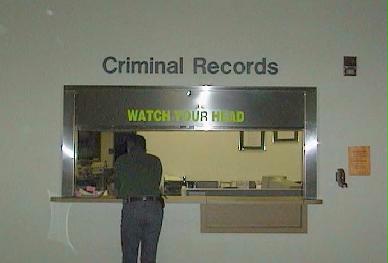 i just received my copy of the bureau of justice statistics' survey of state criminal history information systems, 2003. reporting is inconsistent across the states, but there were 71,028,500 individual subjects listed in state criminal history repositories on december 31, 2003. this is a twenty percent increase from the 59 million files in 1999, but the bigger change is in their availability: online public and private access to these criminal history records has increased dramatically over this period.
this public stigmatization is reflected in the employment-related emails i get from former felons trying to make it on the outside. i don't usually share these publicly, but they very much inform my thinking and writing on the subject. here's a new comment on an old post concerning job fairs and expungement. though pete c. has an unusually strong educational background and work history, his experience will be familiar to many former felons:
Dear Dr. Uggen: I am a 48 yr old with a felony conviction (escape) in GA. I have a substantial criminal record (drug and property crimes) dating back to the 1970's due to a drug addiction that began as a teenager. Despite my addiction I was able to complete undergraduate school and attended law school before my disease overtook my life entirely. I entered treatment at age 30 and, with the help of support groups, was able to earn an MBA by age 32. I was able to find a good job at IBM but was laid off due to corporate down-sizing in 1998. I was convicted of felony escape in GA as a result of leaving a half-way house type of institution. I was sentenced to this institution for a misdemeanor theft conviction resulting from my having relapsed into my addiction. I served 20 months in a GA prison and have not been able to find sustainable (above-poverty level) employment since my release. In many ways my sentence (5 yrs.) has become a de facto "life sentence" due to the stigma of my conviction. It will probably shorten my life due to the fact that I cannot obtain affordable health insurance from an employer. One could even say that, in that respect, I have been given a "death sentence" of sorts. I have tried in vain to secure employment here in Augusta, GA but even the most menial positions in the labor market have rejected me. It is a very difficult existence... Pete C.
pete's comment quickly drew additional testimony from others in his shoes:
Dear Pete C: I understand your position you are not alone. I face the same fate. I'm on the grind seeking employment. It doesn't seem to matter to anyone that I served my country in the Gulf War. I have tried to lie about my past and I have also tried to be truthful but to no avail. It has been 8 years since this "F" has been on my record. I can't offer you any help only support. Keep your head up and I hope you have some good people in your corner.
Low
on friday, jazz hayden asked two questions of the assembled luminaries at john jay. first, "how many of you have ever committed a crime for which you could have been incarcerated?" most hands quickly rose, then descended when he asked, "how many think you should lose your right to vote now because of that act?" we might ask the same thing about employment: how many think you shouldn't be able to make a living, eight years after your release?
one can find employers in most communities who might give a break to former felons -- either because they have a history themselves or because such efforts have been rewarded by highly productive and loyal workers truly appreciative of the opportunity. if anyone in georgia or elsewhere can offer some advice or contacts for pete c., please pass them along. i haven't walked in his shoes and my research offers nothing more than tired advice about "starting at the bottom, keeping the faith, and banging your head against the door." as long as you can take the pain, you've got a fighting chance of breaking through.
to vice, innocence must always seem only a superior kind of chicanery
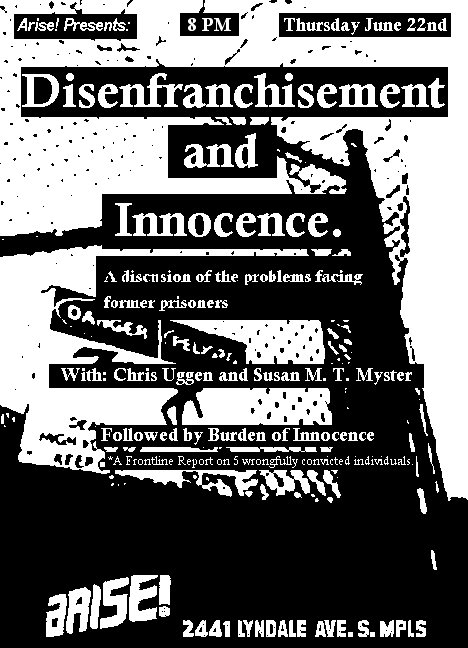 this thursday night i'm at arise! bookstore in minneapolis, talking about locked out on a double-bill with a fascinating speaker from the innocence project of minnesota.
susan thurston myster is a forensic anthropologist at hamline university. she should offer a great perspective on the project's efforts to give investigative and legal assistance to inmates with provable claims that they have been wrongly imprisoned. a free showing of the documentary burden of innocence will follow, tracking former prisoners' lives after their wrongful convictions.
all are welcome!
arise bookstore
thursday, june 22 8pm
2441 lyndale ave.
minneapolis, mn 55404
612-871-7110
minneapolis, mn 55404
612-871-7110
Tuesday, June 13, 2006
job opening at the center of the universe
michael bischoff at the council on crime and justice sends word of their search for a new director of projects to provide leadership on early intervention and prevention projects. they seek someone with "passion and talent for finding innovative ways to prevent crime, reduce racial disparities, and build partnerships." The salary range for the position will be $45,000 - $60,000. you can learn more about the council at www.crimeandjustice.org.
Director of Projects
Organization: The Council on Crime and Justice is a non-profit agency committed to building community capacity to address the causes and consequences of crime and violence through research, demonstration and advocacy.
Position Responsibilities: The Director of Projects will provide leadership over 2 or more demonstration projects. Projects may include re-entry, alternative sentencing, victim services and youth early intervention. Key responsibilities include: managing project staff and activities, furthering implementation of the demonstration model, developing and implementing work plans, interpreting the projects and services to the community, working with the Research Dept. to evaluate projects, completing required reporting, pursuing grant and marketing opportunities, developing new projects and/or enhancing existing projects, developing and monitoring budgets, providing back-up support to other Director of Projects, and participating as a member of management.
Qualifications: Bachelor’s degree, graduate or professional degree preferred and 3-5 years experience in project management and development, or equivalent education and experience sufficient to perform the responsibilities. Skilled in supervision and coaching. Strong written and verbal communication skills. Ability to establish effective relationships with all stakeholders. Ability to provide leadership over teams, as well as, be an active participant. Strong problem solving and conflict negotiation skills. Ability to have both a broad conceptualization and an understanding of details. Skilled at strategic thinking. Invested and motivated to move forward with organizational agenda. Committed to remaining informed and learning about leadership theories, project development and project specific information. Ability to work effectively across cultures and demonstrate sensitivity to ethnicity, gender, age, sexual orientation, disability and faith.
Classification: Full-time, Exempt position with competitive compensation package
To Apply: Submit resume and cover letter by Friday, June 30, 2006 to hr@crimeandjustice.org or Council on Crime and Justice, 822 South 3rd Street, Minneapolis, MN 55415
Director of Projects
Organization: The Council on Crime and Justice is a non-profit agency committed to building community capacity to address the causes and consequences of crime and violence through research, demonstration and advocacy.
Position Responsibilities: The Director of Projects will provide leadership over 2 or more demonstration projects. Projects may include re-entry, alternative sentencing, victim services and youth early intervention. Key responsibilities include: managing project staff and activities, furthering implementation of the demonstration model, developing and implementing work plans, interpreting the projects and services to the community, working with the Research Dept. to evaluate projects, completing required reporting, pursuing grant and marketing opportunities, developing new projects and/or enhancing existing projects, developing and monitoring budgets, providing back-up support to other Director of Projects, and participating as a member of management.
Qualifications: Bachelor’s degree, graduate or professional degree preferred and 3-5 years experience in project management and development, or equivalent education and experience sufficient to perform the responsibilities. Skilled in supervision and coaching. Strong written and verbal communication skills. Ability to establish effective relationships with all stakeholders. Ability to provide leadership over teams, as well as, be an active participant. Strong problem solving and conflict negotiation skills. Ability to have both a broad conceptualization and an understanding of details. Skilled at strategic thinking. Invested and motivated to move forward with organizational agenda. Committed to remaining informed and learning about leadership theories, project development and project specific information. Ability to work effectively across cultures and demonstrate sensitivity to ethnicity, gender, age, sexual orientation, disability and faith.
Classification: Full-time, Exempt position with competitive compensation package
To Apply: Submit resume and cover letter by Friday, June 30, 2006 to hr@crimeandjustice.org or Council on Crime and Justice, 822 South 3rd Street, Minneapolis, MN 55415
racial disparity conference june 28
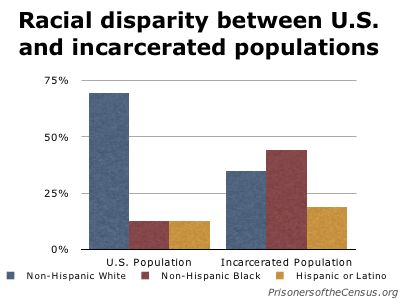 the council on crime and justice is holding a public criminology conference on their racial disparity initiative on june 28 in minneapolis. over the past five years, the council has written 17 reports on race and justice. they are now pulling them together to summarize the knowledge and hammer out some action steps.
the panels have representatives from an incredibly diverse set of institutions and publics, though not everyone will show up. there are ex-offenders, clergypersons, social workers, attorneys, community residents, businesspersons, and academics. mayors rybak of minneapolis and coleman of st. paul are on the program, as are st. paul's police chief john harrington and minneapolis' assistant chief sharon lubinski, minneapolis school superintendent bill green, state supreme court justice alan page, and judge kevin burke of hennepin county district court.
as for criminologists, michael tonry will serve on a panel discussing causes of the disparity, todd clear will be in the collateral consequences group, and i'm on the action steps and ethics panel. i probably won't say much, since my panel is scheduled to include a republican state senator, business folk, police officers, case workers, and don shelby, local anchor god. it should be fun. or a free-for-all. or both.
anyone interested in racial disparities in justice might find something interesting on the program. you can register online, for a suggested donation of $20. attorneys can get CLE elimination of bias and ethics credits but need to kick in more money (sorry, angie). tom johnson of the council is expecting a pretty good crowd. the conference is june 28 at minneapolis community and technical college, 1501 hennepin avenue.
Saturday, June 10, 2006
violent crime in minneapolis
 according to david chanen and myron medcalf of the minneapolis strib, the fbi's final 2005 numbers will show a sharp local increase in violent crime. while murder, rape, robbery, and aggravated assault rose about 2 percent nationwide over 2004, these violent index offenses increased by 35 percent in minneapolis.
it is not uncommon for local homicide numbers to fluctuate dramatically from year to year due to the small numbers involved. a move of this magnitude in a broader index that includes robbery and aggravated assault, however, is much more unusual.
my first instinct is to check for changes in law and reporting procedures. for example, a recent state "strangulation" statute means that a large number of domestic assault cases (hundreds?) once considered misdemeanors are now counted among the aggravated assaults in the violent crime index. i was surpised that neither the writers nor the interim police chief, tim dolan, mentioned this in the article. not surprisingly, chief dolan mentioned the declining number of mpd officers. when i got back to town in the mid-1990s, i believe there were almost 1,000 sworn officers (i know because bridget cleary, an undergrad student, surveyed them), about 200 more than today.
i've personally received many more calls about robberies this year, particularly in more affluent uptown and downtown neighborhoods. yes, the broader twin cities metro area remains quite safe by national standards and minnesota is ranked among the safest states. moreover, like most cities, minneapolis is today far safer than it was a decade ago. nevertheless, if these numbers hold up, it is a shame to see the city lose so much ground in such a short period.
Sunday, June 4, 2006
when would you have your kid arrested?
 under what conditions would you have your teenage kids arrested?
my local sheriff bob fletcher ordered his 17-year old son arrested on tuesday, after his ex-wife found the teenager passed out among syringes and other paraphernalia. sheriff fletcher is the most powerful elected law enforcement official in ramsey county, which includes the capitol city of st. paul in its jurisdiction.
many are criticizing the sheriff, saying that such matters are best handled in the home or with voluntary drug treatment. some cynical observers are even suggesting that sheriff fletcher ordered the arrest because he was up for re-election this fall and wished to appear "tough on crime." i can't imagine anyone raising teenagers would make such accusations, but people are willing to believe anything about elected officials. here's the sheriff:
"I love my son dearly, but right now, the best place for him is in the criminal justice system," he said. "The message I want to talk about is how important it is for parents not to defend their kid but to hold them accountable and to make the call, whether that call is to a crisis connection or a treatment center or a law enforcement agency."
i guess i would only make such a call if my children posed an imminent threat to themselves or others and my own efforts had failed to address the threat. i can't say whether this position would change if i were a sworn law enforcement officer, but i'd be capable of desperate action if i thought either of my kids were closing in on a fatal overdose. still, i think that scrutinizing the parents in such cases smacks of misplaced "piling on." these are families in pain, who have worked their way up a ladder of graduated treatment and punishment and now find themselves on the top rung with nothing to grab hold of.
i'm sad to admit that at 16 i once put my parents in a similar position. i can't say that i'm glad they called the police and had me arrested, but i know they didn't make the decision lightly and that they were desperately trying to act in my best interests. like the sheriff's kid, i had all the advantages of middle-class resources and parental support; everything turned out more-or-less okay for me. unlike the sheriff's kid, i was never charged with two felony counts for heroin and cocaine possession and gross misdemeanor escape. nor was my family drama played out in public.
every year, hundreds of adolescents and their families make their way through such trouble in ramsey county alone. here's hoping that in twenty-five years most of them will also be able to say "everything turned out more-or-less okay."
Thursday, May 25, 2006
when size matters
 chris and i have both written several times on this blog about the especially harsh treatment of sex offenders in this country. and now the associated press offers one of the oddest stories of the year. a judge in nebraska decided that a man convicted of sexually assaulting a child was too short to survive in prison so she sentenced him to ten years of probation instead.
i don't know what to add to this strange piece, so i'll just give you the entire story from the AP wire:
Judge: Man is too short for prison
SIDNEY, Neb. — A judge said a 5-foot-1 man convicted of sexually assaulting a child was too small to survive in prison, and gave him 10 years of probation instead.
His crimes deserved a long sentence, District Judge Kristine Cecava said, but she worried that Richard W. Thompson, 50, would be especially imperiled by prison dangers.
"You are a sex offender, and you did it to a child," she said.
But, she said, "That doesn't make you a hunter. You do not fit in that category."
Thompson will be electronically monitored the first four months of his probation, and he was told to never be alone with someone under age 18 or date or live with a woman whose children were under 18. Cecava also ordered Thompson to get rid of his pornography.
He faces 30 days of jail each year of his probation unless he follows its conditions closely.
"I want control of you until I know you have integrated change into your life," the judge told Thompson. "I truly hope that my bet on you being OK out in society is not misplaced."
what must the victim's parents think? at 5-1, thompson was likely larger than his child victim. did thompson deserve special treatment? does anyone think a male judge would have shown such leniency?
anyone have any thoughts or comments to share?
Wednesday, May 24, 2006
advice on doing public criminology

this post is taken directly from the american society of criminology's division on women and crime's newsletter. you can access the full newsletter at: http://www.criminology.fsu.edu/dwc/newsletter/. thanks to jeanne flavin for putting together such an interesting column on public criminology and allowing us to share it on our blog.
Ask A Tenured Professor
PUBLIC CRIMINOLOGY: "How do we publish, while others perish?”
This column explores the issue of public criminology, that is, criminology as a way of writing and engaging intellectually with the public. I asked how those of us who work in universities might “do” public criminology, and asked practitioners/policymakers what works and does not work in terms of undertaking partnerships with people inside academe. I am very grateful to Miki Akimoto, Becky Block, Michelle Inderbitzin, Kelly Moult, and Wendy Perkins for their frank and honest responses, and thank them for moving the conversation along in important ways!
If there is sufficient interest, I’d like to continue the conversation about public criminology in a future column (though I’d need some feedback on what kind of discussion would be most beneficial!). As always, if you have ideas or questions for future columns, please send them to jflavin@fordham.edu.
Thank you!
Jeanne Flavin
Answer #1. What works? The Working Group on Research Collaboration between Practitioners and Academics has had four ASC workshops where papers were presented, and has had lively email discussions on this issue. We are especially concerned about research collaboration from the practitioner's point of view. If you go to the CWHRS Forum, at http://www.icjia.state.il.us/cwhrs/, and click on "Collaboration," you will see the papers presented at our last two meetings. You will also be able to click on "contract and protocol for agencies working with researchers." This is a tool for practitioners [editor’s note: co-authored by Jo Belknap, Susan Ransbottom, Jenn Roark] to use to judge the integrity and professional skills of academics who want to work with them. I believe that Jackie Campbell also has such a tool, but I haven't been able to get a copy so far. Our agency has developed a contract for research collaboration, in which the outside researcher agrees to maintain confidentiality, sets out a timeline and a list of products, etc. In addition, you might look at a couple of CWHRS publications:
Block, Carolyn Rebecca, Barbara Engel, Sara Naureckas & Kimberly A. Riordan (1999). The Chicago Women’s Health Risk Study: Lessons in Collaboration . Violence Against Women , Vol. 5 No. 10, 1158-1177.
Block, Carolyn Rebecca, Barbara Engel, Sara Naureckas & Kimberly A. Riordan (1999). Collaboration in the Chicago Women’s Health Risk Study. Research Brief: May, 1999. Chicago: Illinois Criminal Justice Information Authority. (Has several good citations.) Re: larger principles of public criminology: …The single most important principle I can think of at the moment is to support data integrity. The foundation of almost everything we do is good, reliable, clearly defined data. Data access is power. Therefore, supporting data integrity and accessibility supports democratic decision-making. Too often, however, academics seem to think of those who are responsible for maintaining data integrity as the "data fairy." Instead, academics should partner with people who collect and maintain data, to increase data quality and accessibility. Specifically, when data integrity is threatened, academics should speak up. When an analyst is fired or a research agency is "lined out" of the budget because they refuse to cook the data, academics should scream. This has been happening a lot lately, and all I hear is a deafening silence. Also, academics should thoroughly document and archive any data that they collect - so that studies can be replicated and so that people in the community can use the data as a basis for decisions.
Answer #2: Since, I am both a practitioner and an academic, I have seen both sides of the coin. Practitioners tend to think academics are nothing but pencil-pushers, and academics tend to think practitioners are do-gooders with no intelligence. Of course these feelings are not universal among practitioners and academics but they are prevalent enough to cause problems. The key is for each side to appreciate what the other side has to offer. Practitioners can offer personal insight into things that academics may never experience, thus making their research more full and complete. In addition, sometimes practitioner experience can 'back up' the research and validate it in the eyes of other practitioners. Academics can offer practitioners (hopefully) methodologically sound program evaluations and empirical support for their on-the-job experiences, thus validating the things they have done/seen and lending credibility to them in the field. That said, both parties must come to the table prepared to work together in such a way that everyone walks away feeling as if their contributions are valuable. Most of the academics I am associated with value practitioners and work with them, however practitioners are not always open to working with academics. I think academia has to overcome that pencil-pusher stigma. I do think that one way to do that is for all people in academia to spend time in the field getting their hands dirty. I know not everyone would agree with me, but if we want to build partnerships then first-hand knowledge of what the practitioners experience is a must so we can come to the table with more than our SPSS and our wits.
Answer #3: I believe that in South Africa [writer is senior researcher at a university] our location as university units paralyze our efforts to act in pressurizing government to act in relation to legislative reform proposals that we set out on the basis of research conducted with criminal justice agencies. Our task is made even more difficult by the fact that we are overwhelmingly donor funded (e.g Soros, Mott, Rowntree etc), which I think has led to the development of young researchers who overwhelmingly research what is funded, rather than have the space to be critically distant, and develop a particular interest and expertise.
Answer #4. I mulled over the quite interesting and very relevant questions that you pose in your query for your column. As you pointed out in our conversation, academe has/have (is it a collective noun?) a large number of resources and vast knowledge that could be useful to criminal justice (and other social services) practitioners, but the connections aren't always made. So, how do you go about bridging that gap?
As you know, much of my career has been in this weird twilight space that exists somewhere between academia and straight-out practice. This makes me just knowledgeable enough about both areas to be dangerous. . . . It seems to me, if you are addressing your responses to academics, that the first thing I would say is, "Beware of arrogance." Too often, you see outside experts coming into practitioner systems with the assumption that because they have XX years of study and YY letters behind their names, that they have The Answer, or worse yet, They Will Find The Answer For You, little practitioner. If you are an academic wishing to partner with and support a public system, remember that you are only one part of the equation. You may know every theory published since 1807, but it is highly unlikely that you have spent time dealing with the messy, nuanced and difficult realties that families in crisis face on a daily basis. Your theories about self-actualization mean little to a mother who is sitting there with $27 in her checking account trying to decide between keeping the heat on and buying groceries. You will need to take some time to get to know the realities of the system you are working with.Which leads me to my second piece of advice, "Take time to understand the culture and system you're trying to partner with." In many public systems, academics are regarded with a great deal of wariness. Many criminal justice, child welfare and other social service workers have been involved in studies that a) took a lot of time for interviews, survey completion, record keeping, etc., and then b) never resulted in any measurable or real improvements in their working lives.* Worst still, many of them have found their work written up as somehow inadequate to the task at hand, regardless of how hard they were working in usually drastically under-resourced situations. These types of reports are often written by researchers or academics who haven't taken the time to fully understand the entire system they are looking at, and are trying to apply ideal/utopian notions to systems that are sometimes operating with 18th century management techniques and 19th century technology.*a subcomponent to this response (or perhaps a corollary) is communicate, communicate, communicate. Then communicate again. Make sure that people who are writing about get to see drafts of things so they can see if they are accurate and/or reflect their understanding. Depending on the situation, you don't have to give folks veto power over documents, but you need to be respectful about sharing information - particularly with the folks who have contributed to your content.Thirdly, "This will take more time and energy than you think." Any good partnership/collaboration takes a great deal of time to establish and maintain. The people involved really matter, and they have to become comfortable with each other before they can move toward that all important feeling of trust. Moreover, you need to take the time at the outset to make sure you are really all on the same page. If an academic approaches a system because she thinks they want to measure X, but the reality is that it's really Y and Z that are important, everyone winds up frustrated at the end of the day. VERY importantly, you must also take the time to make sure that when you say you're measuring X, the practitioners understand that you mean X and aren't hearing Y because of differences in jargon or terminology.Be humble. Folks out on the front lines of our public safety and social services systems have it tough. They deal with life's most difficult circumstances on a daily basis, and literally make life and death decisions. Their field knowledge is often incredibly deep and insightful. LISTEN to them. Recognize at the end of the day that you may well learn more from them than they from you.
Editor’s note: Arguably the best piece of advice I have ever been given is to write plainly and without jargon. Two of my favorite “readers” work for non-profits (one of whom is Miki Akimoto, who contributed to this column). I spent nearly a year at an agency, during which time I wrote three articles that somehow profiled or alluded to their work. I showed a draft of one piece it to my colleague for her feedback.
Judy: Jeanne, when you talk about someone getting out of prison and their ‘mutually interactive networks of support,’ what is it exactly that you mean?
Me: You know, people help each other out.
Judy: Ummm, then why don’t you just say that?!
Also, I need to come to grips with my own ignorance if I’m really to learn anything (which I think is hard for an academic to do!). Recently, for example, I thought I was holding my own in a discussion of the Adoption and Safe Families Act when an child protective services administrator said something in passing that I didn’t follow but everyone else (ACS workers) clearly did. Rather than ask for clarification, I just kept nodding. And then I thought to myself, “Jeanne, that seemed a pretty important and basic point; you’d best ask even if you look stupid.” So I asked for clarification, and was so glad I did because otherwise that “pearl of common knowledge” would have been lost to me.
1 As I understand it, if a child is in kinship care and kin does not formally assume custody – which many families do not wish to do out of respect for the mother, no matter how messed up she might be – than the ASFA/involuntary termination clock still ticks!
Tuesday, May 23, 2006
u.s. incarceration at midyear 2005
 the bureau of justice statistics has released midyear 2005 incarceration numbers. since june 30, 2004, imprisonment has risen by about 1.6 percent, while jail populations grew by 4.7 percent. women now make up 7 percent of the prison population and 13 percent of jail inmates. louisiana and georgia incarcerate the greatest percentage of their residents (with more than 1 percent in prison or jail), while maine and minnesota have the lowest rates (with about 0.3 percent of their state residents incarcerated).
nevertheless, even low incarceration states look high in international perspective. roy walmsley's latest world population list helps put these numbers in context. japan's rate is 58 per 100,000, norway's rate is 65, germany's is 96, saudi arabia's is 110, canada's is 116, england's is 142, mexico's is 182. you get the idea.
based on the 2005 data, the u.s. will continue to lead the world with a rate of 738 per 100,000 residents, outdistancing up-and-comers such as Belarus, (532 per 100,000), Turkmenistan (489), Cuba (487), Suriname (437), and South Africa (413).
walmsley's analysis shows great heterogeneity within and across continents:
• the median rate for western African countries is 52 whereas for southern African countries it is 324;
• the median rate for south American countries is 152 whereas for Caribbean countries it is 324;
• the median rate for south central Asian countries (mainly the Indian sub-continent) is 55 whereas for (ex-Soviet) central Asian countries it is 386;
• the median rate for southern European countries is 80 whereas for central and eastern European countries it is 184;
• in Oceania (including Australia and New Zealand) the median rate is 111.
criminologists have predicted a "leveling off" in u.s. incarceration for several years now, but we continue to see non-trivial increases in both the number (56,428 more inmates than last year) and rate (from 725 to 738 per 100,000) of incarceration. both represent all-time records.
Friday, May 19, 2006
journaling interns -- tell 'em to write it all down
 i supervise a fair number of criminal justice internships. i ask my students for two things: (1) a short paper applying some aspect of their liberal arts education to the experience; and, (2) a journal of daily or weekly experiences.
the papers tell me how my course materials are refracted through students' own experiences. the journals give me their blow-by-blow accounts of these experiences. i'm reading two terrific journals now, and they're absolutely fascinating.
the best journals record things like lunch conversations as well as more official work-related activities. the excerpts below are taken from a single journal by an excellent student who did an internship at a highly-regarded agency.
i asked the student (let's call her holly) for permission to reprint these excerpts, but will use pseudonyms and anonymize people and places just to ensure that nothing comes back to haunt her. holly's journal gives a sense for the range of experiences and the mix of formal and informal training and networking one gets on a good internship. you can also see her perceptiveness and personality in the writing and observations.
...I then went to lunch with two other interns (names restaurant). We ended up sitting with two agents from [names agency]. They told us about their jobs, their past jobs + education. Both are very friendly + talkative. [Name] seems like a person who won't put up with any shit. [Name 2] is very easy going + relaxed.
... For lunch we went to this little [place], two blocks from [agency]. We waited for over a hour, but the food was worth it. It also gave me time to talk to [name] about what it takes to be an agent... I can't wait to start applying for jobs. [Name] gave me a website that lists police/investigator positions that are open.
... We arrived on the scene, the local officers had us wait to enter the house because the search warrant hadn't been signed yet. The news crews were already setting up their equipment... Then the two of us went inside to take more measurements. We started in the basement + worked our way room to room. Then we went upstairs to where the body was...
... I called in sick with a bad cold.
... By the way the [agency's] electric stapler is a piece of CRAP. It jams all the time + two out of every three staples won't go through the paper. AARRR!
... [Name] stopped by my cube + asked if I would be willing to help unload + enter in some new shotguns...
... The M-4, I have never shot before. It can be switched from manual, semi-automatic or fully automatic. It was like a machine gun.
... I have an interview with the [city] Police Department! It was the first of several tests + interviews. I passed the written + video tests. I completed the Behavioral Questionnaire -- now I have to fill out a background packet.
... I had to look through several months of files for any thefts of copper wire (the things people steal). I actually found eight reports.
... The coroner came in + told me not to wear my mask. It would stink, but I would be able to breathe better. I went out + they got started. She made a Y down the chest of the male with a scalpel. There is a bright yellow fatty layer under the skin + then the muscles. After pulling that away, she took basically hedgeclippers + clipped each rib + took out the front of the rib cage....
... The use of force training was fun. This time I was the dummy for [agent's name] in the demonstrations + I partnered up with [name] for the baton usage. I supposedly have a high tolerance for pain because the pressure point demo didn't really work on me.
... Man, I'm a dumbass.
... I talked with [agent] about my dilemma with [2 agencies]. he thinks since i'm a girl and have a degree, i will be heavily sought after. he really is a great guy.
... I learned that I'm left-eye dominant but i can still shoot with my right eye.
... He said he could get me some great connection with the [names police department]. This would be great, but I'm not sure I really want to be in the midwest.
... Made another trip to [place] to pick up another truck. Mine smelled like smoke + her's smelled like vomit.
... I sat in on a course for child abuse + sexual abuse.
... We will be making labels + entering everything into a computer. It won't be very fun work...
the full journal is (much) more intriguing and revealing than the excerpts, of course. such well-written journals take me back to both the mundanity and the shock and awe of my internship twenty years ago. my summer as an investigator in the hennepin county (minneapolis) public defender's office was a career turning point, which still shapes my views on crime and inequality. holly seems to have had a similar experience. most students find the journals to be pretty painless and the more reflective papers a bit trickier. if the journals are going well, i'll sometimes ask them to use the papers to analyze the "journal data" (or some portion of it) sociologically.
internships are great for students, but tough for faculty to supervise and evaluate. though i can't carve out much time for independent studies these days, holly and the the other students i supervised this year made it easy and fun. plus, sharing students' excitement in making fateful career and life choices is one of the great underrated perks of academic life.
Thursday, May 18, 2006
ain't got no home
 from all reports, the two most immediate challenges facing reentering prisoners involve employment and housing. with regard to the latter issue, the real cost of prisons blog points to an atlanta journal-constitution story on the problems of prisoners with nowhere to go.
in many states, one must list an address just to get out of prison. by necessity, however, these are often very temporary arrangements. for example, one's sister may allow her name to be listed in the pre-release plan, though she has absolutely zero intention of permitting more than an overnight stay. when parole boards or prison officials scrutinize such arrangements, they tend to think twice about releasing the inmate.
anyone studying homeless men in the united states quickly discovers the preponderance of former felons in their ranks. there's simply nowhere else for many of them to go. some politicians, such as john conyers of michigan, have proposed housing projects for former prisoners. this is a reasoned response to a real problem, but former prisoners tell me that halfway houses are often the worst place to go if one wishes to remain crime- or drug-free.
for example, a woman who was about to be released told me that a local halfway house was far scarier to her than the prospect of staying in prison ("I don't want to go there. Everyone is using. There's a crackhouse across the street! I DON'T want to go there!"). i'm sure that there are some better housing options both locally and nationally, but i'm not currently aware of any institutions that could be replicated on a scale that would accommodate over 600,000 releasees per year.
Wednesday, May 17, 2006
poll on domestic surveillance
 both felon disenfranchisement and the nsa's domestic surveillance program appear to pit treasured civil rights and liberties against vilified groups that may threaten public safety.
james love has a nice little piece on telephone records of "who calls whom" at huff po today. i have no expert knowledge on any of this, but i'm concerned as a citizen about the selective application of these data against those on any president's enemies list. here's how mr. love puts it:
Can you imagine how interesting it would be to have this type of information on one of your enemies? To know exactly whom they call, and who calls them, and exactly when, going back at least five years? Can you imagine how interesting someone might find these same items, about you?
yikes. i'm already paranoid that the little "click" on my phone is really gene hackman listening from a van outside the social science tower. yes, i can certainly imagine such scenarios all too vividly. so, apparently, can my fellow citizens. a new usa today/gallup poll suggests that civil liberties comes out ahead (51% to 43%) on surveillance, just as it does on disenfranchisement. here's the question:
As you may know, as part of its efforts to investigate terrorism, a federal government agency obtained records from three of the largest U.S. telephone companies in order to create a database of billions of telephone numbers dialed by Americans. ... Based on what you have heard or read about this program to collect phone records, would you say you approve or disapprove of this government program?
Approve - 43%
Disapprove - 51%
No opinion - 6%
this represents a statistically significant difference for a sample of 809 respondents (unfortunately i couldn't gather response rate or any other methodological details from the story). such views are likely to change rapidly, of course, but at least the phone database question seemed to be worded in a fair manner. in particular, righties would like the lead-in ("as part of its efforts to investigate terrorism") and lefties would like the detail on the program's scope ("billions of telephone numbers" and "dialed by Americans"). in my opinion, neither side should be completely happy with the wording on any contentious partisan issue. here are some related items:
[Asked of the approving 43%]: Is that mainly because you do not think the program seriously violates Americans’ civil liberties, (or is it mainly because) you think investigating terrorism is the more important goal, even if it violates some Americans’ civil liberties?
Does not violate civil liberties - 12%
Investigating terrorism is more important, even if it violates civil liberties - 29%
Unsure - 2%
[Asked of the disapproving 51%]: Do you think there would ever be circumstances in which it would be right for the government to create a database of telephone records, or would it not be right for the government to do this under any circumstances?
Yes, there are circumstances in which it would be right - 17%
No, not under any circumstances - 31%
Unsure - 3%
how would you have responded? i'd find myself in the disapproving 51% but probably not in the hardcore libertarian 31% that say "not under any circumstances." off the top of my head, i'd say that the circumstances would involve demonstration of a compelling and specific need, an independent judicial review, and a long list of data assurances. i can imagine the official response to requests for such safeguards:
"well, gosh, if we had all that, we wouldn't need a domestic telephone surveillance database."
or, perhaps:
"data assurances? we ain't got no data assurances. we don't need no data assurances. i don't have to show you any stinking data assurances!"
Thursday, May 11, 2006
extinguishing bright futures
 what would lead three popular teenage boys to trade in bright futures for one brutal crime? from tacoma, washington, the three boys daniel harris, 18, cyril walrond, 17, and jarelle marshall, 16, were each charged with first-degree murder in the beating death of 55-year-old dien kien huynh. the three boys allegedly went on a crime spree that night, robbing a couple earlier in the evening, and then robbing huynh in his own front yard and beating him with a hammer. huynh died two days later.
all three of the boys were athletes, members of the football and track teams at mt. tahoma high school. walrond and harris had both earned college scholarships from the washington state achievers program, a scholarship fund set up by bill and melinda gates to reward "talented, low-income students who have overcome difficult circumstances and who are motivated to attend college."
the tacoma news tribune reports:
Ten days after Huynh was attacked, Walrond served on a panel of high school students at a Tacoma summit on raising the standardized test scores of minority students. He told participants at the University of Puget Sound that he plans to study pre-med and psychology at the University of Washington this fall.if these boys are convicted, they will each face at least 20 years in prison. the light walrond speaks of will have been extinguished in many lives -- the victim, the three perpetrators, the families and friends that love them. more than 100 people, including dozens of students from mt. tahoma high school, attended the arraignment. many of them sobbed as the boys appeared before the judge.
“In the community I live in, not many people will make it,” said Walrond, whose father, Greg, serves as a youth track team coach in Tacoma. “I take it upon myself to be the light in the darkness.”
as someone who studies delinquency and has spent time with violent juvenile offenders, cases like this are the most difficult for me to understand. for young people with a real investment in and hope for their futures, what makes them choose to risk it all in one impetuous night?
obviously there are other cases where youths of privilege commit terrible crimes -- the glen ridge case chronicled in our guys, whatever really happened with the duke lacrosse team -- but this one strikes me as particularly unfortunate. as walrond pointed out, he was a success story in his community, a role model for others. now, if convicted, these boys will spend much of their young lives in prison and, if and when they ever get out, the world will be a very different, darker place for each of them.
Wednesday, May 10, 2006
muntaquim and hayden cases dismissed
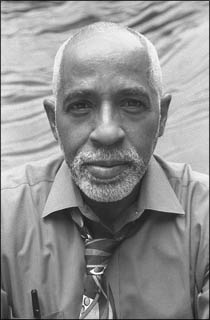 two more cases challenging felon disenfranchisement, muntaqim v. coombe and hayden v. pataki, were dismissed last week by the second circuit u.s. court of appeals. that's jazz hayden at left, who filed the latter suit while incarcerated in new york.
the plaintiffs had argued that felon voting restrictions diluted the voting strength of african american and latino communities, in violation of section two of the voting rights act. i'll need to consult the great legal mind to parse the decisions, but i believe that this is the punch line:
“congress did not intend the voting rights act to cover such provisions” and that applying it in such cases “would alter the constitutional balance between the states and the federal government.”
most judicial challenges to felon disenfranchisement have failed. on the other hand, incremental state-by-state legislative and executive changes have been occurring regularly since the civil rights era. in this connection, catherine weiss of the brennan center has prepared a useful general template titled components of a right to vote bill. her brief summary:
• Restoration of Rights: This provision should clearly identify at what point voting rights are restored to people with criminal convictions – upon discharge from prison? upon completion of parole? upon completion of parole or probation? upon completion of sentence plus a waiting period?
• Notice: This provision should ensure that criminal defendants are informed: (1) before conviction and sentencing, that they will lose their voting rights; and (2) at the point of restoration, that they are again eligible to register and vote.
• Voter Registration: Under this provision, the government agency that has contact with people at the point of restoration (the Department of Corrections, or the Department of Parole or Probation, for example) should take responsibility for assisting them with voluntary voter registration.
• Maintaining the Statewide Voter Registration Database: This provision should ensure that names are removed from and then restored to the state’s computerized list of registered voters by electronic information-sharing between corrections agencies and elections agencies.
• Education: This section should make the state’s chief election official, usually the secretary of state, responsible for educating other government agencies and the public about the legislation.
because public opinion favors voting rights for ex-felons (80%), probationers (68%), and parolees (60%), legislators may be increasingly receptive to reenfranchising these groups. in contrast, only about 33% support voting rights for currently incarcerated prison inmates.
Monday, May 8, 2006
radio ga ga
 we're doing a little radio tour for locked out this summer, so i got up early today to appear on daybreak usa and cable radio network. the interviews were fun and the hosts were gracious, so we're off to a decent start. here's the first leg:
May 6, 9 pm: WBZ Boston (Jeff)
May 7, 10 am: KPFA Berkeley (Jeff)
May 8, 8:35 am: USA network/Daybreak, Scott West (Chris)
May 8, 9:50 am: Cable Radio Network, national (Jack Roberts) (Chris)
May 16, 2:30 pm: American Urban Radio (Jeff)
May 22, 7:36 am: Jacksonville, Ed Furbee show (Chris)
May 25, 10:00 am: Tron in the Morning, Colorado Springs (Chris)
we often get calls and emails after such appearances. sometimes they are friendly, sometimes angry, and sometimes we just don't know what to make of them. i didn't hear jeff's bay area interview this weekend, but it sparked the following email:
In the books you have written, you probably have not addressed the initial "con": the courts' use of devious language and legal fictions, which are first responsible for the accused natural person (the "Defendant"), to unwittingly grant jurisdiction to the de facto "courts". (I.e.; statutory, non-Article III. courts.) While this material is distinctly not taught in "law" school, it is the observation of those of us who study the perverse manifestations of what purports to be "Justice" in the U.S.A., that several devices are used by the "courts" to entrap the "guilty" (often of victimless "crimes"), as well as the innocent. These (most briefly), are the use of the Fictitious Plaintiff, Fictitious Defendant, STRAMINEUS HOMO (Strawman), IDEM SONANS, and the deceptive question: "Do you understand the charges?" If some or all of these are unknown to you, you have failed in the very first part of your reportage, or mission. And, most greviously, you have failed to warn future victims of the "Just Us" system of any hint whatsoever, of how to avoid prosecution, in the first place!
i never know how to respond to such comments, except to thank the writers for their interest in my work. "dialogue with interested publics" sounds good in the abstract, but in such cases i often find that i have little to say beyond what i just said -- in the media or in my research. still, i think such radio tours create a nice opening to do a little public criminology outreach work.
NOTE: speaking of radio, the pic and post title are taken from the electric 6 cover of radio gaga. the band has a knack for combining the tasteless with the funny. depending on your perspective, the results are either "tasty" or "funless." the video doesn't quite match the six's classic (pg-13 rated) danger! high voltage!, but a line like "fire in the taco bell" doesn't come along every day.
Sunday, May 7, 2006
keith ellison and crime control
 every political candidate must say something about crime, but the level of discourse -- from both the democrat and republican side of the aisle -- seems to have slipped a bit in recent years.
candidate a: i'll make sure that all sex offenders serve at least fifty years, plus a lifetime term of double-secret probation.
candidate b: my opponents advocate coddling the worst of the worst! i propose sentences of at least fifty hundred years.
candidate c: under such a proposal, a cryogenically frozen offender could get off scot-free in five short milennia! fifty hundred years is fine and good, but we need to ensure that the pee-wee hermans of the world never see the light of day. i've introduced a bill that would mandate life without parole, plus fifty gazillion years.
in contrast, state representative keith ellison is one politician who talks more sensibly and pragmatically about crime and punishment. representing minneapolis' north side, mr. ellison has been outspoken on contentious crime issues. he is responsive to his district's demand for better public safety and cognizant of the consequences of punishment for individuals and communities. in particular, he has championed the issue of reenfranchisement and reintegration, as well as sentencing alternatives for drug offenders. i was especially moved by his remarks on the right to vote at a recent conference.
i am not blogging to endorse a particular candidate or party, but i am genuinely excited when i meet a politician who seems responsive to social science knowledge in my area of expertise. when i heard that representative ellison was one of many dems seeking to succeed martin sabo in the u.s. house, i asked my political science buddies whether he had a chance. they uniformly praised his oratory and intelligence but doubted his ability to leapfrog others in the distinguished field. well, mr. ellison just won the democratic party's endorsement for the 5th congressional district this weekend. if he takes the september 12 primary, he would surely be a heavy favorite in the overwhelmingly-democratic district this november.
i don't reside in his district and i've only really discussed crime with mr. ellison, but i came away impressed with his vision and his guts. many politicians are so terrified of being portrayed as soft on crime that they seem to suspend their own basic principles, good judgment, and reasoned analysis. if elected, part of me thinks that representative ellison could help articulate a clear alternative vision of crime, punishment, and public safety. of course, another part of me worries that he'll either have to dilute the vision or risk getting tarred with the "soft on crime" brush.
Wednesday, May 3, 2006
when do i stop being a felon?
 i'm in washington today, enjoying an ncovr workshop on desistance from crime. after writing a dissertation on the topic in the nineties, it is nice to catch up.
i'm learning much, but one presentation was particularly intriguing for someone studying collateral sanctions such as voting and occupational restrictions. shawn bushway, megan kurlychek, and bobby brame ask the following question: when does a criminal's risk of a new offense decline to the point that it is indistinguishable from those with no record of past offending.
cool question, right? the authors apply event history analysis and life table demography to birth cohort data from philadelphia and racine, plotting the hazard rate of new offenses for young arrestees versus non-arrestees. at the risk of oversimplifying, the basic story is that the rate of a new arrest is approximately equivalent for the offender and non-offender groups after about 7 years. if such findings can be replicated across space and time, it could provide evidence against imposing lifetime bans on former criminal offenders. i believe that papers are forthcoming in criminology & public policy, crime & delinquency, and ampersand & ampersand.
i've got to prep my own talk, so i can only offer a few other notes on the workshop. first, i learned about reference groups and relative deprivation today. on my way to the exercise room, floridian alex piquero took note of my blindingly white legs. in minnesota, of course, i'm considered quite bronzed.
second, the best probably-shouldn' t-blog-about-this stories came from shadd maruna tonight. here's one i can share: aside from my committee and maybe a few select family members, shadd was virtually the only person interested in my early desistance writings. i'll never forget him writing to me (on actual letters, involving stationery and stamps) back when he was doing diss work as a grad student and i was struggling mightily as an assistant professor.
when shadd's letters arrived -- likely with a fresh batch of journal rejections -- his interest was greatly appreciated but a little problematic. at a time when i felt hopelessly and irredeemably lost, along comes a smart dissertator to ask for directions. i wanted to scrawl "go back! go back to etiology!" after reading making good, of course, i'm glad i didn't. somehow we've both managed to publish our work and, after at least seven years, we've yet to desist from desistance.
Tuesday, May 2, 2006
map of the new asylums
 frontline's the new asylums addresses the deinstitutionalization of state psychiatric hospitals and the reinstitutionalization of the mentally ill in prisons. wgbh compiled a handy interactive map of mental health care in state prison systems, complete with estimated prevalence rates and staffing levels and contact information for administrators in each state.
i can't vouch for all the sources, but the bureau of justice statistics and american correctional association estimates are likely the best available. i haven't screened the video yet, but you can see clips online or order it for $30. i'd consider using it in my deviance class to show the interpenetration of social control systems, but it might also be useful in a social problems or punishment course.
Monday, May 1, 2006
legalize it?
 mexico's senate passed a bill on friday that would decriminalize possession of up to 5 grams of marijuana, 0.5 grams of cocaine, 25 mgs of heroin, and two pounds of peyote. according to the washington post, cnn, and other sources, vicente fox is signaling that he will sign off on changes such as these to mexico's federal penal code:
Article 478: No criminal prosecution will be brought against ... II. Any drug addict or consumer who is found in possession of a narcotic for personal use. Article 474 defines a "consumer" as any person who consumes or uses psychotropic or narcotic substances, and who does not exhibit any symptoms of addiction.
legalization advocates such as ethan nadelman of the drug policy alliance are praising the measure, ostensibly for its potential to reduce low-level police corruption. i strongly favor ratcheting down lengthy drug sentences and collateral sanctions targeting drug offenders, such as housing and financial aid restrictions. nevertheless, the prospect of legal heroin gives me the willies.
although legalization seems to function ok in the netherlands, someone will have to convince me how this is a good deal for mexicans or americans. at best, the move will diminish the social harm associated with harsh and erratic enforcement (though i can imagine, say, san diego kids getting twenty years hard time for stuff they did legally in tijuana). at worst, the prevalence of use will increase and both locals and tourists could pick up some potentially life-changing habits.
given the two-pound peyote limit, one thing is certain: we'll see more carlos castaneda-like writing from students doing spring break in cancun and mazatlan.
Sunday, April 30, 2006
emerging from prison as an adult
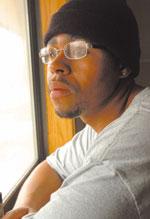 to borrow a story from the distinguished dr. uggen's hometown, the pioneer press ran a great piece a couple of weeks ago on steven glaze, a young man who was prosecuted as an adult at age 15, served 11 years in prison, and is now back out in the community trying to find a job, navigate a whole new world, and create a new life.
glaze walked out of prison with only his prison-issue television set and $100 to his name. even though glaze had taken advantage of all of the educational and vocational opportunities available to him while incarcerated, he reentered the community with the stigma of a long prison sentence, a lack of legitimate work history, and without even a driver's license to help smooth his way.
four months after his release, glaze is still looking for a job and is growing ever more frustrated. he claims it has been the most challenging experience of his life. adding to the pressure is the fact that his fiance, rachel (who he met during a prison poetry workshop -- another example of female volunteers falling in love with prison inmates), is pregnant with twins. it seems his struggles to adjust to his new life on the outside have just begun.
other juveniles tried as adults will face similar pressures sooner or later. as i wrote about recently, willard jimerson, jr. was prosecuted as an adult at age 13 and sentenced to 23 years. he's 25 today and will serve another decade behind bars, but he will eventually get out and be expected to function as an adult in the larger society.
more recently, on friday, a 15-year-old boy, evan savoie, from ephrata, washington was convicted of first-degree murder and he now faces 20 to 26 years in prison. savoie was 12-years-old at the time of his crime and he is the youngest murder defendant since 1931 to be prosecuted as an adult in washington state.
as i've said before and will continue to reiterate, we should remember that all of these young men (and young women in similar situations) will likely survive their prison sentences and will be returned to the community to live among us. knowing that, how would you like to see them treated for their crimes?
Thursday, April 27, 2006
how many of your students are doing the reading?
 over a fine dinner with jeff draine and irene wong, i asked whether their penn students did all of the reading assigned for coursework. jeff replied that he doubted it, but quickly noted that his inside-out students indeed do all the reading.
jeff teaches in the inside-out prison exchange program, which takes university undergrads behind prison walls to attend class with inmates. in jeff's experience, the "inside" or incarcerated students often lead the way. this sets a high bar for preparation and participation that can motivate the "outside" students to work a little more diligently than they otherwise would.
i could envision such a pattern holding for my minnversity undergrads as well. if they heard inmates critiquing code of the streets, for example, they'd be more likely to dig into it to form their own opinions (especially if the critique somehow challenged ol' doc uggen's reading of the text). my pubcrim colleague michelle took the inside-out training program last summer, so i'm looking forward to some firsthand blogging on her experiences teaching in the program next year.
Wednesday, April 26, 2006
the most important holiday of the year?
 today, april 26, is administrative professional's day a/k/a secretary's day. like defense secretary rumsfeld, i eagerly await the shower of prizes and recognition that will surely come my way as ASC executive secretary.
let me assure you that administrative professional's day is no hallmark holiday. the wikipedia entry lists the standard gifts as candy, flowers, a card, and "occasionally, extra time off." this will not stand. i work too hard typing minutes to be placated by a vermont teddy bear.
i've been secretary since 2003, so i have some expertise in this area. let me propose the following officially approved administrative professional's day gifts:
1. an extension cord for my laptop so i can sit at the big table
2. a large quantity of small-batch bourbon
3. a significant clothing allowance
4. comp me a couple nights at the conference hotel. club level, please
5. a secretary's secretary who would perform all actual work and work-like duties
6. a personalized stainless-steel ice-cream scooper
7. i guess i wouldn't mind a few flowers, candy, and cards
i fly to philadelphia today and state college on thursday, so i won't collect my gifts until returning this weekend. the next stop is dc on may 2, when i'll take rummy out for a little lunch and commiseration.
Sunday, April 23, 2006
tip for the crim meetings
 i've just returned from los angeles, where the 2006 american society of criminology meetings will be held. each year the ASC holds its midyear executive board meeting in the conference facilities for the upcoming november meeting. that way, the board can get a taste of the facilities and hammer down meeting details as it does its business.
the 2006 meetings will take place at the convention center, which means that the ASC booked rooms in three or four expensive hotels and will bus participants back and forth. i figure that the room block will fill fast, so i thought i'd pass along a little inside information.
after my stay this weekend, i can personally give a strong endorsement to the biltmore. the rooms are cool, with ancient curvy bathtubs and other amenities. but the truly inspiring spots are the art-deco lobbies, fountains, wrought-iron work, and pool area.
in the 1930s the academy awards were held at the biltmore, so there are great black-and-white photos of tyrone power, walt disney, and martha raye hanging about. plus, they still film scenes from the west wing and commander in chief in the boardroom and other spots in the hotel.
in my humble opinion, the whole place has a funky charm and nine billion times more texture than most conference hotels. see you in the bar...
Subscribe to:
Posts (Atom)


